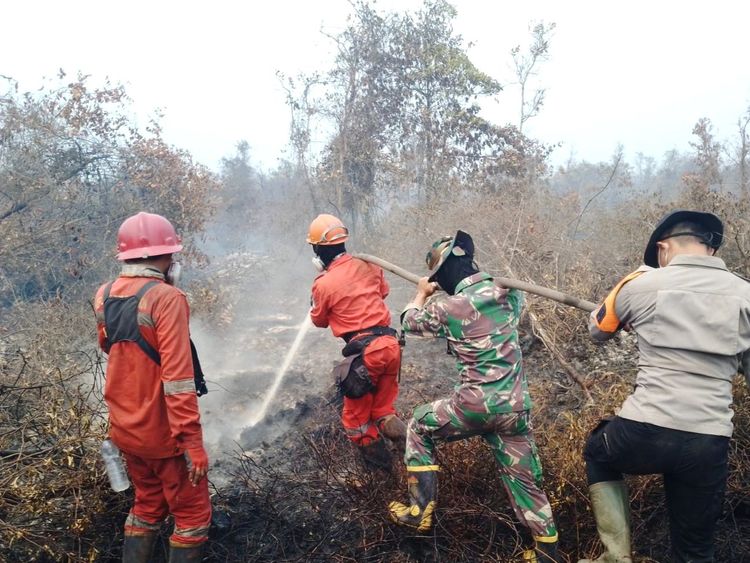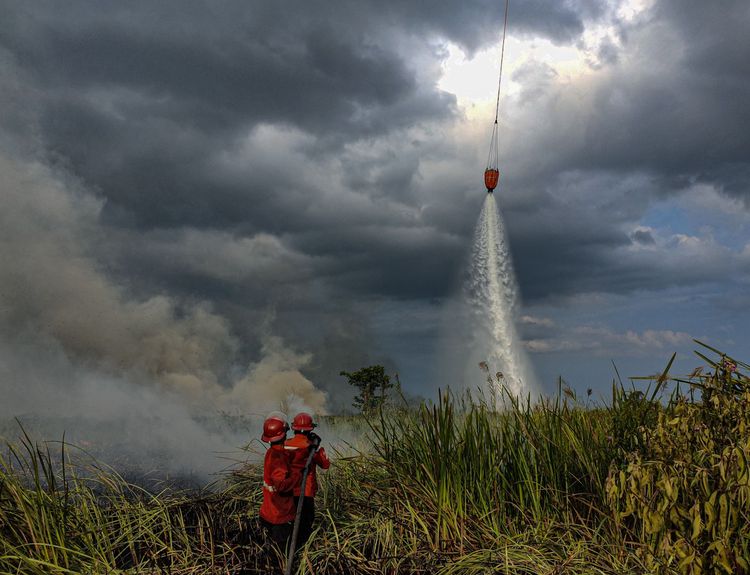


Enviro News Asia, Jakarta — The Association of Indonesian Forest Concessionaires (APHI) supports the government’s plan to revise the provision allowing land clearing by burning up to two hectares per household as part of efforts to strengthen forest and land fire prevention. The association also emphasizes the importance of providing communities with practical alternatives to land clearing without burning
APHI Chairman Soewarso said the proposed revision should be accompanied by a comprehensive review of the regulation’s implementation, the effectiveness of monitoring and enforcement, and communities’ readiness to adopt land-clearing practices without burning.
“APHI supports the government’s initiative to revise the provision on land clearing through burning. The objective is to strengthen forest and land fire prevention, protect communities, and ensure legal certainty for all stakeholders,” Soewarso said.
The statement comes in response to the government’s plan to propose amendments to Law No. 32 of 2009 on Environmental Protection and Management, including a proposal to remove provisions that allow land burning based on local wisdom and traditional practices.
Soewarso said the regulatory review should take into account the risk of fires spreading beyond their initial locations, particularly during dry conditions and in areas with limited firefighting capabilities.
According to Soewarso, the size of the land area should not be the sole consideration. Weather conditions, land characteristics, water availability, and the readiness of firefighting equipment and personnel must also be taken into account.
“Fire does not recognize property boundaries. Burning in one location can pose risks to surrounding areas if it becomes uncontrollable. Therefore, prevention must be the primary consideration in revising the regulation,” Soewarso said.
He emphasized that regulatory changes must be accompanied by practical alternatives that communities can implement. Such support could include land preparation equipment, technical assistance, and access to financing.
“Regulatory changes must come with practical solutions. Communities need support to clear and cultivate their land without burning, at an affordable cost,” Soewarso said.
He added that businesses could contribute through community partnerships and empowerment programs tailored to local needs and conditions. These initiatives should be coordinated with regional and village governments to ensure that assistance reaches the intended beneficiaries.
Soewarso further noted that stronger fire prevention requires continuous public education, early detection systems, firefighting preparedness, and effective communication among government authorities, businesses, and local communities.
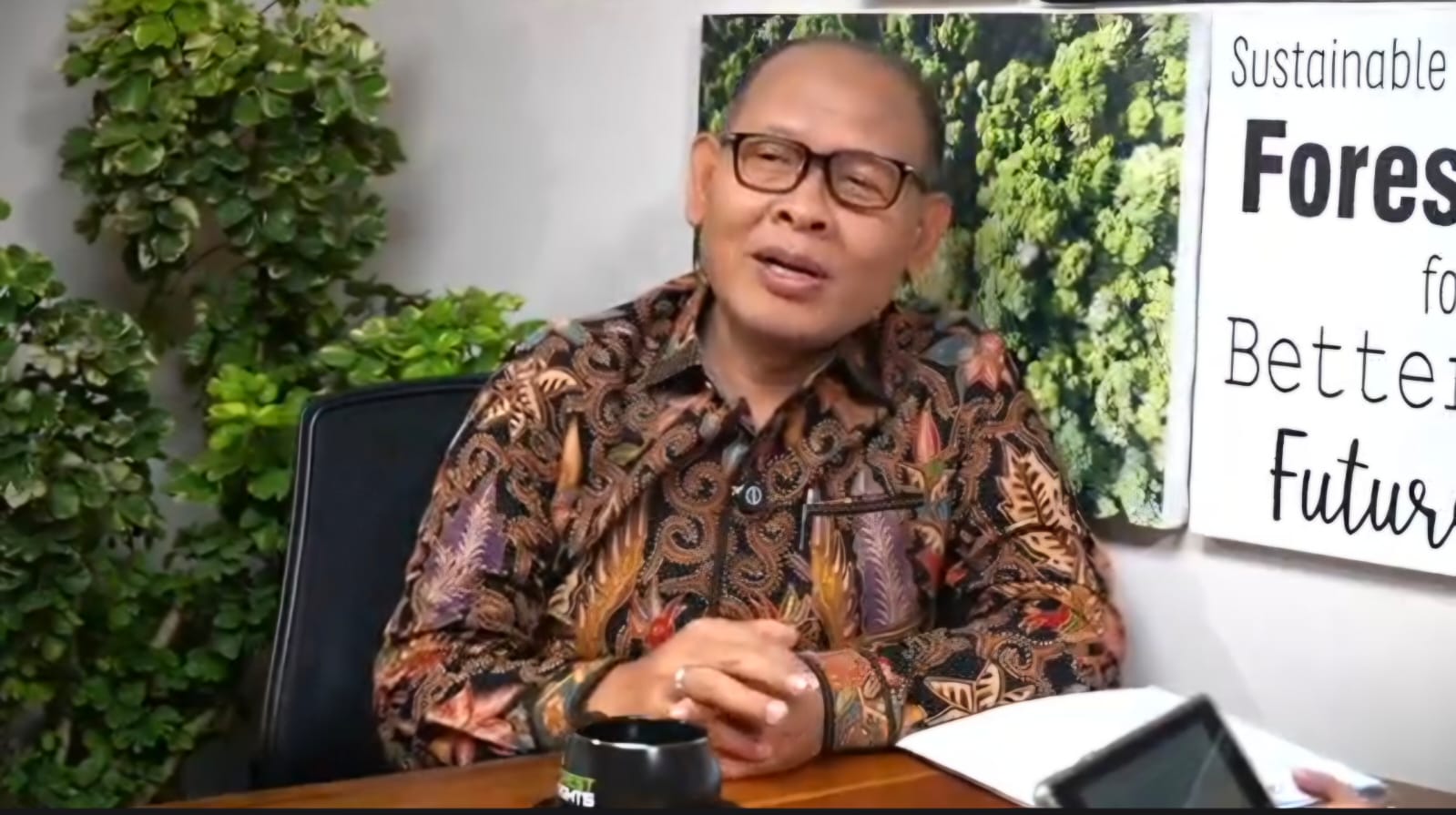
Meanwhile, forestry and environmental law expert Sadino said the proposed revision should be based on a comprehensive understanding of the existing legal provisions. He stressed that the two-hectare provision should not be interpreted as a general permit to burn forests.
Article 69, paragraph (1), letter h, of the Environmental Protection and Management Law prohibits land clearing by burning. However, paragraph (2) requires that the application of this prohibition give due consideration to local wisdom in the respective regions.
The explanatory provisions specify that such local wisdom includes burning a maximum of two hectares of land per household for cultivating local crop varieties, provided that the area is surrounded by firebreaks to prevent fires from spreading to neighboring areas.
“The provision must be interpreted in its entirety. It includes the context of local wisdom, limitations on land area, crop types, and requirements for firebreaks. Therefore, it would be incorrect to interpret it as unrestricted permission to burn up to two hectares of forest or land,” Sadino said.
According to Sadino, the review should assess whether these strict requirements can be effectively implemented and monitored, and whether the existing regulatory framework provides sufficient clarity for communities and law enforcement authorities.
Sadino explained that amendments to provisions at the statutory level must follow the applicable legislative procedures, including amendments to laws and relevant government regulations. Consequently, regional regulations must also be adjusted in accordance with changes to their underlying legal framework.
“If the government intends to remove or amend these provisions, the process must follow the applicable legal procedures. The regulatory framework must be clear to prevent differing interpretations in implementation and law enforcement,” Sadino said.
He added that amendments to laws and government regulations would have implications for subordinate regulations. Therefore, the revision process should involve Indigenous Peoples and local communities, regional governments, academics, and other relevant stakeholders.
Such participation is essential to ensure that environmental protection measures remain aligned with the needs and livelihoods of local communities.
Sadino also emphasized that reviewing land-burning provisions applicable to communities does not diminish the obligations of businesses to prevent and respond to forest and land fires in accordance with existing regulations.
“All parties must continue to fulfill their respective responsibilities. Regulatory revisions should strengthen prevention and compliance among both communities and businesses,” Sadino said.
The proposed revision of land-burning provisions is expected to strengthen legal certainty and reduce the risk of forest and land fires. Consistent enforcement, meaningful community participation, and support for land clearing without burning will be essential to ensuring that the revised policy can be effectively implemented on the ground. (*)