BRIN: 2026 El Niño Expected to Be Moderate, but Longer Dry Season Warrants Vigilance
Enviro News Asia, Jakarta – The public need not panic over warnings of an extreme El Niño in 2026, the National Research and Innovation Agency (BRIN) has said, confirming that the likelihood of a so-called Godzilla El Niño, an exceptionally intense event capable of triggering severe drought, is very small this year. However, both the public and the government still need to remain alert to a dry season expected to last longer than normal, BRIN’s Center for Climate and Atmospheric Research Head Albertus Sulaiman said in an El Niño 2026 progress report.
Albertus said analysis from multiple global climate models indicates that current global climate conditions point more toward a moderate El Niño, with a probability of around 27 percent, differing significantly from the super-strong Godzilla El Niño events that struck in 1997 and 2015.
“El Niño 2026 is not expected to reach extreme levels. However, the dry season is predicted to last longer with rainfall below the climatological average,” Albertus said on Saturday (6/20).
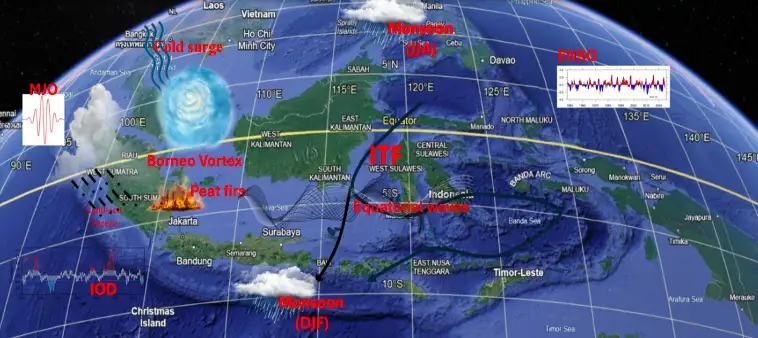
He explained that El Niño is a phenomenon involving the warming of sea surface temperatures in the central and eastern Pacific Ocean that disrupts cloud and rainfall formation patterns over Indonesia. Under normal conditions, Indonesia’s warm waters serve as a center for cloud and rainfall formation, but during El Niño, this center shifts toward the Central Pacific, significantly reducing rainfall across Indonesia.
Based on BRIN’s projections, the peak of the 2026 dry season is expected to fall in August. Several areas on Java, particularly in West Java including Bekasi, Cirebon, Kuningan, and Bandung, are at risk of experiencing very dry conditions. “Overall, the probability of a longer-than-normal dry season is around 81 percent,” Albertus said.
He stressed that the likelihood of a Godzilla El Niño this year is very small for several scientific reasons. One is that the Indian Ocean Dipole (IOD) is currently in a neutral phase, predicted to persist through April 2027. In addition, Indonesia and the Pacific region have only recently come through a strong El Niño in the 2023–2024 period, meaning the ocean has not yet accumulated sufficient energy to generate another super-extreme El Niño within such a short interval.
Nevertheless, BRIN has detected signals of increasing extreme El Niño risk toward the end of 2027 through mid-2028. Using a stochastic analysis approach based on the Fokker-Planck Equation, the probability of a Godzilla El Niño during that period is estimated to rise to nearly 40 percent. “This finding serves as an early warning for the government to begin preparing medium-term mitigation strategies,” Albertus said.
To address the impacts of a prolonged dry season, BRIN has developed a range of research-based mitigation technologies. One is a real-time peatland monitoring system through the Ina-Carbon platform, capable of monitoring groundwater levels, soil moisture, rainfall, and air quality, and able to detect critical peatland conditions one to two weeks before forest and land fires occur.
BRIN has also developed firefighting drone technology capable of reaching remote locations difficult for field personnel to access, designed to support forest and land fire response efforts that typically intensify during prolonged El Niño-driven dry seasons.
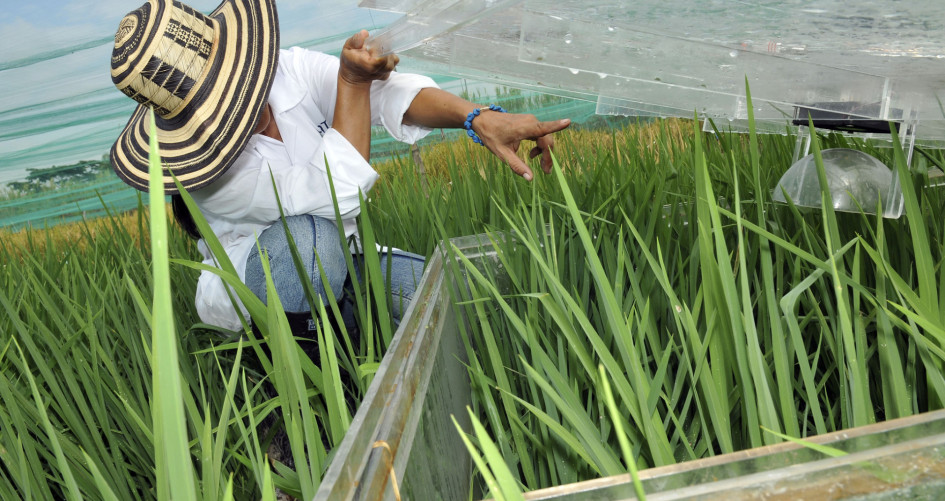
In the food sector, BRIN is preparing a range of adaptation technologies to reduce crop failure risks, including water-efficient irrigation systems, more efficient water resource management, and the utilization of suboptimal land such as swamp areas as alternative food production sites when conventional agricultural land faces water shortages.
Albertus stressed that the ability to weather El Niño depends not only on the scale of the climate anomaly but also on the readiness of technology and adaptation strategies put in place early.
“What needs to be done now is to increase preparedness, strengthen water resource management, anticipate potential forest and land fires, and ensure food security is maintained. With the right mitigation and adaptation measures, the impact of El Niño can be minimized,” Albertus concluded. (*)