Enviro News Asia, Cibinong — Indonesia’s National Research and Innovation Agency (BRIN) has highlighted the significant potential of Malapari (Pongamia pinnata) as a renewable energy crop capable of supporting the country’s energy transition while helping restore degraded land.
The plant was showcased during the 2026 Capacity Building and Expo of BRIN’s Research Organization for Life and Environmental Sciences (ORHL), held on July 8–9 at the Indonesia Convention Center (ICC) in BRIN’s Soekarno Science and Technology Area, Cibinong, Bogor. The event featured eight thematic exhibitions presenting research and innovation in life and environmental sciences.
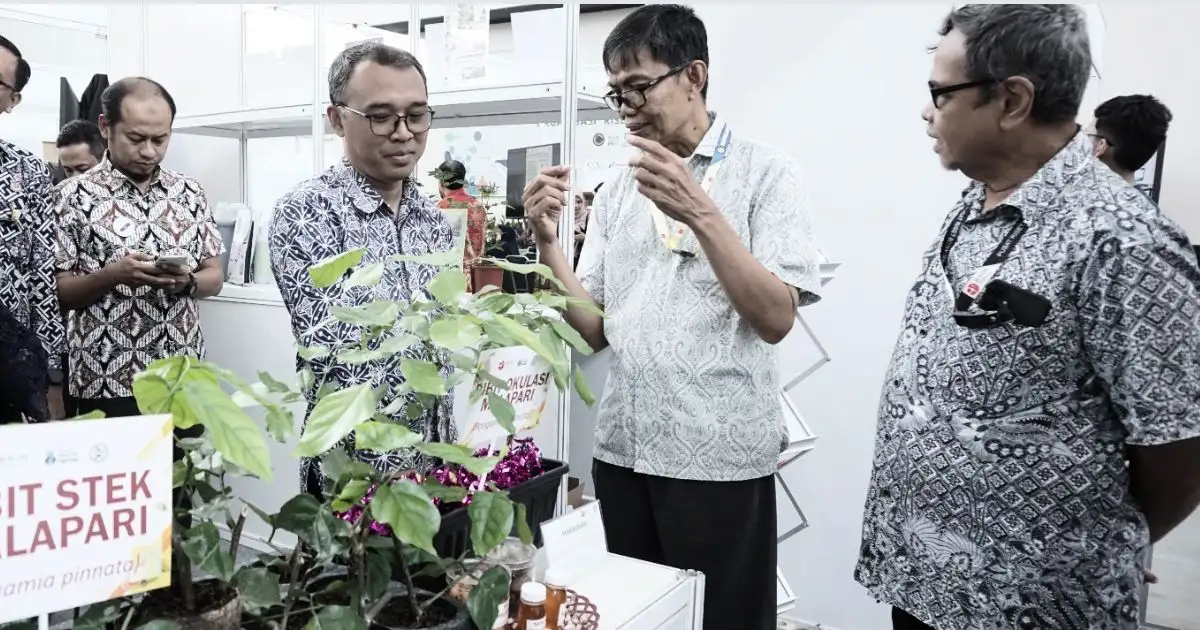
One of the featured exhibits focused on BRIN’s Applied Botany Research Center, where researchers are developing Malapari as a strategic feedstock for Indonesia’s bioenergy industry.
Applied Botany Research Center researcher Danu said Malapari is a multipurpose tree that produces vegetable oil suitable for biodiesel production and has strong potential as a feedstock for sustainable aviation fuel (SAF).
According to Danu, one of Malapari’s main advantages is its ability to thrive on degraded and marginal land that is unsuitable for food crops. Its nitrogen-fixing root system improves soil fertility, making the species valuable for land rehabilitation while producing renewable energy feedstock.
Beyond biofuel production, nearly every part of the tree has economic value. Seed cake remaining after oil extraction can be processed into livestock feed, while its leaves are being studied as ingredients for skincare products through collaborations with industrial partners.
To accelerate commercialization, BRIN’s Macropropagation Technology Research Group has established partnerships with PT SANTI Group, Four Pride, PT SANTI Energi Hijau, PT Rumah Tani Nusantara, PT Pinna Foresta Raya, and Indonesia’s Ministry of Forestry. The collaboration focuses on building a sustainable Malapari supply chain by simultaneously expanding plantations and developing processing facilities.
BRIN is also producing high-quality Malapari seedlings with improved productivity to support future large-scale cultivation. Initial development is focused on core plantation areas before expanding through partnerships with local communities to increase economic benefits.
Danu said BRIN has successfully produced biodiesel from Malapari and noted growing interest from domestic and international companies, including firms from Japan, demonstrating the plant’s potential to become a globally competitive bioenergy commodity. (*)