Enviro News Asia, Jakarta – Indonesian Minister of Environment and Head of the Environmental Control Agency (KLH/BPLH), Moh Jumhur Hidayat, said carbon credits and biodiversity credits present significant opportunities to create new economic innovations by aligning environmental conservation with sustainable economic growth.
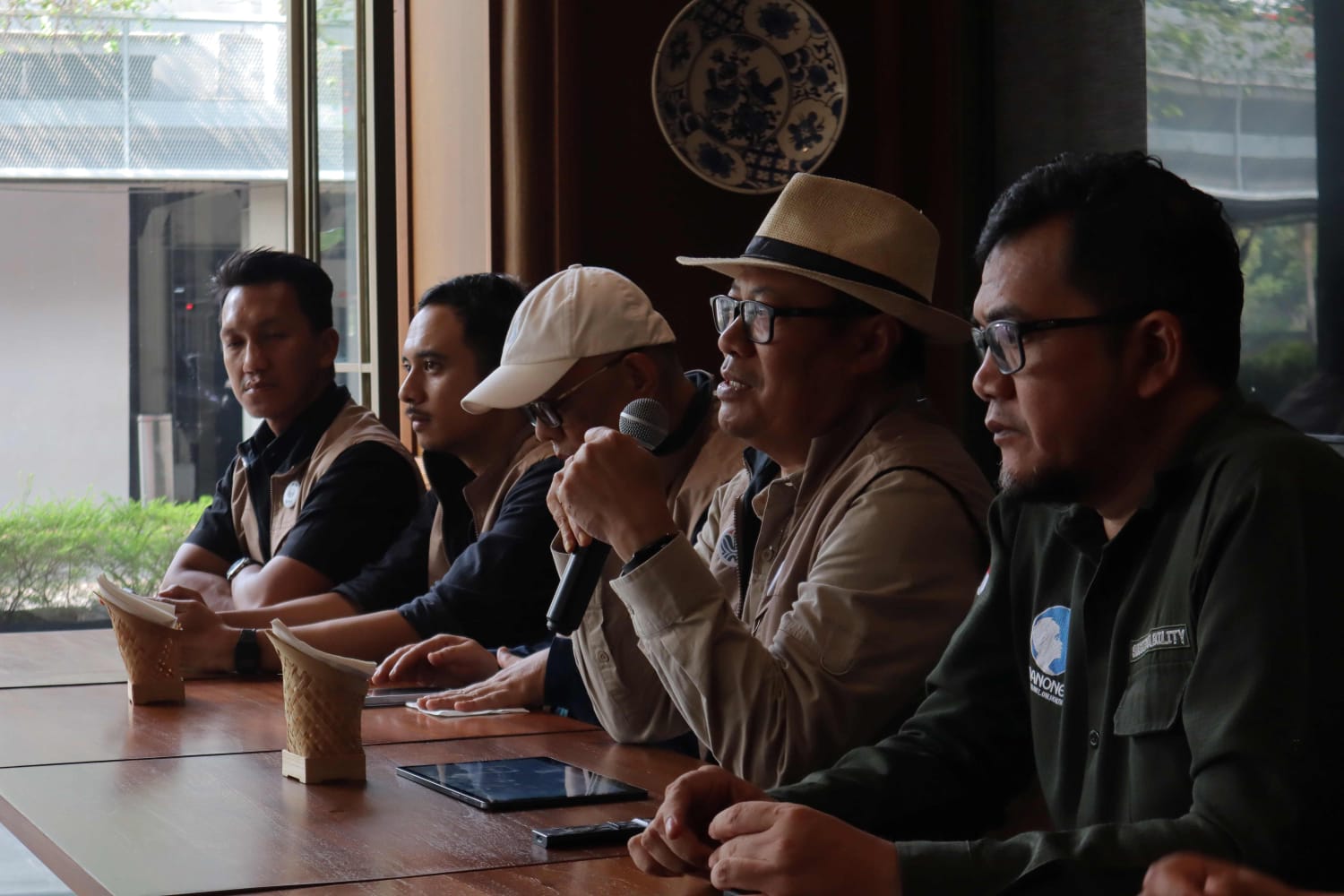
Speaking on Indonesia’s environmental economy agenda, Minister Jumhur emphasized that biodiversity conservation and climate action should not be viewed as separate issues because they are closely interconnected.
“I do not want to compare biodiversity with climate change because the two are closely linked. If we fail to address climate change properly, it will severely affect biodiversity. These two efforts should reinforce one another,” he said.
The minister explained that developing carbon-based businesses can generate multiple benefits, including environmental restoration, the creation of green jobs, and new economic opportunities for businesses and local communities.
As an example, he highlighted the “avoiding” mechanism in carbon trading, under which forest concession holders voluntarily refrain from exploiting areas they are legally permitted to harvest in order to preserve forest ecosystems.
“I may decide not to harvest timber within my industrial plantation forest concession, even though I have the legal right to log 100,000 hectares. By choosing to conserve the forest instead, that action can generate carbon credits and provide financial returns,” Minister Jumhur explained.
According to him, such conservation decisions can be rewarded through carbon market mechanisms that provide economic incentives for activities contributing to greenhouse gas emission reductions.
“In this way, you help protect the environment while also generating income. There are many business opportunities that arise from environmental conservation,” he added.
The Ministry of Environment (KLH/BPLH) will continue to promote the development of environment-based economic initiatives to ensure that the benefits of Indonesia’s rich biodiversity are enjoyed by local communities and domestic businesses.
The government is committed to positioning Indonesia not only as one of the world’s most biodiverse countries but also as a global leader in creating economic value through environmental protection and sustainable natural resource management. (*)