

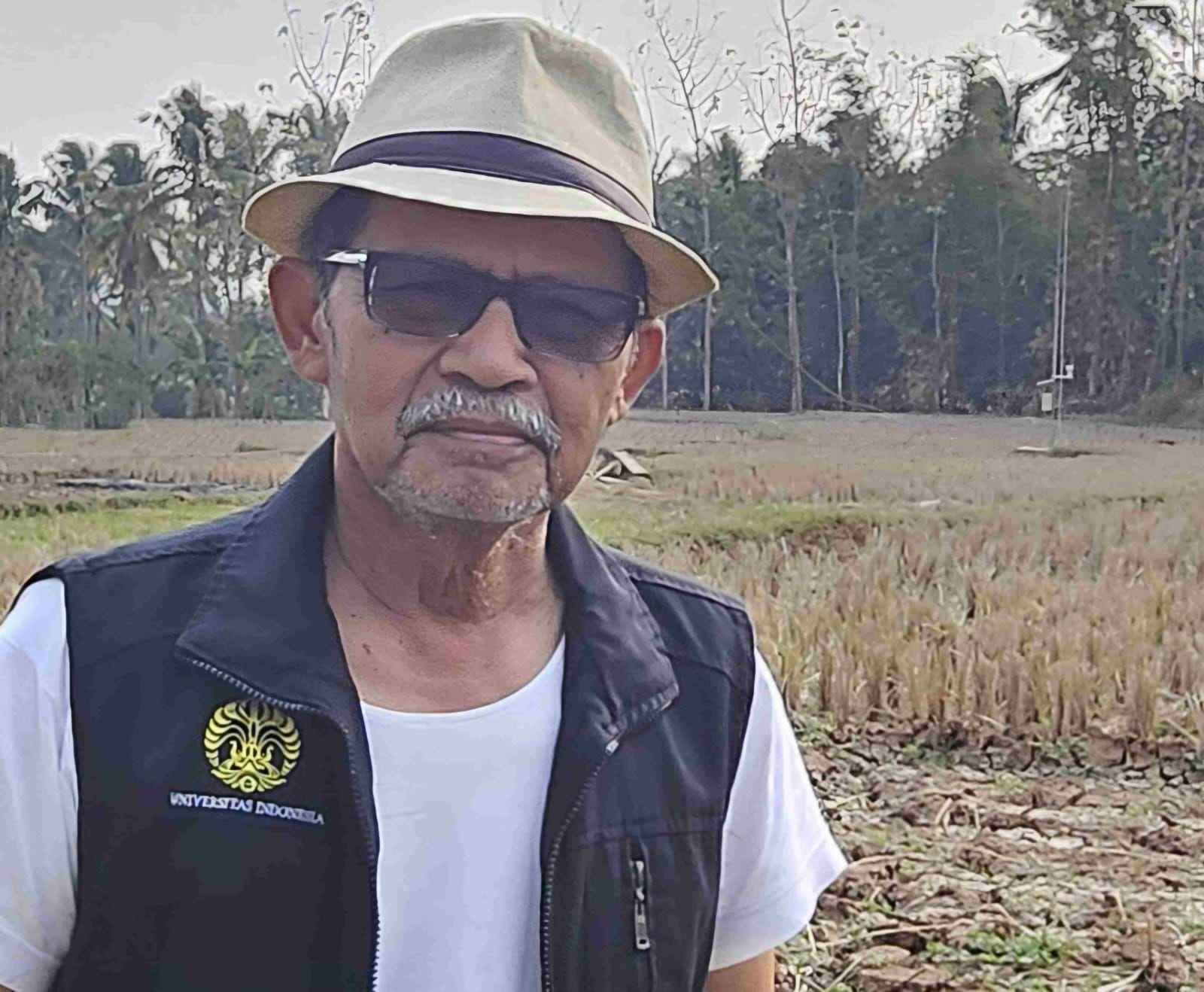
Enviro News Asia, Jakarta — Environmental, climate and geospatial observer A. Karsidi has warned that the onset of rainfall in several parts of Indonesia does not signal the end of drought, forest and land fire, or clean water shortage risks.
“Do not regard the first rains as a sign that the dry season has ended,” Karsidi wrote in his Analysis and Evaluation of Indonesia’s Climate Conditions report, updated on October 11, 2026.
The report stresses the need to maintain vigilance until soil conditions and water availability have recovered on a sustained basis.
“Vigilance against forest and land fires and water crises must be maintained until there is evidence of sustained recovery in soil moisture, peatland water levels, river discharge and water reserves,” he wrote.
Karsidi’s analysis draws on reports from Indonesia’s Meteorology, Climatology and Geophysics Agency (BMKG), the US National Oceanic and Atmospheric Administration’s Climate Prediction Center (NOAA/CPC), and monitoring data from Indonesia’s National Disaster Management Agency (BNPB).
According to BMKG data cited in the report, the proportion of areas experiencing low rainfall declined from 87.53 percent in the second ten-day period of September to 70.59 percent in the third ten-day period of September 2026. A ten-day period, known locally as a dasarian, is a standard interval used in climate monitoring.
Although the figures indicate increased rainfall in several areas, the change does not yet represent a comprehensive recovery. Approximately 70.41 percent of the country’s areas continued to experience below-normal rainfall.
The report also noted that 40 seasonal zones, representing approximately 5.7 percent of all seasonal zones, had entered the rainy season during the third ten-day period of September. This indicates that the seasonal transition has begun but remains uneven across the country.
Karsidi explained that the strengthening El Niño and the tendency toward a positive Indian Ocean Dipole (IOD) could continue to inhibit rainfall formation. However, atmospheric wave activity and the availability of regional water vapor could still bring rain to several areas.
“Therefore, a nationwide dry season does not mean that every part of Indonesia is experiencing an absence of rainfall,” he wrote.
According to the analysis, increased rainfall alone is insufficient to address water shortages accumulated throughout the dry season. The recovery of groundwater reserves, farm ponds and reservoirs also requires time.
In South Sumatra, the report cited monitoring data from the South Sumatra Climatology Station on October 10, which indicated meteorological drought at the alert level in Palembang, Banyuasin, Ogan Ilir and Ogan Komering Ilir regencies.
The longest recorded period without rainfall reached 106 days in Cinta Manis, Ogan Ilir Regency.
Karsidi said these conditions should be a major consideration in forest and land fire prevention efforts. In his assessment, fire risk evaluations cannot rely solely on climate indicators or the number of hotspots.
“An integrated approach is needed that combines fuel moisture, peatland water levels, consecutive days without rainfall, wind speed and human activities. Preventing fires from being ignited must remain the top priority,” he wrote.
He recommended strengthening location-based early warning systems by integrating weather data, soil moisture, peatland water levels and hotspot information. Such integration would enable authorities to identify high-risk areas down to the village or concession level.
Monitoring of open burning, patrols, the management of dry and combustible materials, and preparedness for initial firefighting operations should also be reinforced.
“In peatland areas, rewetting measures should be implemented before groundwater levels fall to dangerous levels,” Karsidi wrote.
Beyond forest and land fires, the report highlighted the effects of drought on communities’ water needs. Citing a BNPB report dated October 2, Karsidi said declining water sources had affected approximately 1,327 households, or 4,242 people, in Kendal Regency, Central Java.
In West Seram Regency, Maluku, declining water discharge from springs and wells had left approximately 80 households in need of clean water distribution assistance.
To anticipate further impacts, he recommended updating water balance assessments every ten days so local governments could estimate available reserves and projected demand until rainfall becomes sufficient again.
He also called for planting calendars to be adjusted to the reliability of water supplies, the implementation of rotational irrigation, and the use of local rainfall to replenish farm ponds, retention ponds and reservoirs.
Karsidi emphasized that drought management must prioritize prevention before fires and water crises occur. Increased rainfall must be accompanied by continued field monitoring to ensure that local governments, companies and communities remain prepared until soil moisture and water reserves have genuinely recovered (**).