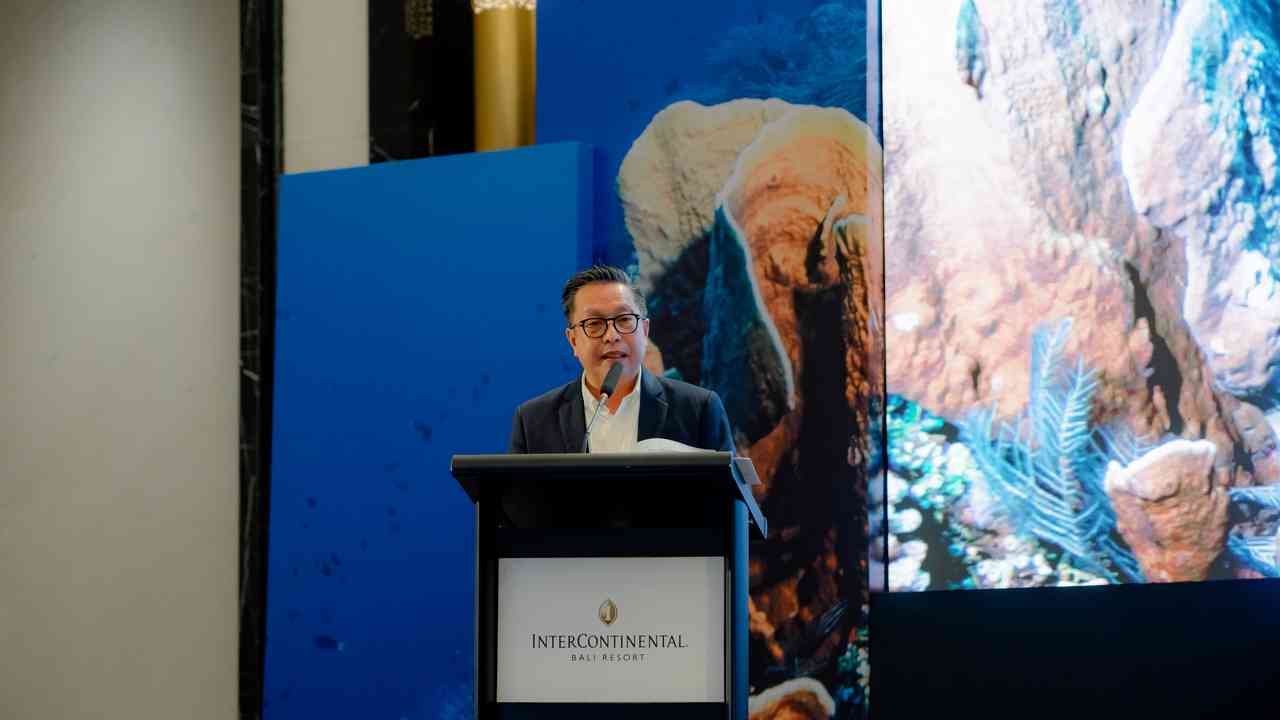
Enviro News Asia, Belém — The 30th United Nations Climate Change Conference (COP30) officially opened in Belém, Brazil, marking a pivotal moment in the global journey to address the climate crisis. The opening ceremony coincided with the sessions of CMP20, CMA7, SBI63, and SBSTA63, and symbolized the handover of leadership from Azerbaijan to Brazil.
Indonesia attended the conference with strong diplomatic representation, led by the President’s Special Envoy for Climate and Energy, Hashim S. Djojohadikusumo, and Minister of Environment, Hanif Faisol Nurofiq. The delegation included representatives from various ministries — Foreign Affairs, Environment, National Development Planning (Bappenas), Agriculture, Marine and Fisheries (KKP), and Energy and Mineral Resources (ESDM) — along with the private sector, academia, and youth. This diverse participation underscores Indonesia’s unified national commitment to strengthening its position on the global climate stage.
Through hard diplomacy, Indonesia actively engages in seven key negotiation agendas, including the Global Stocktake, National Adaptation Plans, Just Transition, and the Global Goal on Adaptation. Meanwhile, via soft diplomacy, the Indonesia Pavilion once again serves as a global collaboration hub, showcasing initiatives in mitigation, adaptation, carbon trading, forest conservation, and international partnerships based on practical climate solutions.
“Indonesia comes not only with commitments but with concrete actions — from tropical forest protection and clean energy transition to strengthening the carbon economy. We are actively contributing to a more resilient planet,” emphasized Hashim in his speech.
Minister Hanif further highlighted that Indonesia has entered the implementation phase of its green development agenda.
“COP30 is our moment to prove that green development is not only possible but profitable. Indonesia’s leadership is built on real action, not mere promises,” he stated.
During the opening ceremony, COP30 President André Corrêa do Lago expressed Brazil’s optimism in guiding the world toward science-based, decisive climate action. He emphasized that COP30 should be remembered as the “COP of Truth” — a COP that upholds integrity, science, and decisions aligned with the reality of the climate crisis.
“Science, education, and culture have shown how humanity builds civilization. In confronting climate change, multilateralism is the way forward,” André affirmed.
UNFCCC Executive Secretary Simon Stiell reiterated the global commitments made under the Paris Agreement to reduce emissions and enhance climate resilience. He used the Amazon River as a metaphor for the fragility of global ecosystems, stressing that successful climate action requires comprehensive cross-sectoral and cross-national collaboration.
Brazilian President Luiz Inácio Lula da Silva launched a Call for Action containing three key appeals:
- All countries must strengthen their climate commitments through more ambitious Nationally Determined Contributions (NDCs), supported by adequate Means of Implementation.
- Climate issues must be elevated politically through the establishment of a Climate Council directly linked to the UN General Assembly.
- The climate agenda must put people at the center, ensuring that global warming does not push millions back into poverty and vulnerability.
COP30 will run until November 21, 2025, and is expected to produce substantive outcomes that accelerate the implementation of global climate pledges. Indonesia’s active participation through KLH/BPLH demonstrates that the country is not only raising its voice but also translating green diplomacy into concrete actions.
Indonesia reaffirms that sustainability is not merely an international agenda, but a national commitment to safeguarding the planet for future generations. (*)