

Enviro News Asia, Cali — The Alliance of Bioversity International and the International Center for Tropical Agriculture (CIAT) is advancing climate-smart agriculture through a pioneering research initiative focused on carbon sequestration in tropical soils, demonstrating how sustainable farming systems can simultaneously address climate change, restore soil health, and strengthen food security.
Over the past four years, the Alliance has led the Carbon Sequestration Project, supported by the Bezos Earth Fund, to evaluate the capacity of deep-rooted crops and forages to increase soil organic carbon (SOC) storage in tropical agricultural landscapes across Latin America. The initiative combines soil science, plant breeding, artificial intelligence, and advanced monitoring technologies to develop scalable solutions for farmers and policymakers.
The research is being conducted in two contrasting regions of Colombia: Palmira in Valle del Cauca and Puerto López in Meta. Scientists are comparing conventional monoculture systems with crop-livestock rotation systems that incorporate rice and tropical forage varieties with different root architectures, including deep-rooted and shallow-rooted genotypes.
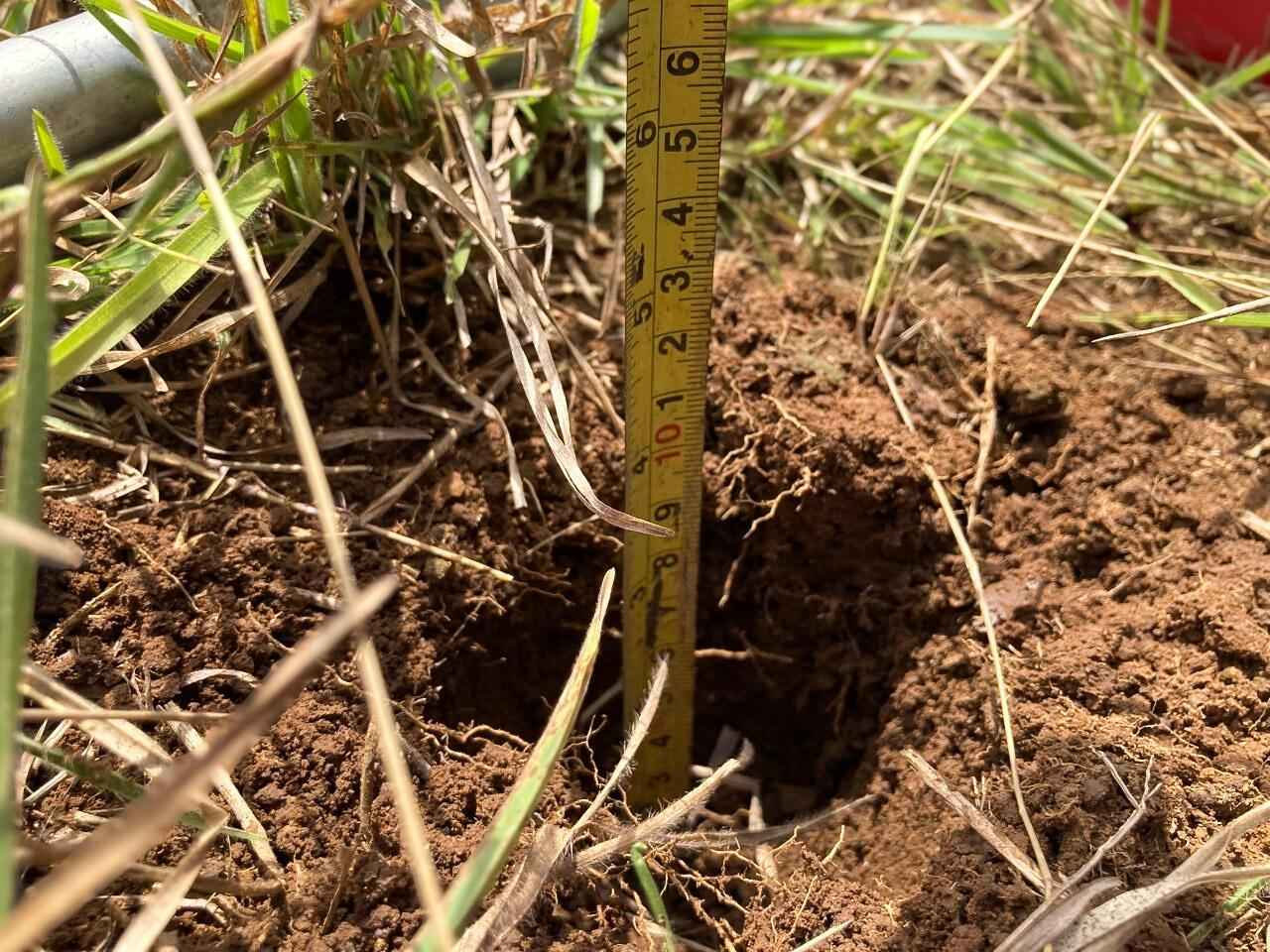
After 20 months of continuous field monitoring, researchers observed significant differences in carbon accumulation depending on soil type, depth, and management practices. In Palmira, increases in soil organic carbon were detected primarily in systems using deep-rooted forage monocultures and rice-forage rotations. In Colombia’s Eastern Plains, the most substantial gains were recorded in rotational systems combining deep-rooted rice varieties with both deep-rooted and shallow-rooted forages.
A major innovation of the project is the integration of field observations with Digital Soil Mapping (DSM) and artificial intelligence. By combining environmental data, machine-learning algorithms, and extensive soil sampling, researchers have produced high-resolution maps showing the distribution of soil organic carbon stocks across the Eastern Plains of Colombia.
The digital models also identify carbon sequestration hotspots and estimate soil carbon saturation potential, enabling scientists to determine how much additional carbon specific soils can store before reaching their maximum retention capacity. This information provides valuable guidance for developing targeted climate-smart agricultural strategies and directing investments toward areas with the greatest mitigation potential.
Beyond experimental sites, the project is evaluating carbon dynamics on commercial farms in the departments of Meta and Casanare. Researchers are examining how common agricultural practices influence carbon balances in rice cultivation and livestock production systems.
Preliminary findings indicate that intensive monoculture systems tend to reduce soil organic carbon over time, particularly in rice production areas. In contrast, improved pasture systems show greater potential for maintaining or increasing carbon stocks compared to degraded agricultural land.
The project has also established a technological partnership with the Earth Rover Program to test non-invasive geophysical sensors capable of measuring soil moisture, density, porosity, and carbon content in real time. The technology allows researchers to assess soil conditions without collecting physical samples or disturbing soil structure, potentially reducing monitoring costs while improving data accuracy.
The initiative has attracted international attention and was presented at the 2024 United Nations Climate Change Conference (COP), where it contributed to discussions on the critical role of soil health in climate mitigation and global food security.
Researchers say the results provide strong evidence that deep-rooted crop varieties and improved rice-forage rotations can significantly enhance the capacity of tropical soils to store carbon, improve ecosystem health, and generate long-term benefits for farmers.
As climate change, soil degradation, and declining organic matter continue to threaten agricultural productivity worldwide, the project highlights the importance of investing in soil restoration as a pathway to reducing emissions, strengthening food systems, and building more resilient agricultural landscapes. (*)