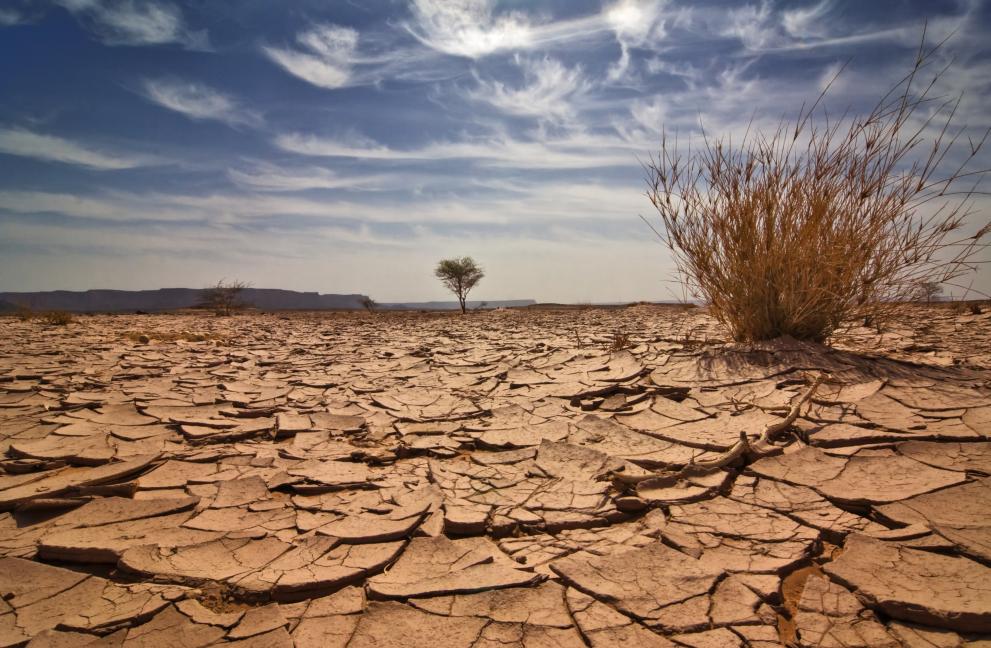
Enviro News Asia, Brussels — The European Union is calling for stronger international action to restore degraded land, improve drought resilience, and protect water resources as extreme heat, water scarcity, and prolonged drought continue to intensify. The EU will promote these priorities at the 17th Conference of the Parties to the United Nations Convention to Combat Desertification (UNCCD COP17) in Ulaanbaatar, Mongolia, from August 17–28.
The conference, held under the theme “Restoring Land, Restoring Hope,” brings together governments, scientists, civil society, businesses, Indigenous Peoples, and other stakeholders to address the interconnected challenges of desertification, land degradation, and drought.
The EU said the urgency of strengthening drought resilience is increasingly evident across Europe, where extreme heat and prolonged periods of low rainfall are placing pressure on water supplies, agriculture, energy production, river transport, and ecosystems. Europe is also warming faster than any other continent, increasing risks associated with drought and water scarcity.
European Commissioner for Environment, Water Resilience and a Competitive Circular Economy Jessika Roswall said drought and water scarcity are already affecting communities, economies, and ecosystems and require a shift from emergency response toward long-term preparedness.
At COP17, the EU plans to promote stronger implementation of the UNCCD through 2030 and beyond, with a focus on land degradation neutrality and improved drought resilience. A major priority will be moving from reactive crisis management toward proactive drought risk management.
This approach includes greater investment in preparedness, early-warning systems, risk reduction, and sustainable land and water management before drought develops into a humanitarian, economic, or environmental crisis.
The EU also intends to strengthen coordination among global environmental agreements. The year 2026 brings together key international processes under the three Rio Conventions—the UNCCD, the United Nations Framework Convention on Climate Change, and the Convention on Biological Diversity—alongside the UN Water Conference.
The EU argues that land, water, biodiversity, and climate challenges are closely interconnected and therefore require coordinated policies and solutions. It will also support a stronger implementation framework for the UNCCD beyond 2030, including adequate resources for the Convention’s Secretariat.
The EU is also highlighting investments through its Global Gateway initiative, which supports sustainable projects aimed at addressing land degradation, strengthening livelihoods, and building resilience to drought and climate change. One example is support for Africa’s Great Green Wall, a major land restoration initiative across the Sahel.
In addition, the EU supports global monitoring and early-warning systems, including the use of Copernicus satellite data to monitor drought conditions worldwide. These tools are intended to improve early detection and support more effective drought preparedness and response.
The EU will further advocate for meaningful participation by civil society, the private sector, and other stakeholders in UNCCD processes. It also supports stronger gender balance and gender-responsive approaches in efforts to combat desertification and drought.
The UNCCD, established in 1994, is one of the three Rio Conventions and serves as the principal international framework for combating desertification, restoring degraded land, and addressing the effects of drought. With 197 Parties, including the EU and its 27 Member States, the Convention focuses on improving livelihoods in drylands and restoring land and soil productivity.
The EU’s position at COP17 reflects a broader shift toward prevention and resilience, emphasizing that healthy land and sustainable water resources are essential for food production, biodiversity, livelihoods, and long-term economic stability. (*)