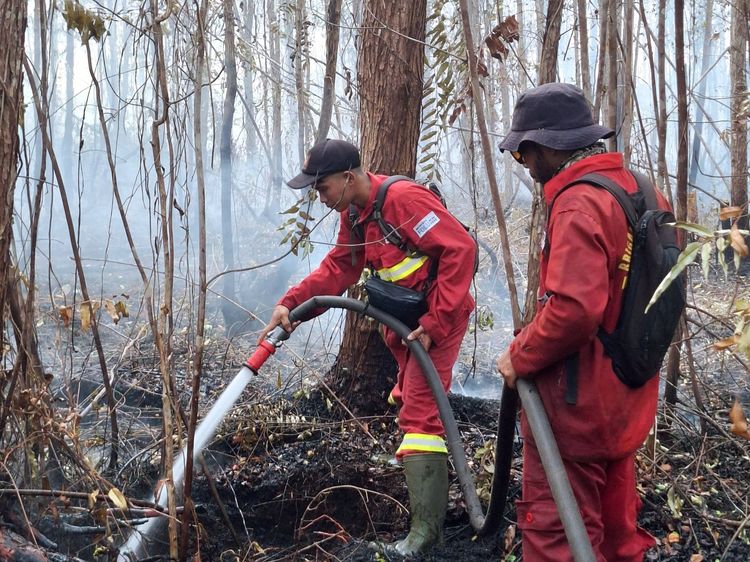


Enviro News Asia, palembang — Preventing forest and land fires in peatland ecosystems requires stronger community empowerment, proper water management and shared responsibilities among stakeholders. Education, community assistance and access to alternative livelihoods that do not involve burning are essential to encouraging greater public participation in protecting land from fire threats.
In a presentation at the National Webinar titled “Save Our Peatlands,” organized by the South Sumatra Regional Commission of the Indonesian Soil Science Association (HITI) on Thursday, October 29, 2026, Husnain highlighted the importance of maintaining peatland hydrological functions, government coordination and land managers’ responsibilities as key elements of fire prevention.
HITI Chairman Dr. Husnain emphasized the importance of community involvement and shared responsibilities among stakeholders in preventing forest and land fires in peatland ecosystems.
“Peatland fires can certainly be prevented,” Husnain said during his presentation.
He explained that communities could contribute through patrols, reporting and preparedness activities. Villages surrounding plantation areas should be involved in joint monitoring and given access to relevant information, while the government should provide guidance and conduct supervision.
For plantation managers, prevention measures include implementing zero-burning land management practices, providing water sources and firefighting equipment, and establishing early warning systems. Water management must also ensure that peatlands do not become excessively dry.
“Success should not be measured solely by the number of hectares planted, but also by the stability of water management and a reduction in fire incidents,” Husnain emphasized in his presentation on oil palm plantations on peatlands.
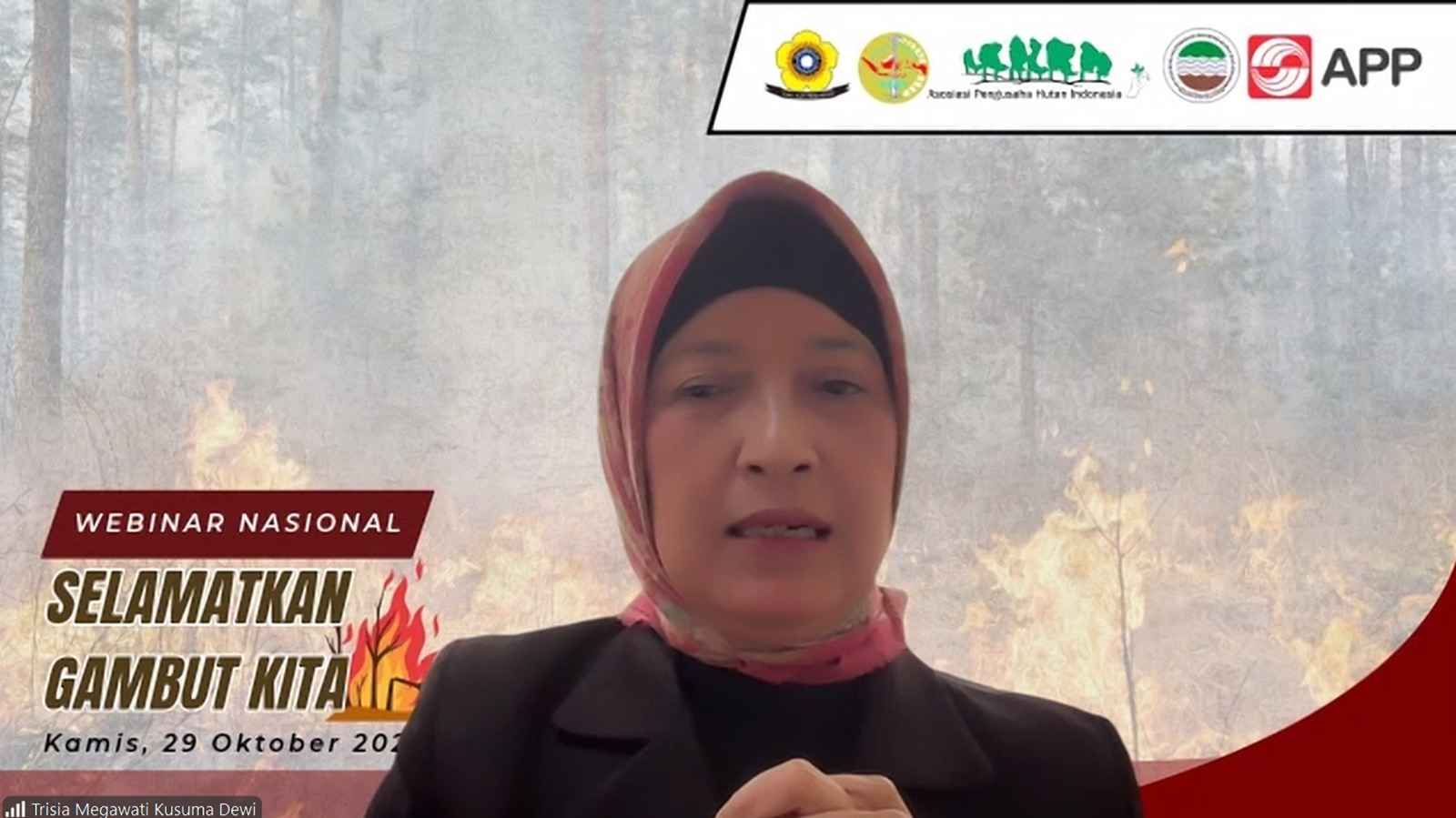
Meanwhile, environmental communication researcher at the Indonesian Forestry Entrepreneurs Association (APHI), Dr. Trisia Megawati Kusuma Dewi, highlighted the importance of community empowerment in strengthening fire prevention efforts. Her presentation focused on education, community assistance and the development of non-burning livelihoods as essential components of behavioural change at the local level.
“Fire prevention must be a year-round responsibility,” Trisia said.
According to Trisia, prevention efforts must be incorporated into planning, budgeting and community programmes before an emergency alert status is declared. Dependence on land burning should be addressed by providing accessible alternative technologies and livelihood opportunities that do not involve burning.
She also presented research on environmental communication under the Desa Makmur Peduli Alam (DMPA) programme in Sri Gading Village, Ogan Komering Ilir Regency, South Sumatra. The research found that messages communicating lower levels of threat were more effective in increasing community participation than messages conveying higher levels of threat.
The findings highlight the importance of communication strategies in fire prevention. In discussing the research implications, Trisia stressed the need for sustained community empowerment to strengthen collective norms, people’s capacity to take action and access to non-burning alternatives, enabling public awareness and intentions to translate into meaningful participation.
The village-level initiatives outlined in her presentation included strengthening community fire awareness groups, local economic institutions and integrated patrols. Community assistance was also directed towards improving access to business opportunities and strengthening economic independence.
As a follow-up measure, Trisia proposed integrating community empowerment programmes in high-risk peatland areas into work plans, budgets, partnerships and management plans. Their implementation should be planned, measurable and properly documented to ensure that fire prevention efforts continue throughout the year. (*)