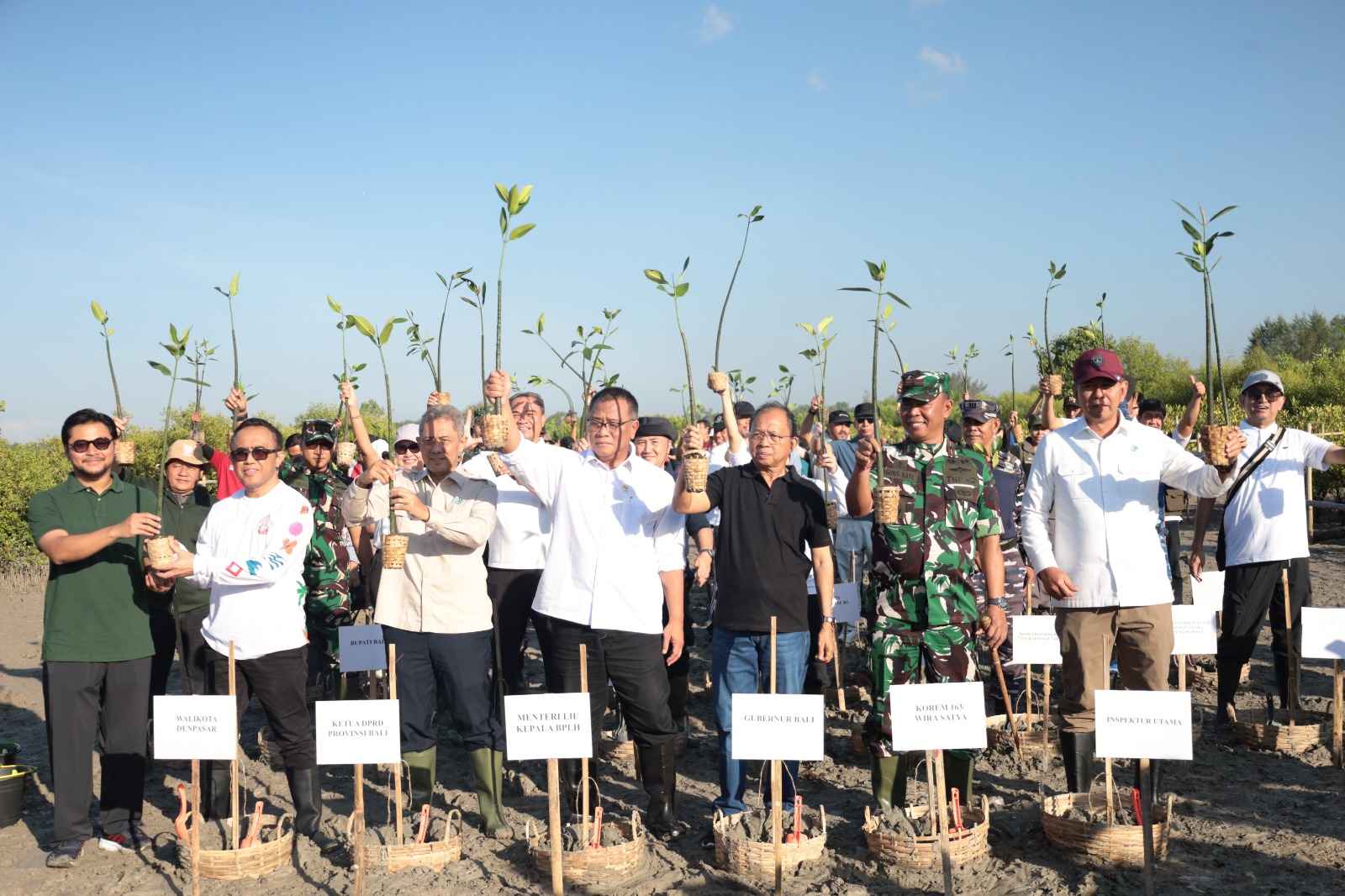
Enviro News Asia, Bogor — The Minister of Environment and Head of the Environmental Control Agency (KLH/BPLH), Hanif Faisol Nurofiq, led a collaborative tree-planting initiative in the upper Cisadane River Basin to mitigate abrasion, land degradation, and flood risks. The activity took place in Leuwiliang District, Bogor Regency, and involved the Alliance of Student Executive Boards (BEM) of the Greater Bogor area and local communities.
The initiative aimed to establish a natural “Green Belt” by planting 1,000 trees along the upstream area of the Cisadane Watershed. The government positioned the effort as a long-term ecological defense strategy to strengthen soil structure, prevent riverbank erosion, and restore the hydrological function of the upstream zone.
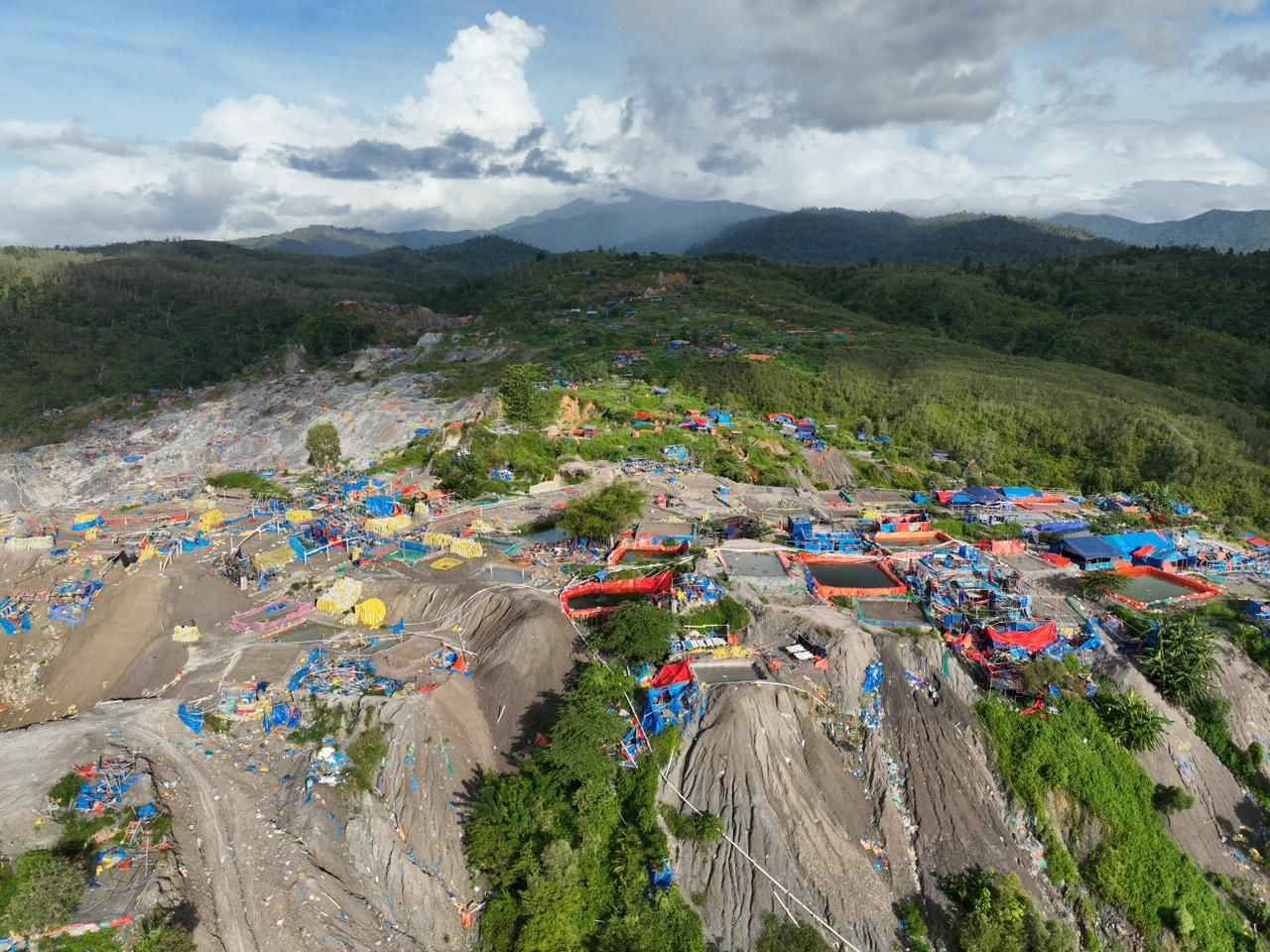
Minister Hanif stated that upstream areas serve as the first line of defense in protecting downstream regions from floods. He emphasized that the absence of strong tree roots accelerates abrasion and sedimentation, which ultimately disrupts river flow and increases flood risks. According to the minister, community and student participation reflects growing collective awareness of the critical role of water catchment protection in ensuring environmental sustainability in Bogor and surrounding areas.
During his address, Minister Hanif described tree planting as a tangible investment in public safety. He stressed that environmental protection requires continuous and consistent action, not one-off activities, because disaster mitigation through reforestation is a long-term process.
The minister also revealed alarming data on forest cover in the Cisadane River Basin. Current forest cover stands at less than 10 percent—approximately 15,000 hectares out of a total area of 152,000 hectares—placing the watershed in a critical condition and underscoring the urgency of large-scale greening efforts.
The initiative received strong support from the Coordinator of the Greater Bogor BEM Alliance, Indra Mahfuzhi, who affirmed students’ readiness to act as frontline guardians of environmental preservation. He stated that student involvement would continue to ensure the sustainability and growth of the trees planted as protective buffers for water catchment areas.
Through this program, KLH/BPLH reaffirmed its commitment to monitoring the effectiveness of the planting as part of a national effort to restore priority river basins. The collaboration between government authorities, students, and local communities highlights a shared responsibility to protect upstream ecosystems in order to safeguard downstream populations and promote long-term environmental resilience. (*)