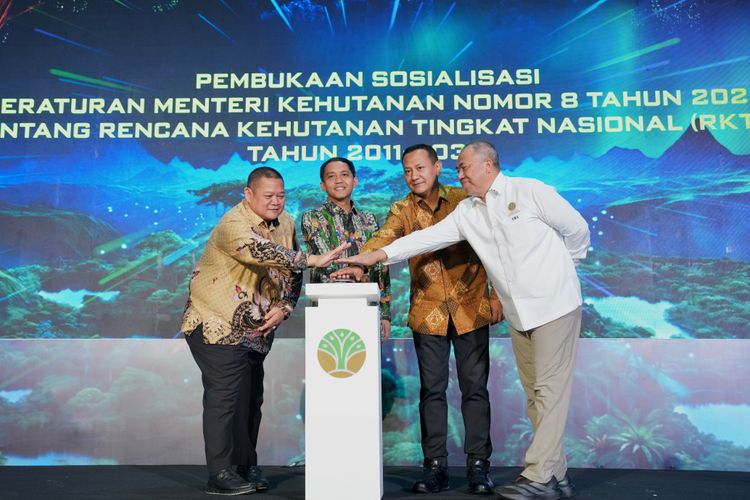
Enviro News Asia, Jakarta — Indonesia’s Ministry of Forestry has entered the implementation phase of the National Forestry Plan (RKTN) 2011–2030, calling for the alignment of forest planning and management from the national level down to provincial governments and Forest Management Units (KPH).
Indonesia’s Ministry of Forestry has entered the implementation phase of the National Forestry Plan (RKTN) 2011–2030, calling for the alignment of forest planning and management from the national level down to provincial governments and Forest Management Units (KPH).
The implementation follows the enactment of Minister of Forestry Regulation No. 8 of 2026 on April 30, after it was signed on April 21, establishing the RKTN as the country’s primary framework for forestry planning and sustainable forest management.The ministry said the implementation phase aims to translate the national policy into regional forestry plans and on-the-ground management to ensure forests contribute to environmental protection, green economic growth, and community welfare.
Forestry Minister Raja Juli Antoni emphasized that consistent implementation is essential to achieving President Prabowo Subianto’s vision of balancing economic development with ecological sustainability. He urged all stakeholders to remain committed to the plan during its implementation.
Under the new regulation, the RKTN serves as the reference for preparing Provincial Forestry Plans (RKTP), forest management plans at the operational level, indicative maps for forest utilization, business work plans, and forestry development and control programs. It also functions as a coordination framework for cross-sector activities involving forest areas.
The Ministry of Forestry has instructed forestry agencies in all 38 provinces to revise their provincial forestry plans in line with the updated RKTN, allowing national policies to be adapted to local ecological conditions, development priorities, and regional needs.
The updated RKTN introduces a more adaptive forest management approach through land-sharing and land-sparing strategies, integrating ecological, economic, and social objectives while maintaining the primary functions of forest landscapes.The plan also expands the economic role of forests beyond timber production by promoting multi-business forestry, non-timber forest products, environmental services, forest carbon, bioeconomy, circular economy initiatives, and downstream forestry industries.In addition, the RKTN strengthens support for social forestry, tenure conflict resolution, agrarian reform, community capacity building, and greater participation of micro, small and medium enterprises, youth, women, and Indigenous communities in sustainable forest management.
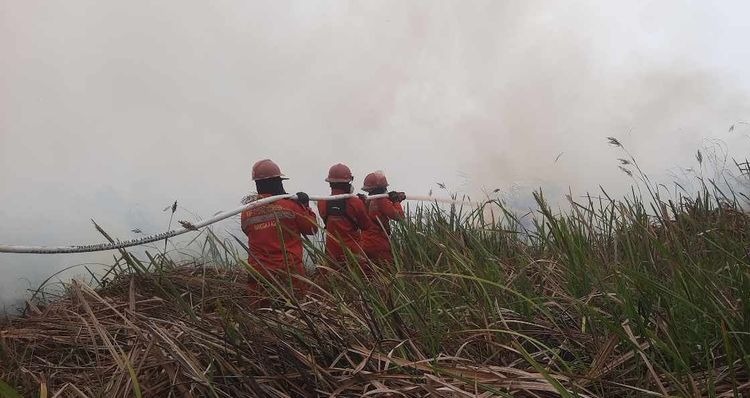
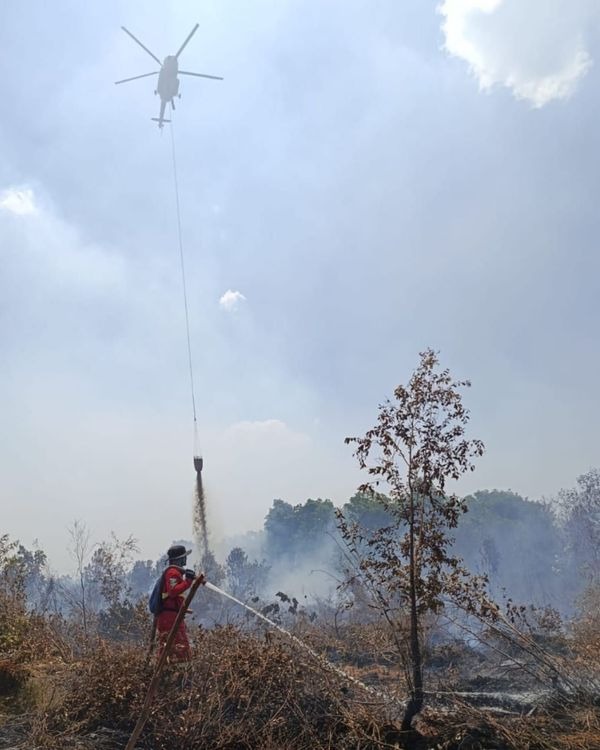
The ministry said the plan also reinforces Indonesia’s climate commitments, including the FOLU Net Sink 2030 strategy, ecosystem restoration, biodiversity conservation, forest and land fire prevention, and the development of digital forestry and spatial information systems.
Director General of Forestry Planning Ade Tri Ajikusumah said the updated RKTN was designed to address conservation priorities, economic development, community welfare, and climate change simultaneously.
The ministry will continue synchronizing national, provincial, and local forest management plans to ensure the policy delivers measurable outcomes across Indonesia’s forest landscapes.
The implementation follows the enactment of Minister of Forestry Regulation No. 8 of 2026 on April 30, after it was signed on April 21, establishing the RKTN as the country’s primary framework for forestry planning and sustainable forest management.
The ministry said the implementation phase aims to translate the national policy into regional forestry plans and on-the-ground management to ensure forests contribute to environmental protection, green economic growth, and community welfare.
Forestry Minister Raja Juli Antoni emphasized that consistent implementation is essential to achieving President Prabowo Subianto’s vision of balancing economic development with ecological sustainability. He urged all stakeholders to remain committed to the plan during its implementation.
Under the new regulation, the RKTN serves as the reference for preparing Provincial Forestry Plans (RKTP), forest management plans at the operational level, indicative maps for forest utilization, business work plans, and forestry development and control programs. It also functions as a coordination framework for cross-sector activities involving forest areas.
The Ministry of Forestry has instructed forestry agencies in all 38 provinces to revise their provincial forestry plans in line with the updated RKTN, allowing national policies to be adapted to local ecological conditions, development priorities, and regional needs.
The updated RKTN introduces a more adaptive forest management approach through land-sharing and land-sparing strategies, integrating ecological, economic, and social objectives while maintaining the primary functions of forest landscapes.
The plan also expands the economic role of forests beyond timber production by promoting multi-business forestry, non-timber forest products, environmental services, forest carbon, bioeconomy, circular economy initiatives, and downstream forestry industries.
In addition, the RKTN strengthens support for social forestry, tenure conflict resolution, agrarian reform, community capacity building, and greater participation of micro, small and medium enterprises, youth, women, and Indigenous communities in sustainable forest management.
The ministry said the plan also reinforces Indonesia’s climate commitments, including the FOLU Net Sink 2030 strategy, ecosystem restoration, biodiversity conservation, forest and land fire prevention, and the development of digital forestry and spatial information systems.
Director General of Forestry Planning Ade Tri Ajikusumah said the updated RKTN was designed to address conservation priorities, economic development, community welfare, and climate change simultaneously. The ministry will continue synchronizing national, provincial, and local forest management plans to ensure the policy delivers measurable outcomes across Indonesia’s forest landscapes. (*)