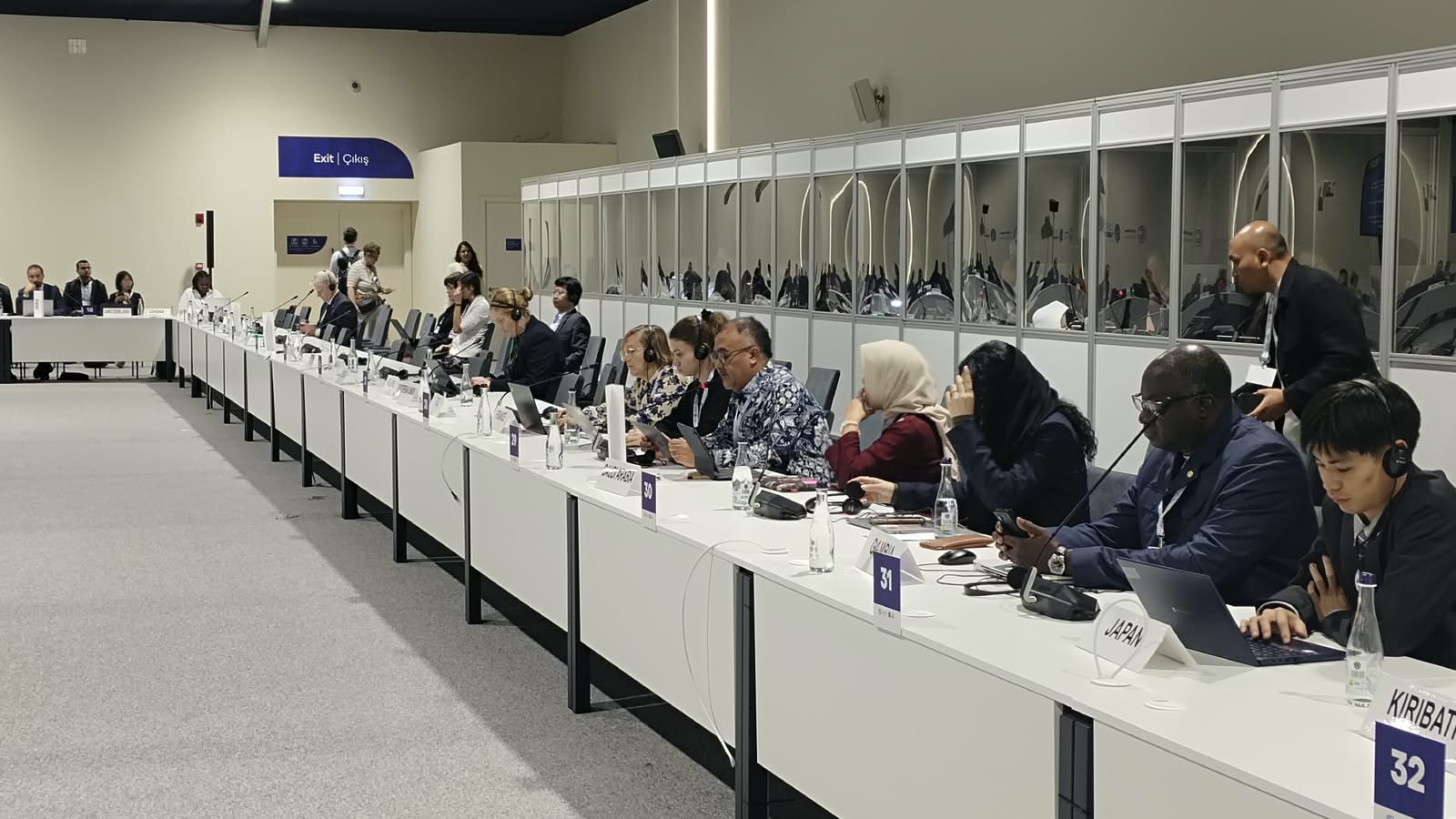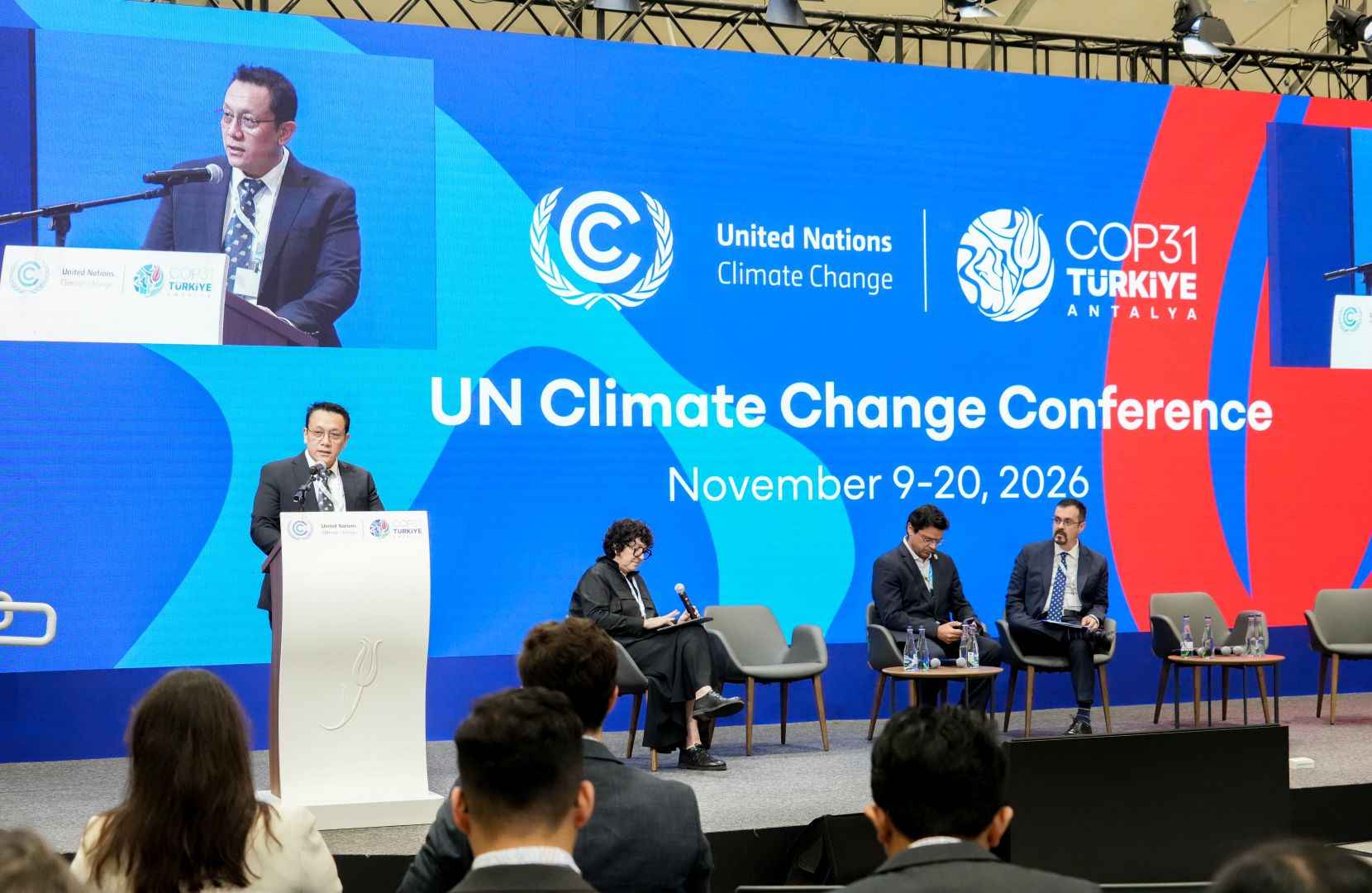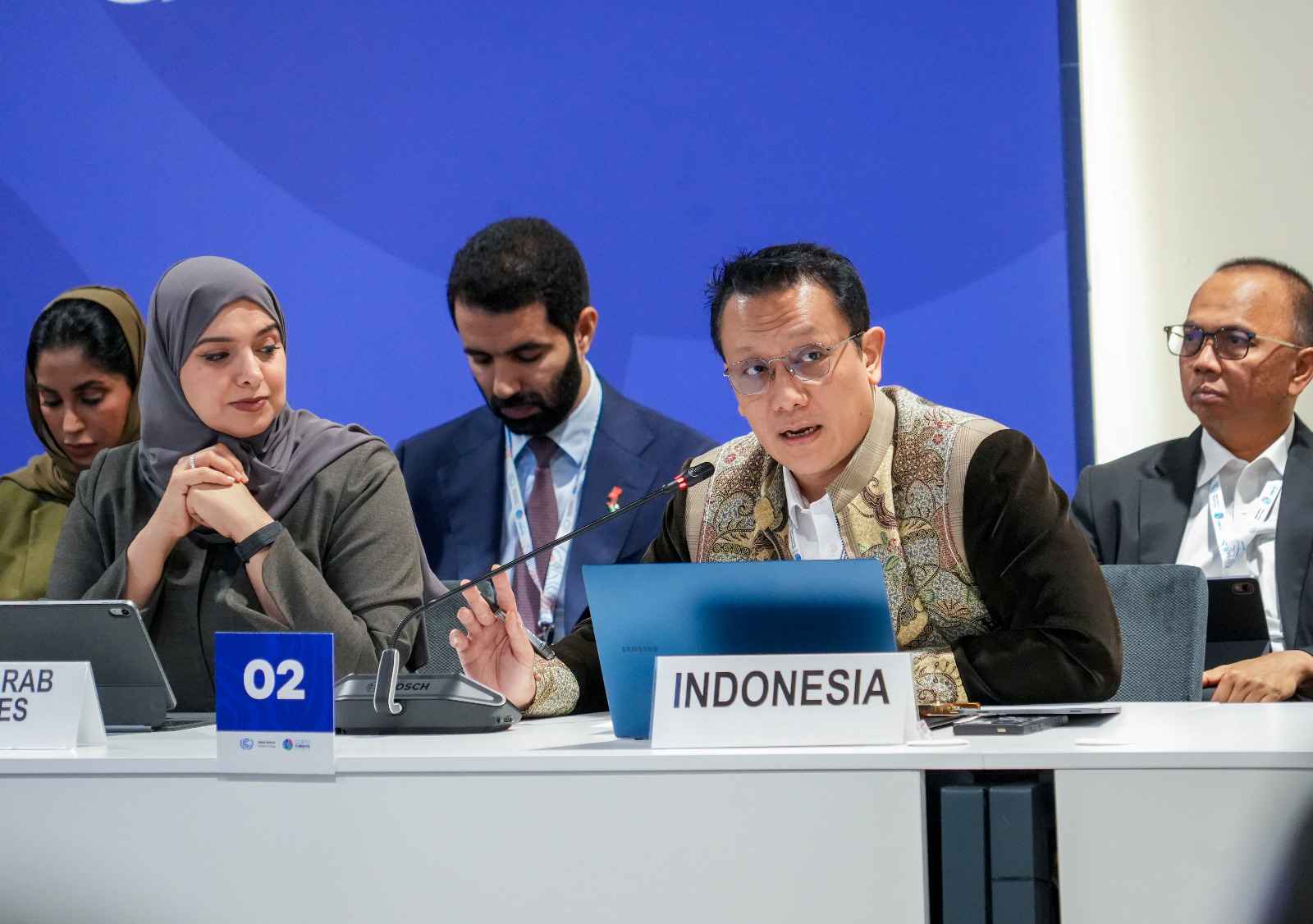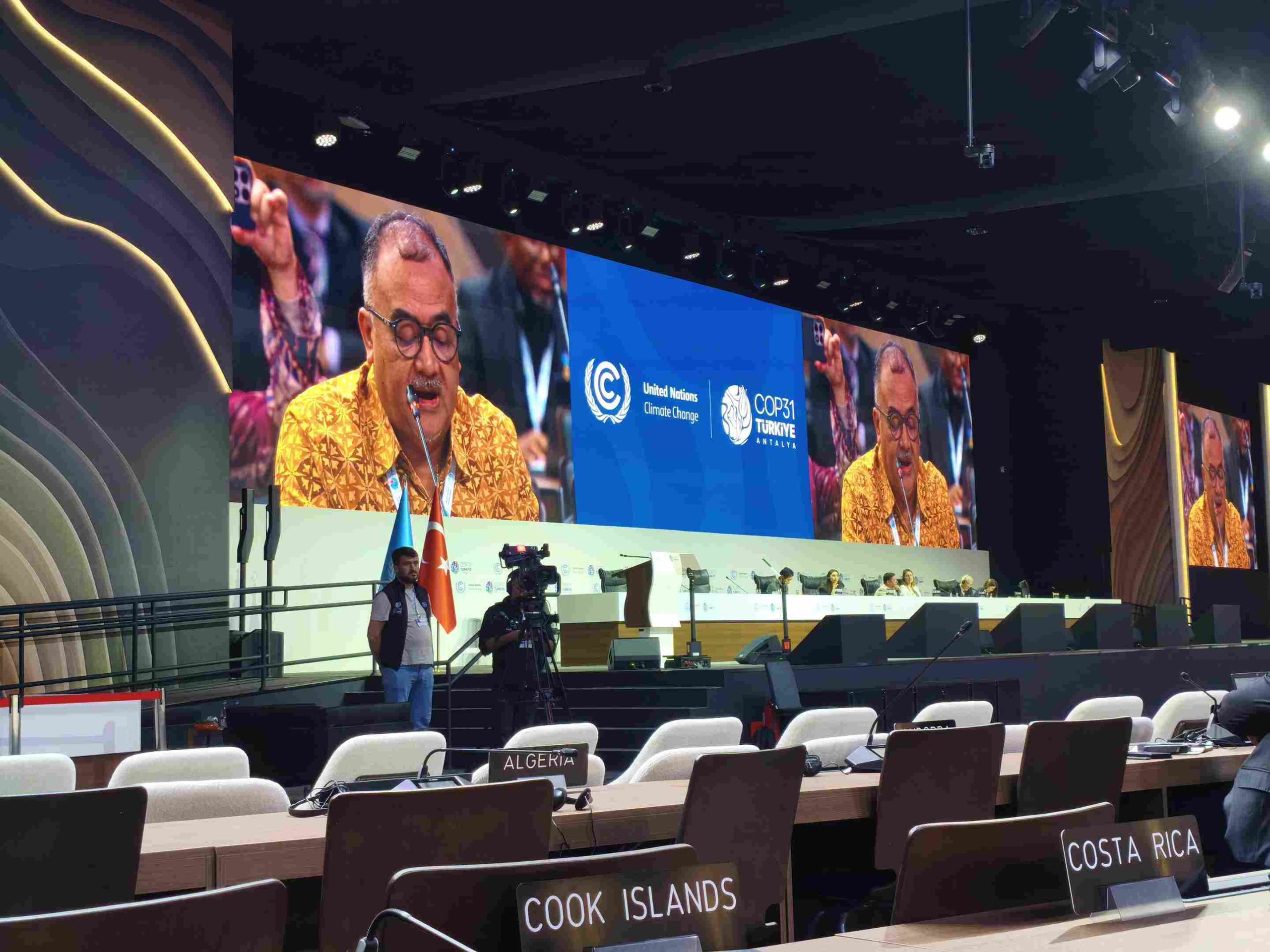
Enviro News Asia, Antalya — Indonesia has called for stronger international support through the Just Transition Mechanism (JTM) to help developing countries accelerate low-carbon development without increasing their financial burdens. The government emphasized that climate transition policies must reflect national development priorities, ensure social protection and provide adequate funding, technology transfer and capacity-building assistance.
The position was delivered by Ary Sudijanto, Deputy for Climate Change Control and Carbon Economic Value Governance at the Ministry of Environment/Environmental Control Agency (KLH/BPLH), during the Fourth Annual High-level Ministerial Roundtable on Just Transition at the 31st United Nations Climate Change Conference (COP31) in Antalya, Türkiye, on Monday (Nov. 16, 2026).
During the high-level meeting, Indonesia stressed that a just transition was essential to achieving the goals of the Paris Agreement. Its implementation, Ary said, must be based on the principles of equity and common but differentiated responsibilities and respective capabilities (CBDR-RC), while respecting each country’s national development priorities.
Ary emphasized that the JTM should be designed as a country-driven mechanism focused on practical implementation. It should facilitate concrete assistance for developing countries, including adequate access to climate finance, technology transfer and capacity-building programs.
“Just transition must address its direct impacts on workers and communities through reskilling programs, economic diversification, decent job creation and inclusive social protection for Indigenous Peoples and local communities,” Ary said.
Indonesia also highlighted the importance of complying with Article 9 of the Paris Agreement, which addresses climate finance obligations. The government called for financial support to developing countries to be provided primarily through grants and concessional financing to prevent additional debt burdens.
Three Governance Pillars Proposed by Indonesia
To ensure the JTM operates effectively and transparently, Indonesia proposed three complementary governance components under the authority of the Conference of the Parties serving as the meeting of the Parties to the Paris Agreement (CMA).
The first is a Steering Body responsible for providing policy direction. The second is a Technical and Knowledge Hub designed to deliver technical assistance and facilitate knowledge exchange. The third is an Implementation and Support Facility intended to support practical action and implementation on the ground.
Regarding coordination with the UAE Just Transition Work Programme (JTWP), Indonesia called for a clear division of responsibilities between the two initiatives.
The JTWP should serve as a platform for dialogue and the exchange of experiences among countries, while the JTM should function as an implementation instrument that translates those discussions into concrete financial and technical assistance.
Indonesia stressed that this arrangement should avoid overlapping mandates and prevent the introduction of additional reporting requirements for developing countries.
Through stronger governance arrangements and greater protection for vulnerable communities, Indonesia aims to ensure that the transition towards low-carbon development delivers tangible benefits without leaving workers and affected communities behind.
The government maintained that international cooperation, accessible climate finance and inclusive policies would be essential to ensuring that climate action advances alongside economic development and social welfare. (*)