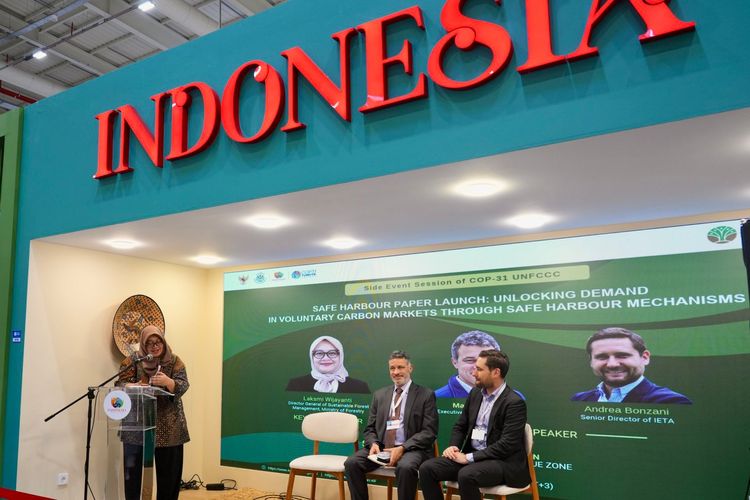
Enviro News Asia, Antalya — Indonesia is calling for stronger legal certainty and greater business confidence in high-integrity carbon trading to attract more financing for climate action.
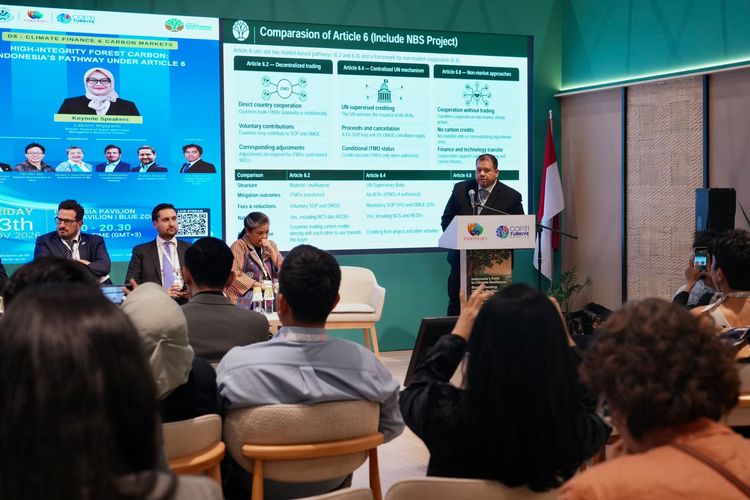
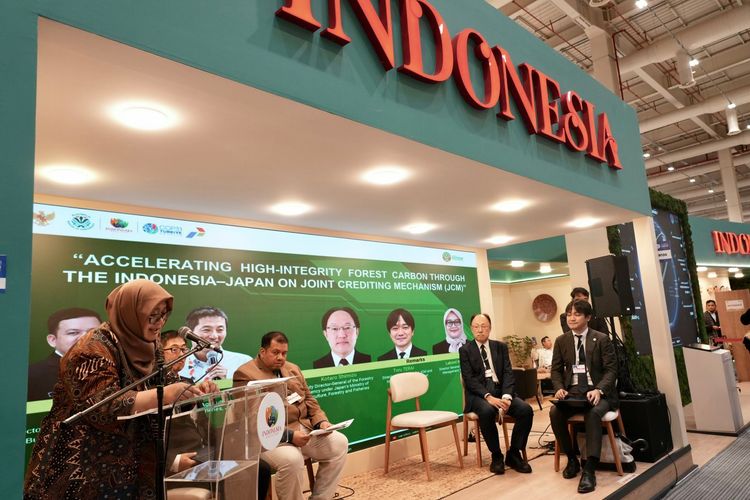
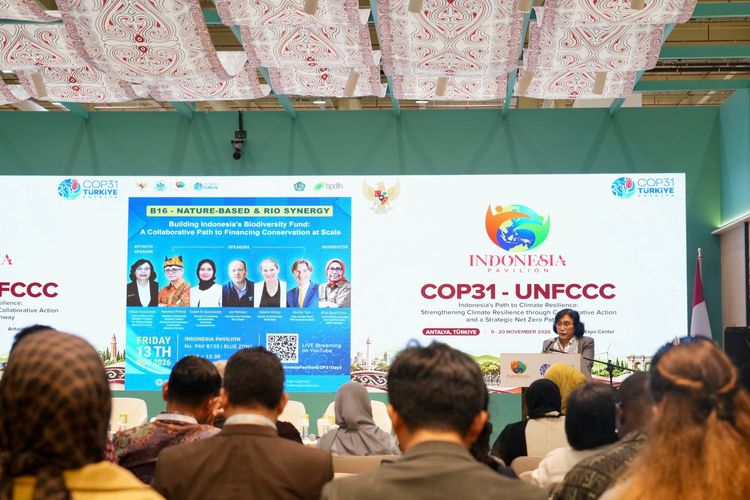
The initiative was outlined by Laksmi Wijayanti, Director General of Sustainable Forest Management at the Ministry of Forestry, during the launch of a report titled “Unlocking Demand in Voluntary Carbon Markets through Safe Harbour Mechanisms: A Recommendation to Governments” at the Indonesian Pavilion during the 31st United Nations Climate Change Conference (COP31) in Antalya, Türkiye, on Nov. 14, 2026.
Developed by the International Emissions Trading Association (IETA) and the Coalition to Grow Carbon Markets, the report introduces a safe harbour approach. The mechanism provides conditional legal protection for companies that use high-quality carbon credits and make responsible climate claims.
The approach aims to reduce legal uncertainty and reputational risks, which have become significant barriers to increasing demand for carbon credits.
Laksmi welcomed the initiative, saying carbon markets had considerable potential to mobilize private financing for climate action. However, she stressed that market growth required more than an adequate supply of carbon credits.
“Carbon markets have enormous potential to mobilize private financing for climate action. However, their growth requires more than just an adequate supply of carbon credits. Buyer confidence, legal certainty, and trust in the environmental integrity of carbon credits and the credibility of corporate climate claims are essential,” she said.
Laksmi noted that companies increasingly face legal and reputational risks when purchasing carbon credits and communicating their use as part of climate action. Such uncertainty can discourage investment, including in high-quality carbon projects that meet environmental requirements.
Under the safe harbour approach, governments could consider establishing conditional legal protection based on clearly defined criteria, including carbon credit integrity standards and the accuracy of corporate environmental claims.
The report recommends government guidelines, recognized labelling or certification systems, and stronger legal frameworks to provide greater certainty for market participants. However, such protection would not exempt companies from legal responsibilities or provide an absolute guarantee of carbon credit quality.
For Indonesia, strengthening the legal framework for carbon markets must go hand in hand with environmental and social standards.
Laksmi emphasized that carbon credit eligibility should also consider compliance with the regulations of the country where projects originate, including land rights, biodiversity protection, environmental and social safeguards, and benefit-sharing mechanisms for local communities.
“These requirements are particularly important in the forestry sector, because carbon activities are closely linked to forest governance, local communities, Indigenous peoples and the long-term protection of ecosystems,” she said.
Indonesia is continuing to strengthen the legal and governance framework for carbon trading, including by developing safe harbour approaches, more standardized contracts and dispute resolution mechanisms.
These measures are expected to improve transaction certainty while ensuring that carbon market development remains aligned with national policies and Indonesia’s climate commitments.
The report launch involved the Coalition to Grow Carbon Markets, IETA, government representatives and international carbon market participants. It presents recommendations for governments to strengthen business confidence in high-integrity carbon credits while addressing legal and reputational risks through transparent and responsible policies.
Laksmi said Indonesia aimed to develop a competitive and trusted forest carbon market capable of attracting responsible investment, supporting national climate commitments, protecting biodiversity and ensuring fair benefits for local communities. (*)