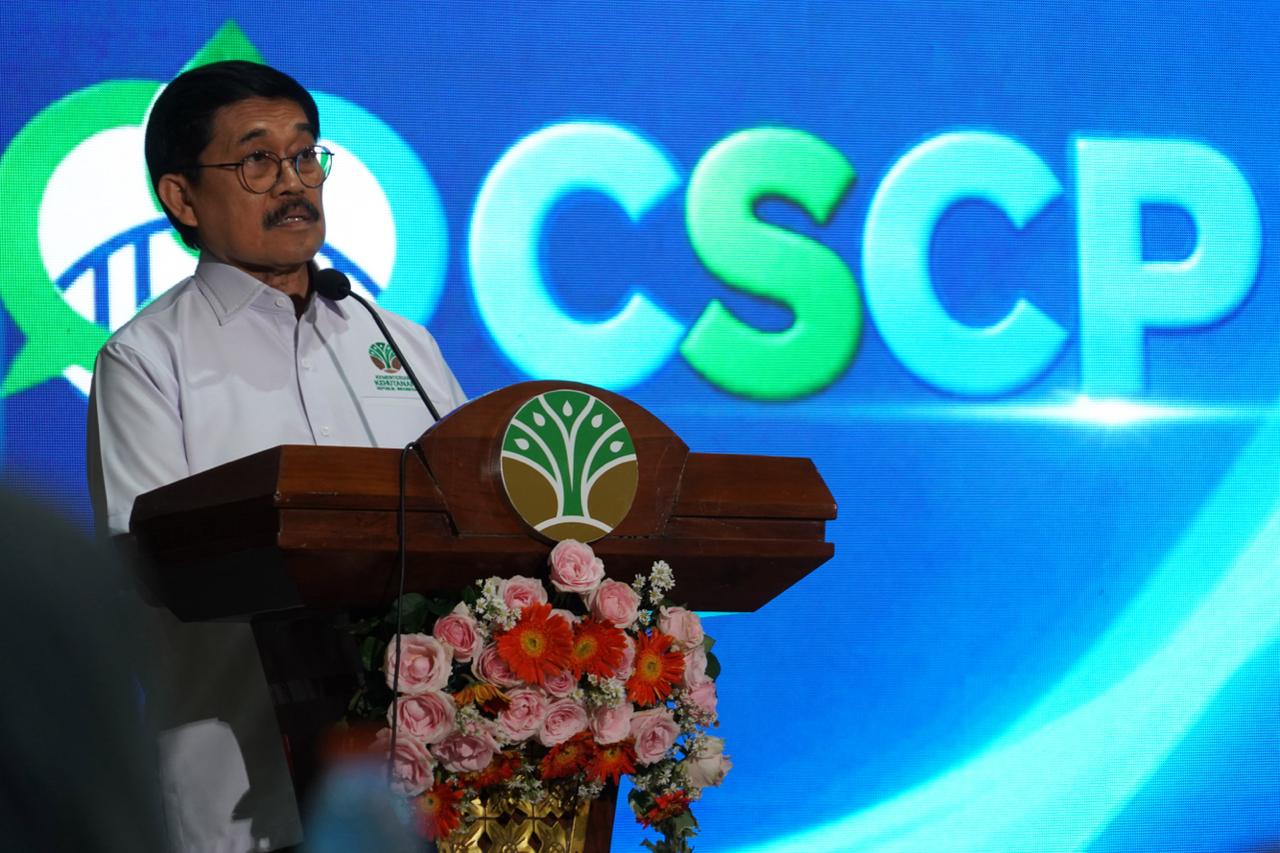


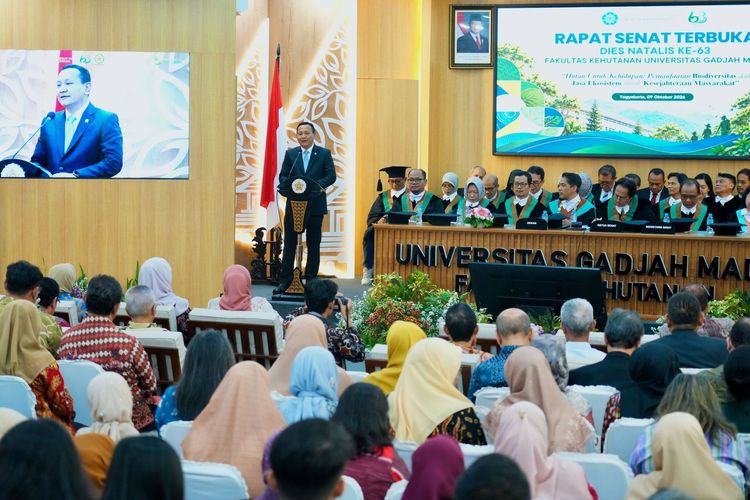
Enviro News Asia, Yogyakarta — Indonesia is seeking to transform its forestry sector by expanding the economic value of biodiversity, ecosystem services and carbon trading to improve community welfare while protecting forests, Deputy Minister of Forestry Rohmat Marzuki said on Friday.
Speaking at the 63rd anniversary of Universitas Gadjah Mada’s Faculty of Forestry in Yogyakarta on Oct. 9, Rohmat called for a shift from a timber-centered model toward a diversified forest economy that generates measurable economic benefits without compromising environmental sustainability.
“Our task is not merely to protect forests. We must ensure that the value of sustainable forests is visible, measurable and rewarded, while improving the welfare of surrounding communities,” Rohmat said.
He argued that forests would be better protected when sustainable management generated greater economic returns than deforestation or land conversion. This approach would integrate timber and non-timber forest products with biodiversity conservation, ecosystem services and carbon storage.
Carbon trading is among the government’s priorities in this transformation. Forests, peatlands and mangroves play a critical role in absorbing and storing carbon while maintaining ecological functions that support communities and help mitigate climate change.
The government is strengthening the regulatory framework for forest-sector carbon trading through Presidential Regulation No. 110/2025 on the implementation of carbon economic value instruments and greenhouse gas emission control, followed by Forestry Ministerial Regulation No. 6/2026 on procedures for forest-sector carbon trading.
The framework provides opportunities for private companies, social forestry business groups, community forest farmers and Indigenous communities to participate in voluntary carbon markets, subject to applicable requirements.
According to the Forestry Ministry, the minister has approved carbon units meeting the requirements for international carbon certification under mechanisms outside Indonesia’s Greenhouse Gas Emission Reduction Certificate scheme, covering more than 31.7 million tonnes of carbon dioxide equivalent (CO₂e). The approved portfolio comprises three carbon units under forest utilisation business permits and one social forestry unit involving a village forest in Jambi province, where more than 900 households are involved.
Rohmat said carbon finance could help fund forest protection, restoration and sustainable management, provided that strong governance and environmental integrity were maintained.
Beyond carbon markets, Indonesia could unlock greater economic value from its extensive biodiversity through non-timber forest products, essential oils, honey, medicinal plants, agroforestry, ecotourism, bioprospecting and other ecosystem services.
Such activities, he said, could diversify income sources for communities living near forest areas while ensuring that economic development remained compatible with ecosystem protection. Timber production would remain part of the sector, but would be managed alongside other sustainable sources of value.
Rohmat also called for stronger collaboration between the government, universities and other stakeholders to accelerate the adoption of nature-based solutions supported by science and technology.
He praised the Faculty of Forestry at UGM for its contributions to forest and land rehabilitation at Wanagama, agroforestry development, social forestry management, intensive silviculture, drone-assisted forest rehabilitation and bioacoustic technology to detect elephants.
The collaboration, he said, would help translate research and technological innovation into practical solutions for forest management, strengthening Indonesia’s green economy while ensuring that the benefits of sustainable natural resource management reach local communities. (*)