


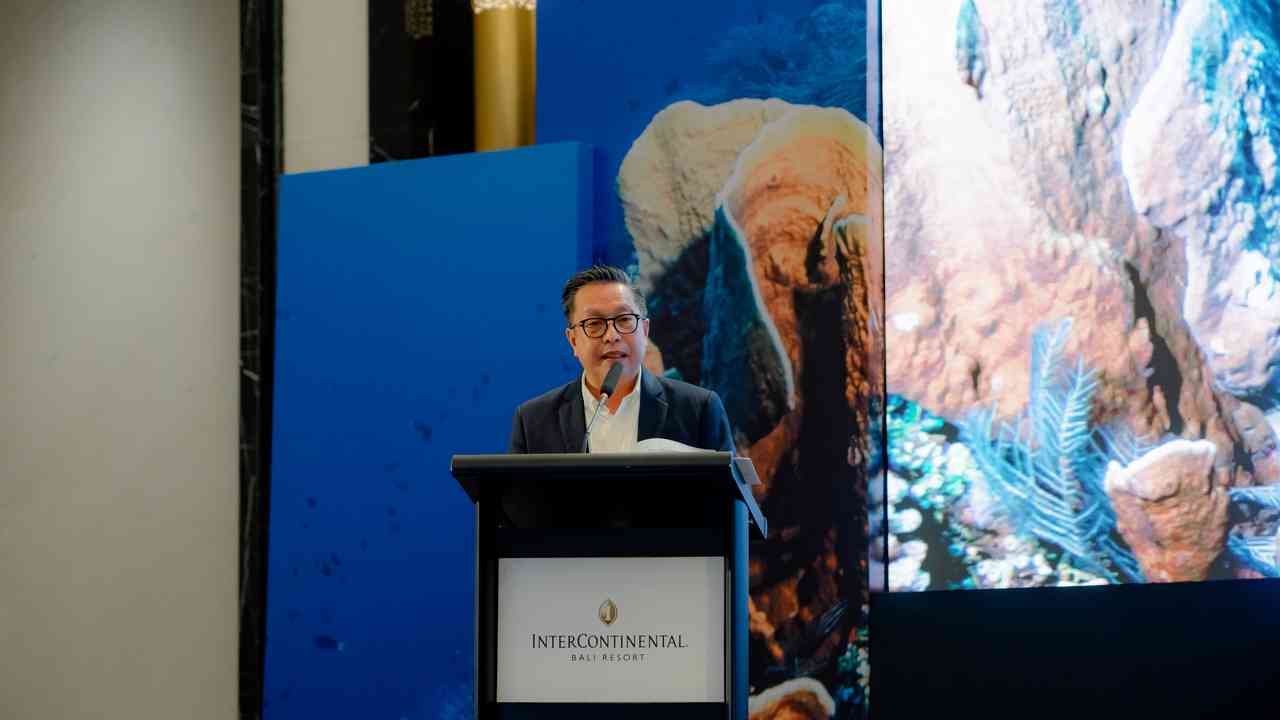
Enviro News Asia, Bali — The Ministry of Environment and Environmental Control Agency of Indonesia (KLH/BPLH) reaffirmed the implementation of the blue economy as a core national strategy to safeguard marine ecosystems while strengthening economic resilience amid climate change challenges. The commitment was delivered during the Bali Ocean Days (BOD) 2026 Conference and Showcase held at the InterContinental Hotel Jimbaran, Bali, on 31 January 2026.
The forum brought together policymakers, academics, and business stakeholders to address growing threats of marine pollution and coastal environmental degradation. Representing the Minister of Environment and Head of BPLH, Deputy for Pollution and Environmental Damage Control Rasio Ridho Sani emphasized Indonesia’s strategic advantage as a maritime nation with more than 95,000 kilometers of coastline and over 17,000 islands.
Indonesia hosts approximately 3.44 million hectares of mangroves and 2.5 million hectares of coral reefs, positioning the country as the holder of around 70 percent of the world’s blue carbon reserves. However, Rasio noted that these assets face mounting pressure, with an estimated 30–40 percent of national coral reefs currently damaged and nearly 195,000 hectares of mangroves lost over the past decade.
Environmental degradation has directly affected key economic sectors, including marine tourism, which plays a vital role in regional economies such as Bali. Rising sea levels and transboundary plastic pollution have intensified risks to coastal ecosystems, prompting KLH to adopt four main policy directions. These include accelerating ecosystem restoration, strengthening pollution control through the Extended Producer Responsibility (EPR) scheme, and enhancing science-based marine data to support credible and adaptive policymaking.
Rasio underlined that mangroves, seagrass meadows, and coral reefs function not only as ecological buffers but also as economic pillars that support sustainable fisheries, marine tourism, and blue carbon storage. Collaborative mitigation efforts have begun to show tangible results. In Bali, cooperation among government agencies, local communities, and the private sector succeeded in collecting and managing 1,274 tons of marine waste between January and February 2025.
Bali Ocean Days 2026 also reinforced Indonesia’s role in regional and global marine cooperation, engaging platforms such as ASEAN, SEA-MaP, PEMSEA, COBSEA, and the Global Fund for Coral Reefs. Through this forum, KLH reiterated its commitment to ensuring that the transition toward a blue economy aligns environmental conservation with inclusive economic growth and long-term coastal resilience. (*)


