

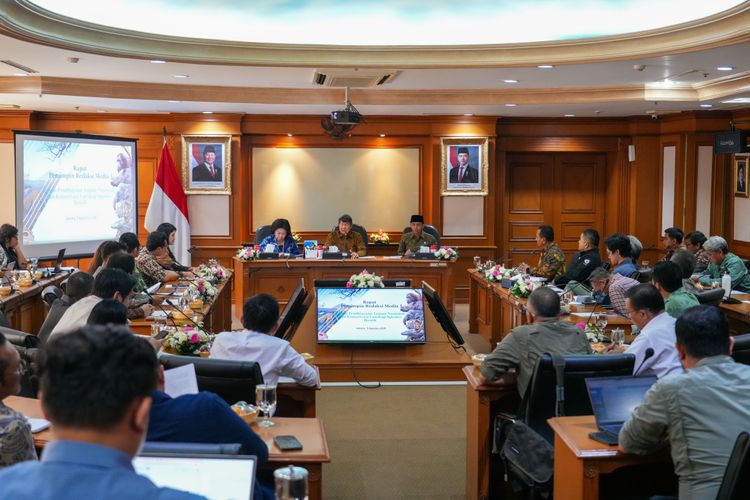
Enviro News Asia, Jakarta – Indonesia’s National Park and Iconic Species Conservation Financing Innovation Task Force has strengthened efforts to develop sustainable conservation financing by engaging national media leaders in a dialogue on innovative funding mechanisms for protected areas and biodiversity conservation.
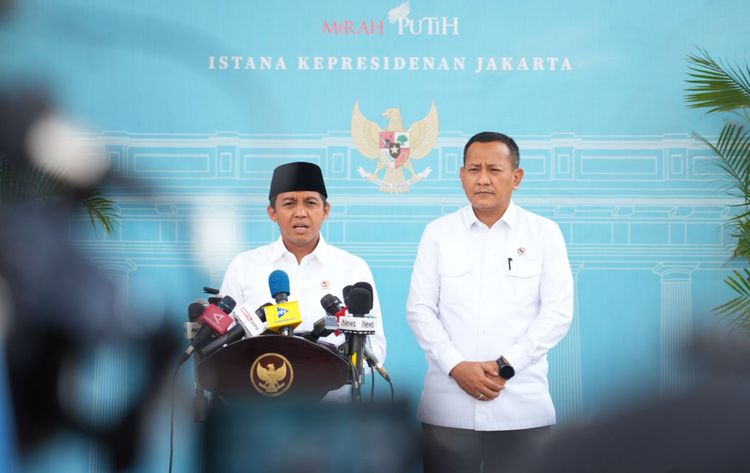
The discussion, held at the Ministry of Forestry on August 5, brought together Task Force Chairman Hashim Djojohadikusumo, Minister of Forestry Raja Juli Antoni, who serves as Deputy Chair for Regulatory Affairs, and Mari Elka Pangestu, Deputy Chair for Investment. The meeting aimed to update media representatives on the Task Force’s progress while gathering input to improve public communication on national park management and iconic species protection.
The dialogue focused on expanding sustainable financing mechanisms for conservation, including carbon markets, Public Service Agency (BLU) financing, payment for ecosystem services, philanthropy, results-based financing, private investment, and innovative financial instruments such as species bonds. Participants also discussed community participation, governance, and long-term conservation strategies.
Hashim Djojohadikusumo emphasized that conservation should be viewed as a long-term investment in Indonesia’s future rather than solely as an environmental obligation. He said sustainable financing is essential to protect ecosystems while generating equitable benefits for communities living around conservation areas.
Minister Raja Juli Antoni highlighted that Indonesia’s 57 national parks, covering approximately 27 million hectares, represent strategic national assets that require innovative management approaches. He said the Task Force, established under Presidential Decree No. 8 of 2026, has been mandated to revitalize 13 priority national parks and two iconic species conservation landscapes through collaboration with universities, non-governmental organizations, and conservation partners.
Mari Elka Pangestu noted that current funding meets only about 26 percent of the ideal financial requirements for managing Indonesia’s national parks. She said diversified financing sources are therefore necessary to ensure long-term conservation while safeguarding ecosystem services such as clean water, biodiversity, and climate regulation.
As an initial phase, the Task Force has identified 13 priority national parks based on ecosystem representation, biodiversity significance, carbon value, iconic species, and community participation. These include Bromo Tengger Semeru, Gunung Rinjani, Lorentz, Wakatobi, Komodo, Tanjung Puting, Ujung Kulon, Way Kambas, Sebangau, Gunung Leuser, Manusela, Mutis Timau, and Mamberamo Foja. Each park will adopt financing models tailored to its ecological characteristics, conservation priorities, and local socio-economic conditions.
During the discussion, media leaders raised questions regarding governance, community involvement, prevention of commercialization, pressures from plantation and mining activities, and the long-term sustainability of the Task Force. Government officials stressed that innovative financing is intended to strengthen conservation rather than commercialize national parks.
Raja Juli Antoni reaffirmed that carbon trading is not the ultimate objective of conservation policy but rather a tool to protect forests, enhance biodiversity, and improve community welfare. He also underscored the principle of “ecology before tourism,” stating that the success of national parks should be measured by the health of their ecosystems rather than visitor numbers.
The Ministry of Forestry said continued collaboration with the media will play an important role in improving public understanding of conservation financing and supporting Indonesia’s long-term biodiversity and sustainable forest management goals. (*)