


Enviro News Asia, Washington DC — Indonesia is strengthening its position as a supplier of legal and sustainable timber products to the United States through expanded cooperation in forestry trade, legality verification, and sustainable supply chain governance.
The commitment was highlighted during an international webinar titled Navigating U.S. Market Access for Indonesian Forest Products: Trade, Legality, and Sustainability, held in Washington DC on Thursday, May 14, 2026. The event was organized by Indonesia’s Ministry of Forestry in collaboration with the Indonesian Embassy in Washington DC, the Indonesian Forest Concession Holders Association (APHI), and the Indonesian Forestry Community Communication Forum (FKMPI).
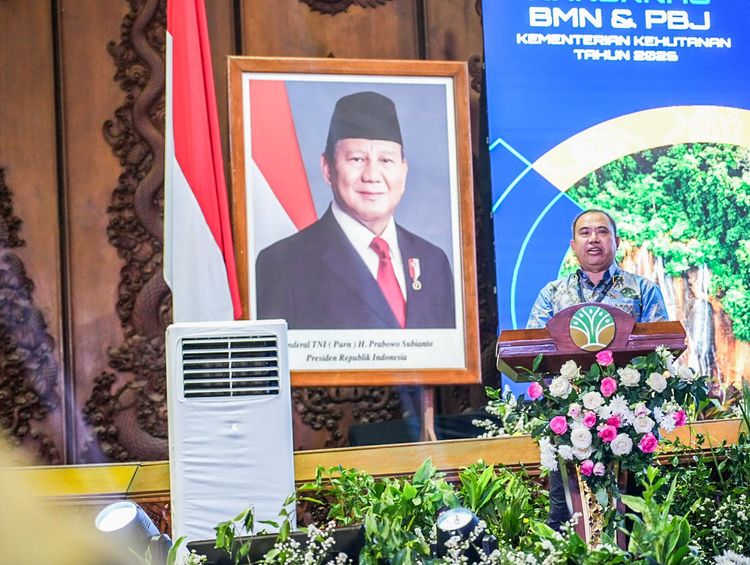
Minister of Forestry Raja Juli Antoni stated that Indonesia and the United States have maintained forestry trade relations for more than three decades based on trust, quality, and commitment to sustainable forest management.
“Indonesian plywood entering the United States does not come from illegally managed forests. Our products are certified, traceable, and verified through the SVLK+ system, which is among the most comprehensive legality verification systems in the world,” Raja Juli Antoni said during his keynote speech.
He explained that more than 70 percent of Indonesia’s plywood exports to the United States already carry FSC certification and Indonesia’s Timber Legality and Sustainability Verification System (SVLK+). The Minister also encouraged diversification of Indonesian forestry products in the U.S. market beyond plywood and dipterocarp timber species, citing opportunities in construction materials, furniture, and recreational vehicle (RV) industries.
Meanwhile, Indonesian Ambassador to the United States Indroyono Soesilo emphasized that bilateral trade relations between the two countries continue to strengthen, with forestry remaining one of the key sectors supporting economic cooperation.
According to Indroyono, U.S. demand for competitive, transparent, and sustainable forest products continues to grow, creating wider opportunities for Indonesian producers to expand their market share.
Trade relations between Indonesia and the United States surpassed USD 40 billion in 2025. In the forestry sector, Indonesia’s plywood exports to the U.S. reached approximately USD 450 million in 2024, while pulp and paper exports totaled around USD 1.6 billion and furniture exports reached USD 1.4 billion.
The U.S. recreational vehicle industry alone reportedly consumes around 500 meranti trees from Indonesia every day. At the same time, new opportunities are emerging from carbon markets, with Indonesia preparing to trade 96 million tons of carbon certificates starting in July 2026. An additional 16 Forest & Other Land Uses (FOLU) carbon certification projects are currently being processed by Verra, the Washington DC-based carbon certification body.
Director General of Sustainable Forest Management at the Ministry of Forestry, Laksmi Wijayanti, stated that the SVLK+ system continues to evolve in response to global regulations such as the U.S. Lacey Act and the European Union Deforestation Regulation (EUDR).
“SVLK+ integrates legality, sustainability, traceability, and independent verification into a national system that supports transparent forestry supply chains,” Laksmi said.
She added that Indonesia has strengthened forest governance through multisector supervision, digitalization, satellite-based monitoring, and geolocation and QR code traceability systems.
During the webinar, Chief Executive Officer of the Washington DC-based International Wood Products Association, Ashley Amidon, also explained several U.S. trade regulations affecting Indonesia’s timber industry. She discussed strategies for complying with Section 301 trade regulations to avoid higher tariffs on Indonesian timber products and highlighted the importance of meeting Lacey Act requirements to ensure timber legality.
Amidon also addressed Section 232 provisions that could potentially impose higher import duties on Indonesian wood products, affecting prices in the U.S. market. She provided several recommendations and strategic steps to strengthen Indonesia’s competitiveness and compliance in the American market.
The Washington DC forum is expected to be followed by concrete programs aimed at significantly increasing Indonesian timber product exports to the United States. (*)