

Enviro News Asia, Jakarta — Indonesia must demonstrate measurable progress in implementing domestic climate policies to strengthen its credibility at the 31st United Nations Climate Change Conference (COP31), the Institute for Essential Services Reform (IESR) said ahead of the November 9–20 summit in Antalya, Türkiye.
The energy policy think tank warned on Nov. 4 that Indonesia’s climate commitments need to be supported by stronger action, particularly in the energy and industrial sectors. Climate Action Tracker (CAT) continues to rate Indonesia’s climate action as “Critically Insufficient” to align with the Paris Agreement’s 1.5°C temperature limit.
Outside forestry and land use, Indonesia’s emissions continue to rise and are projected to increase towards 2030. The country’s 2035 emissions targets, both those based on domestic capacity and those dependent on international support, also remain far from the reductions required to meet global climate goals, according to the analysis.
The gap between commitments and implementation reflects a wider challenge identified in the first Global Stocktake (GST), adopted at COP28 in December 2023. The assessment found that global efforts remain insufficient to achieve the Paris Agreement’s objectives, while the time available to prevent more severe climate impacts is narrowing.
IESR said Indonesia should accelerate climate policies by tripling renewable energy capacity, doubling the rate of energy efficiency improvements by 2030 and reducing non-carbon dioxide emissions, including methane.
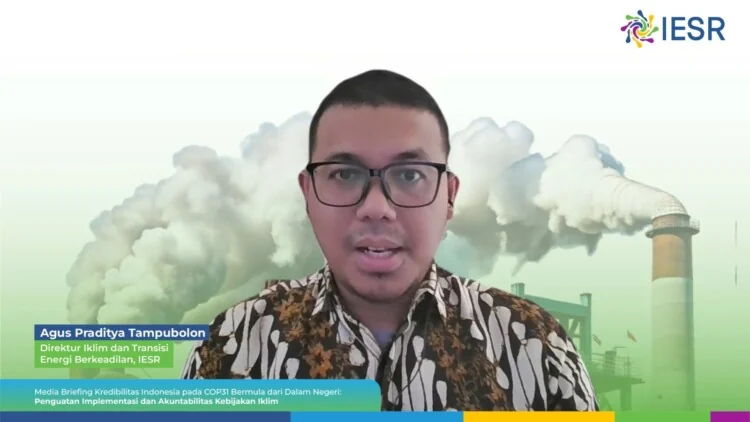
“An important COP31 agenda is accelerating the electrification of final energy consumption. This is particularly relevant for Indonesia, where recurring fuel supply disruptions and shortages highlight the dependence of households and economic activities on fossil fuels,” said Agus Praditya Tampubolon, IESR’s Climate and Just Energy Transition Programme Director.
A gradual shift to electricity in transport, households and industry could reduce the impact of fuel supply disruptions, provided that additional electricity demand is met by renewable energy, he said.
Agus called on the government to establish a clear electrification roadmap, identify sectors that could transition to electricity more quickly, and ensure adequate grid infrastructure and clean power supplies.
To support electrification, IESR also urged the government to accelerate its 100-gigawatt-peak solar power programme. The initiative could include large-scale solar power plants, rooftop installations for industrial facilities and buildings, and clean electricity supplies for data centres and industrial estates.
However, achieving the target will require consistent policies, stronger transmission and distribution networks, and technically and commercially viable projects capable of attracting investment.
IESR also described the energy transition as an increasingly important component of national energy security and fiscal resilience amid global supply uncertainties and volatile energy prices.
“High dependence on fossil fuels makes Indonesia more vulnerable to supply disruptions and energy price fluctuations. It can also place additional pressure on the state budget when the government seeks to maintain affordable energy prices,” Agus said.
Accelerating renewable energy, electrification, energy efficiency and electricity grid development could reduce those vulnerabilities and strengthen the resilience of the national energy system, he added.
Beyond the energy transition, Indonesia’s emissions reduction efforts must also include forest and biodiversity protection, according to the Indonesian Centre for Environmental Law (ICEL).
ICEL warned that rising temperatures, drought and forest degradation can alter habitats and accelerate biodiversity loss. Healthy forests, peatlands and mangroves play an important role in storing carbon while strengthening resilience to climate change.
“Forests are essential for carbon storage, ecosystem support and sustaining communities. Nature-based solutions are therefore crucial to ensuring integrated implementation of climate and biodiversity action,” said Decmonth Nuel Pasaribu, a researcher in ICEL’s Forestry and Biodiversity Division.
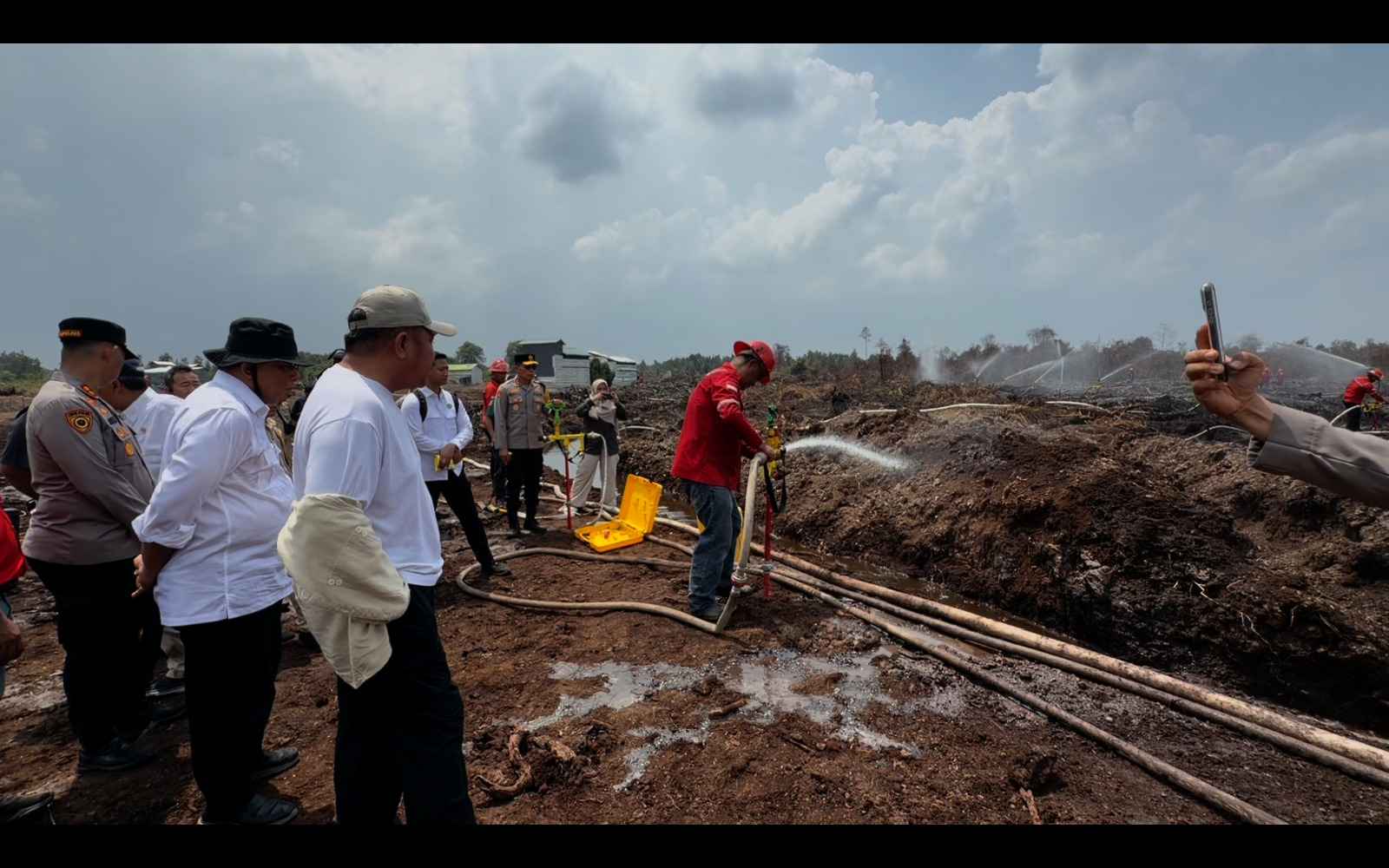
IESR also stressed the need for stronger accountability in climate policies covering forestry and land use. Forest and land fires, it said, should be addressed not only through emergency response but also through prevention, monitoring, law enforcement and emissions control.
The organisation outlined several priorities for Indonesia ahead of and during COP31. These include developing an electrification roadmap towards a 35 percent target by 2035, expanding electricity access in remote, frontier and outermost regions, electrifying industrial heating processes and accelerating electric transport.
Other priorities include strengthening the commitment to cut methane emissions by 30 percent by 2030, preparing climate finance projects ready for funding, and advancing a Just Transition Mechanism through the 64th sessions of the UNFCCC subsidiary bodies (SB64).
IESR also called for the second Global Stocktake (GST2) process to assess the gap between climate commitments and policy implementation. Its findings should provide a basis for strengthening Indonesia’s future climate targets and actions. (*)