Enviro News Asia, Jakarta — Raja Juli Antoni has called for the acceleration of Multi-Business Forestry (MUK) implementation as part of Indonesia’s strategy to build a productive, sustainable, and investment-oriented forest economy that also improves community welfare.
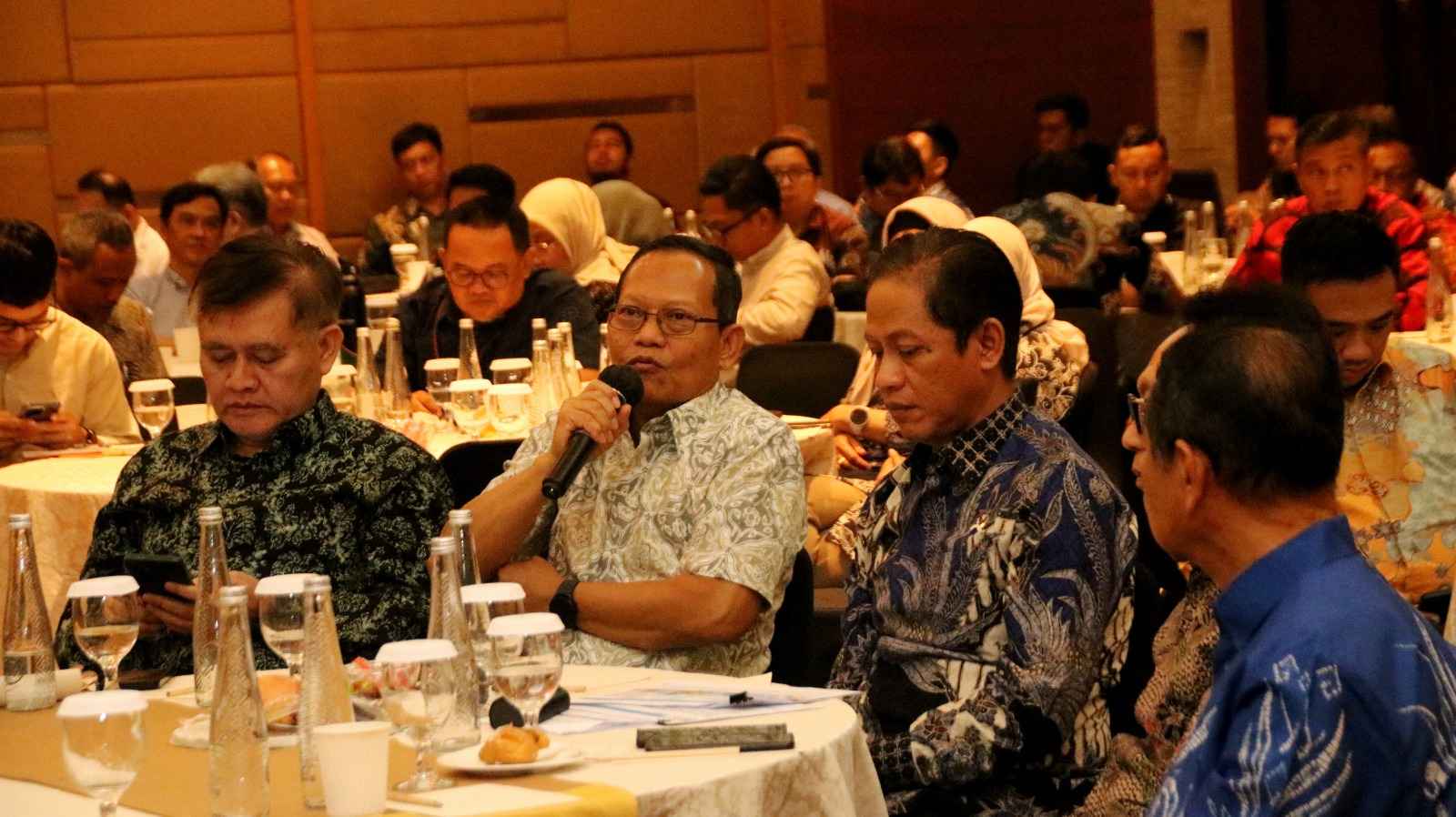
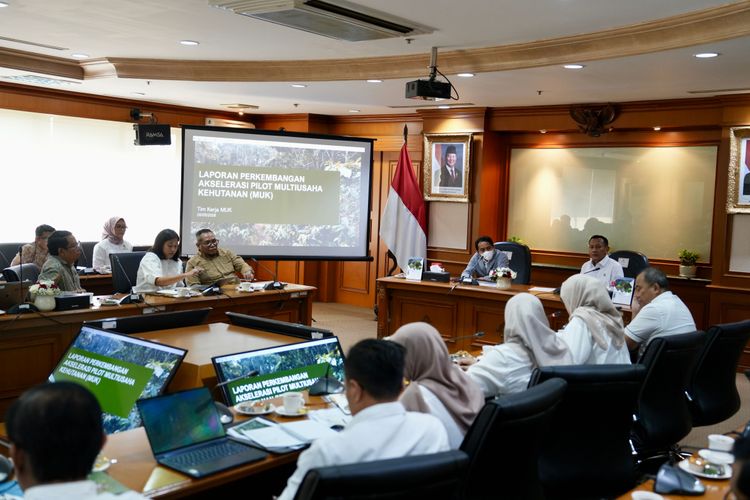
The directive was delivered during a meeting with Deputy Forestry Minister Rohmat Marzuki and the Forestry Multi-Business Acceleration Task Force in Jakarta on Tuesday (26/5).
The task force, led by Senior Advisor to the Minister of Forestry Silverius Oscar Unggul, presented progress on the development of pilot Multi-Business Forestry projects designed to integrate ecological sustainability, economic productivity, social inclusion, and market access within forest management practices.
During the meeting, Raja Juli Antoni emphasized that the task force was established to support the acceleration of Multi-Business Forestry implementation in the field. He instructed all stakeholders to immediately communicate any needs related to data support, coordination, or technical follow-up to ensure the program can move forward effectively.
According to the presentation, the Multi-Business Forestry model focuses on two primary approaches: agroforestry-based forestry and ecosystem restoration. The program prioritizes coffee and cocoa commodities due to their strong global market potential and greater resilience to climate change.
The Forestry Ministry projects that by 2045, agroforestry-based coffee and cocoa development under the MUK program could contribute approximately Rp418 trillion in export value, support the livelihoods of around 3.8 million people, sustainably manage 2.5 million hectares of land, and help absorb nearly 25 million tons of CO2 equivalent emissions.
Silverius Oscar Unggul stated that the initiative is intended to become a practical model of sustainable forest management rather than remaining a policy concept. He stressed the importance of integrating forest concession holders, social forestry groups, local communities, buyers, financial institutions, local governments, and the central government into a unified value chain.
The task force has identified several priority landscapes for pilot implementation, including Bukit Tigapuluh in Jambi, Pesawaran and South Lampung in Lampung Province, Wehea Kelay/Bentala in East Kalimantan, Kubu Raya in West Kalimantan, and the Peusangan Elephant Conservation Initiative (PECI) in Aceh, which focuses on ecosystem restoration and elephant conservation.
The ministry noted that the success of Multi-Business Forestry will depend on collaboration among multiple stakeholders, including production-based forestry permit holders, social forestry groups, market off-takers, financing institutions, and government agencies responsible for policy support and coordination.
To strengthen market commitments, the task force is also preparing a Multi-Business Forestry Buyer Roundtable aimed at building strategic partnerships for the pilot landscapes.
Through the accelerated implementation of Multi-Business Forestry, the Ministry of Forestry aims to promote adaptive and sustainable forest management capable of supporting green economic growth, biodiversity conservation, food security, and improved livelihoods for communities living around forest areas. (*)