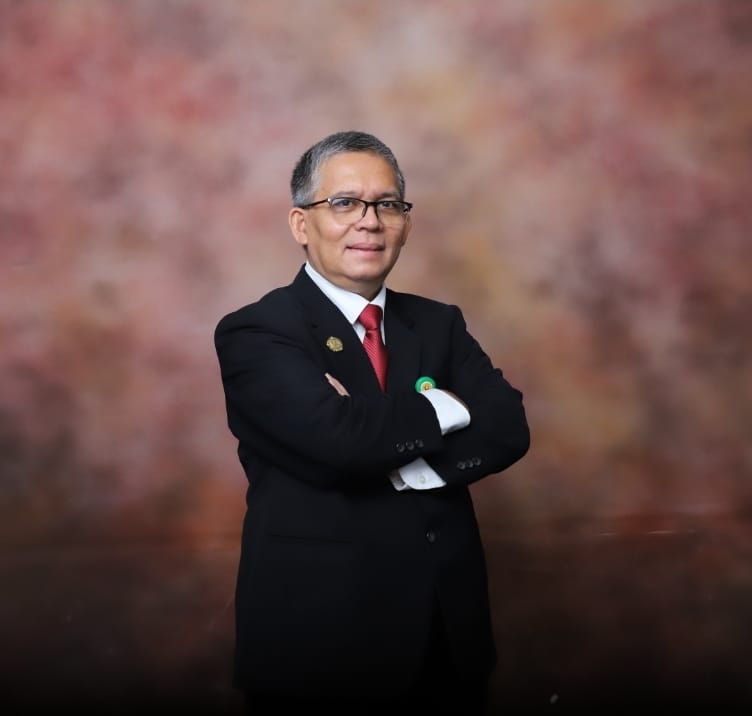
Enviro News Asia, Jakarta — The initiator and Chairman of the National Alliance, Pontjo Sutowo, emphasized that Indonesia’s development must involve the active participation of the public.
According to him, the government needs to open up space for public involvement in determining the direction of development, given that Indonesia is a pluralistic and multicultural nation.
Pontjo delivered this statement during a discussion themed “The Role of Science, Technology, and Innovation in National Development,” organized by the Center for Technology and Innovation Studies (CTIS) on Wednesday, June 4, 2025.
“Indonesia’s diverse culture and natural conditions require a unifying factor, which is Pancasila. A cultural approach to building the nation’s civilization must begin with the development of the mind and body of the Indonesian people themselves—nothing else,” Pontjo asserted.
He quoted the former Head of the Agency for Pancasila Ideology Education (BPIP), Yudi Latif, referencing the mental-cultural or values domain, which he considers the most important.
This domain simultaneously builds the system of state governance (institutional-political domain) and an economy oriented toward public welfare (prosperity or material-technological domain).
According to Pontjo, the Pancasila paradigm serves as the foundation for building all three of these domains. Hence, public involvement in the policy-making process is crucial.
He cited the flagship program of President Prabowo Subianto’s administration—Free Nutritious Meals (MBG)—which, he argued, should involve communities more actively.
“MBG is designed to prevent stunting. But if local communities are involved—for example, by including local food ingredients—this program could also enhance regional food security and support the local economy,” he explained.
Pontjo added that every region has its own signature local food that could be further developed through technological support to become attractive products, especially for children.
He also highlighted the importance of food diversification to reduce dependency on rice. Citing the rice crisis in Japan due to failed harvests, Pontjo viewed the Japanese government’s approach—not opening up rice imports—as a form of respect for local farmers.
“That’s a form of public participation. The Japanese government allowed prices to rise as a sign of respect for farmers who failed to harvest. The government supported them by providing knowledge and technology to improve efficiency. This way, cooperation between the government and farmers to prevent future crop failures can be strengthened,” he explained.
In the education sector, Pontjo criticized the plan to establish new flagship schools such as Sekolah Nusantara and Sekolah Rakyat, involving the Ministry of Social Affairs, even though there is already a Ministry of Basic and Secondary Education.
According to him, the government should optimize the roles of existing schools, including private institutions, by maximizing the use of the 20% of the national budget allocated annually to education, in accordance with the Education Law.
“Improving the quality of existing private schools to meet national standards is far more efficient than building entirely new schools,” he stated.
He also criticized the exclusivity of state-owned enterprises (BUMN), which he believes limits opportunities for private sector participation.
“The government tends to rely on BUMNs and their subsidiaries to carry out all development activities from upstream to downstream, without involving the private sector—seeing private businesses as competitors rather than partners. This must change,” he emphasized.
Pontjo suggested that participatory governance in both the education sector and BUMNs could adopt the model of the total defense and security system (Sishankamrata) implemented by the Indonesian National Armed Forces (TNI), where the main defense force is the people, with the core strength being the military.
In this system, the TNI Commander determines threats and military strategies (force deployment), while force development (training and education) is handled by the Chiefs of Staff, who manage their resources.
He further stressed that Indonesia’s economic system must be science-based.
“Science is the process of acquiring knowledge through observation and experimentation, while technology is its application in human life,” Pontjo explained.
However, he felt that current government economic policies do not fully support the growth of domestic industries. He criticized the import substitution strategy, saying it is not always relevant.
“Not all imported goods need to be produced domestically. The Domestic Component Level (TKDN) in import substitution does not automatically drive the advancement of national industry,” Pontjo said.
Closing the discussion, Pontjo called on CTIS, the National Alliance, and the broader community of Indonesian scholars and professionals to formulate a knowledge-based industrial development strategy rooted in the Pancasila paradigm.
“The result of these discussions will be submitted to the government as an intellectual contribution,” he concluded. (*)