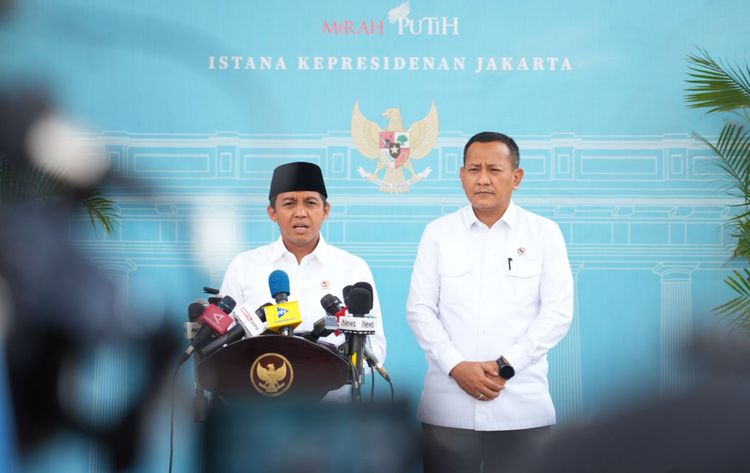


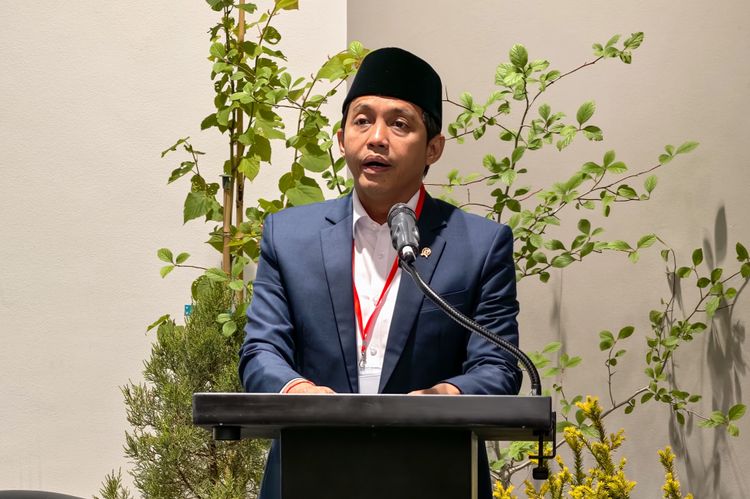
Enviro News Asia, London – The Indonesian government has reaffirmed its commitment to transforming the approach to conservation from merely financing nature protection to treating it as a strategic investment in the future of sustainable development. The commitment was delivered by Minister of Forestry Raja Juli Antoni at the high-level opening session on Nature and Finance during London Climate Action Week 2026 on Monday (6/23).
In his remarks, the Minister stressed that Indonesia views nature as a strategic national asset underpinning economic resilience, food security, water security, climate stability, and the welfare of future generations.
“Indonesia believes that nature is not merely something to be protected, but development capital that must be managed and invested in sustainably. That is why we need to shift from a paradigm of financing conservation toward investing in conservation,” Minister Raja Juli Antoni said.
As a megadiverse nation with one of the world’s richest concentrations of biodiversity, Indonesia holds that conservation must simultaneously generate ecological, social, and economic benefits, in line with the direction of President Prabowo Subianto to strengthen natural resource protection while creating inclusive and sustainable development opportunities.
At the forum, the Minister introduced the Presidential Task Force for Innovative Financing for National Parks, a strategic platform aimed at strengthening the protection and restoration of national parks, safeguarding rare and endangered species, and developing sustainable conservation financing sources.
The Minister affirmed that conservation success cannot be separated from community involvement, with the Indonesian government committed to ensuring indigenous and local communities serve as primary partners and beneficiaries in conservation area management.
“The knowledge, experience, and centuries-old relationships between communities and nature are invaluable capital for achieving long-term conservation success,” he said.
To support this agenda, Indonesia has conducted assessments across a number of national parks to identify financing opportunities suited to their ecological characteristics, conservation priorities, and management capacities. Instruments under development include carbon credits, biodiversity credits, species conservation bonds, ecotourism, debt-for-nature swaps, and other innovative financing mechanisms.
Indonesia also introduced the “One Species, One Company” initiative, aimed at encouraging private sector participation in supporting the protection of iconic Indonesian wildlife including rhinos, orangutans, elephants, tigers, and birds of paradise.
On the institutional side, the government is strengthening conservation financing governance through the development of a Public Service Agency (BLU) scheme for national parks to improve financial management flexibility and ensure long-term conservation funding sustainability.
One of the priorities currently being developed is the preparation of science-based investment prospectuses for 13 priority national parks in Indonesia, designed to demonstrate the real value of conservation areas through ecosystem services, biodiversity protection, climate mitigation and adaptation, sustainable tourism, watershed protection, and community development, translating conservation outcomes into credible, transparent, and scalable investment opportunities.
Closing his remarks, the Minister called on global stakeholders to strengthen collaboration in closing the world’s still vast conservation financing gap.
“No single country can close the global nature financing gap alone. Collective action, innovative partnerships, and shared responsibility are essential. Indonesia invites governments, development institutions, philanthropic organizations, financial institutions, and private investors to together build conservation financing models that are practical, measurable, and deliver real impact,” he said. (*)