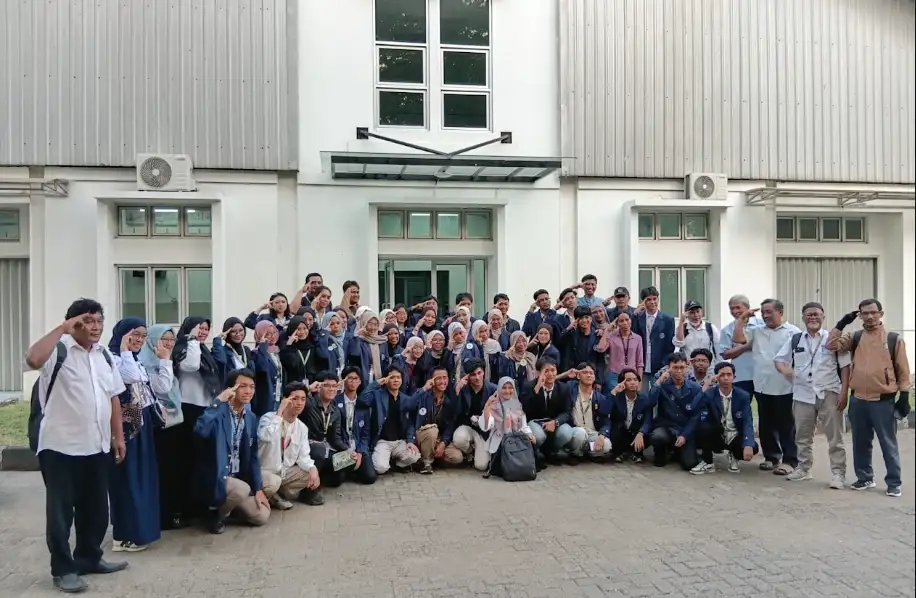
Enviro News Asia, Surabaya – In commemoration of National Waste Awareness Day, the Institut Teknologi Sepuluh Nopember (ITS), through the Center for Infrastructure and Sustainable Environment (ILB), officially launched the “1,000 Environmentally Friendly Schools Movement” program. This initiative, in collaboration with Tunas Hijau Indonesia, was held at the ITS Research and Innovation Technology Gallery (GRIT) on Thursday (27/2).
In his speech, ITS Vice Rector IV for Research, Innovation, Cooperation, and Alumni Affairs, Prof. Agus Muhamad Hatta, ST, MSi, PhD, emphasized the importance of the environment in human life. He highlighted the necessity for schools to prioritize environmental awareness education for their students. “By instilling an environmentally conscious lifestyle, we can create a healthier environment for future generations,” Hatta stated, as conveyed in a press release from Institut Teknologi Sepuluh Nopember.
Echoing this sentiment, the ITS Department of Physics Engineering lecturer explained that this program reflects ITS’s commitment to fostering an educational ecosystem that supports sustainability. By integrating eco-friendly concepts into the curriculum, schools can inspire students to contribute to environmental conservation from an early age.
Similarly, Prof. Ir. IDAA Warmadewanthi, ST, MT, PhD, Head of the ILB ITS Center, explained that this program targets elementary and secondary schools nationwide. The goal is to raise student awareness about environmental management as early as possible. “By fostering environmentally friendly habits, the younger generation will grow into individuals who are responsible for the environment,” said Warmadewanthi, who is familiarly known as Wawa.
The ITS Environmental Engineering lecturer affirmed that the ILB ITS team is ready to assist schools in implementing sustainable environmental management practices. To ensure the program’s effectiveness, ITS will develop a special assessment index to measure each school’s progress in adopting environmentally friendly principles. This index is expected to serve as both a benchmark and motivation for schools to continually enhance their commitment to environmental sustainability.
As the opening activity for the “1,000 Environmentally Friendly Schools Movement,” the event encouraged active participation from elementary and middle school students through competitions and an innovation exhibition titled “My Green School, My Great School.” This exhibition provided a platform for students to showcase their projects and tangible actions in implementing eco-friendly concepts at school. “Students can inspire one another and realize that environmental management can start with small steps,” Wawa explained.
In addition to competitions and exhibitions, the event also featured workshops demonstrating the implementation of environmentally friendly schools. Teachers and educators were also equipped with foundational knowledge on environmental-based curricula for classroom application. By increasing schools’ awareness of environmental issues and climate change, this program serves as a concrete step by ITS in achieving Sustainable Development Goal (SDG) 13.
Moving forward, ITS remains committed to overseeing the implementation of the “1,000 Environmentally Friendly Schools Movement.” Wawa expressed hope that more schools will be encouraged to adopt eco-friendly principles. “Through this initiative, we can cultivate a generation that understands the importance of environmental preservation,” she concluded optimistically.