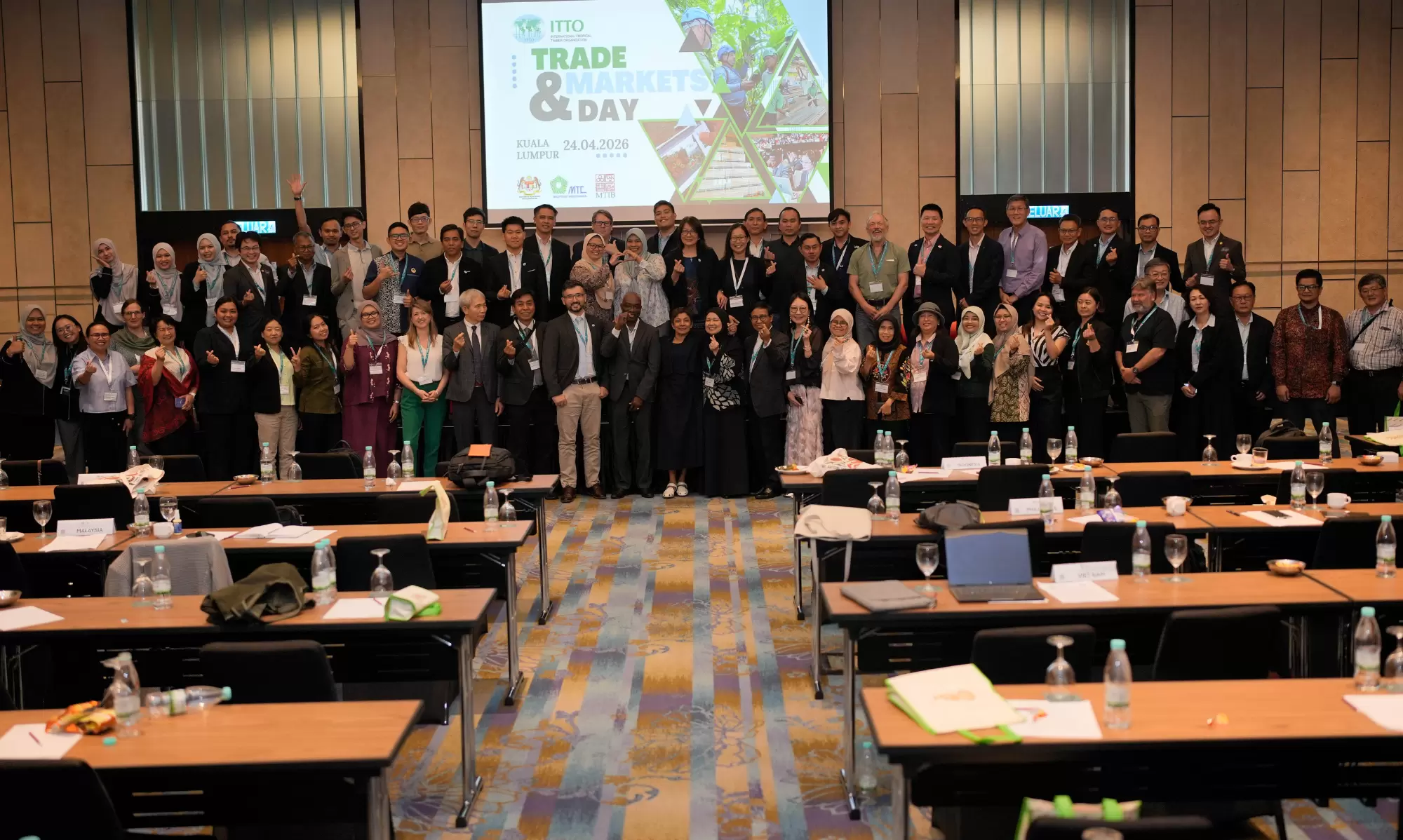
Enviro News Asia, Kuala Lumpur — The International Tropical Timber Organization convened policymakers, private sector leaders, certification bodies, scientists, and trade experts from across the Asia-Pacific region during its Trade and Markets Day held in Kuala Lumpur, Malaysia.
The event was organized alongside the ITTO Asia-Pacific Regional Training Workshop on CITES non-detriment findings (NDFs) for timber species listed under Appendix II and hosted with support from Malaysia’s Ministry of Plantation and Commodities. Discussions focused on strengthening legal and sustainable tropical timber trade amid increasing global demand, tightening regulations, and rising market uncertainty.
Opening the forum, ITTO Executive Director Sheam Satkuru stressed the importance of stronger collaboration between governments and the private sector to maintain resilient timber supply chains and sustainable market systems.
“The expansion and diversification of legal and sustainable timber trade remains central to ITTO’s mandate. Meaningful engagement with the private sector is essential to strengthening supply chains, identifying workable solutions and ensuring resilient and well-functioning markets,” she said.
Representatives from seven ITTO member countries participated in discussions addressing major industry challenges, including the European Union Deforestation Regulation (EUDR), evolving CITES requirements, geopolitical tensions, and changing global market expectations.
Satkuru emphasized that well-governed and effectively regulated timber markets can become important drivers of sustainable growth and economic development.
A keynote presentation by CIFOR-ICRAF researcher Herry Purnomo highlighted projections showing significant increases in global wood demand by 2050, reinforcing the need for stronger forest governance, sustainable supply systems, and improved traceability mechanisms.
Experts from organizations including Forest Stewardship Council and Programme for the Endorsement of Forest Certification also discussed how certification systems could help producers comply with EUDR obligations while improving legality verification and expanding market access.
The forum further showcased technological innovations such as DNA and isotope testing, AI-powered wood identification systems, geolocation tools, and digital traceability platforms as emerging solutions to improve transparency and due diligence in the timber sector.
Delegates from Malaysia, Indonesia, and Viet Nam exchanged perspectives on market diversification, increasing compliance costs, logistical disruptions, and concerns surrounding species-specific trade regulations. Participants also discussed the impact of recent global trade policy shifts, including developments in the United States, which are encouraging timber-producing countries to diversify export destinations and adapt to evolving geopolitical conditions.
Parallel discussions on CITES implementation raised concerns regarding potential Appendix II listings for commercially important timber species. Participants warned that broad genus-level listings could create unintended burdens for sustainably managed species and exporting countries, while also disrupting supply chains. They called for science-based policymaking, stronger data-sharing systems, and closer cooperation between ITTO and CITES authorities.
A high-level panel moderated by Sheam Satkuru featured representatives from the Malaysia Timber Council, VIFOREST, the Indonesian Forest Community Forum, and the International Wood Products Association. The panel explored strategies to strengthen resilience, policy alignment, and sustainable timber trade under increasingly complex regulatory frameworks.
Throughout the event, speakers emphasized the importance of targeted technical assistance and capacity-building support for smallholders, domestic producers, and developing countries to help them meet growing international compliance standards.
“By staying informed, adaptive, and forward-looking, trust and confidence can be built to meet changing market expectations and conditions,” Satkuru concluded.
ITTO expressed appreciation to Malaysia’s Ministry of Plantation and Commodities, TRAFFIC, the German Federal Agency for Nature Conservation, and other technical partners for supporting the event, which reinforced Trade and Markets Day as a strategic platform for shaping the future of sustainable tropical forestry and timber trade. (*)