Enviro News Asia, Jakarta — PT Pertamina (Persero) emphasized that National Oil Companies (NOCs) play a strategic role not only in maintaining national energy security but also in supporting economic growth amid rising geopolitical uncertainty, global energy market volatility, and the challenges of energy transition.
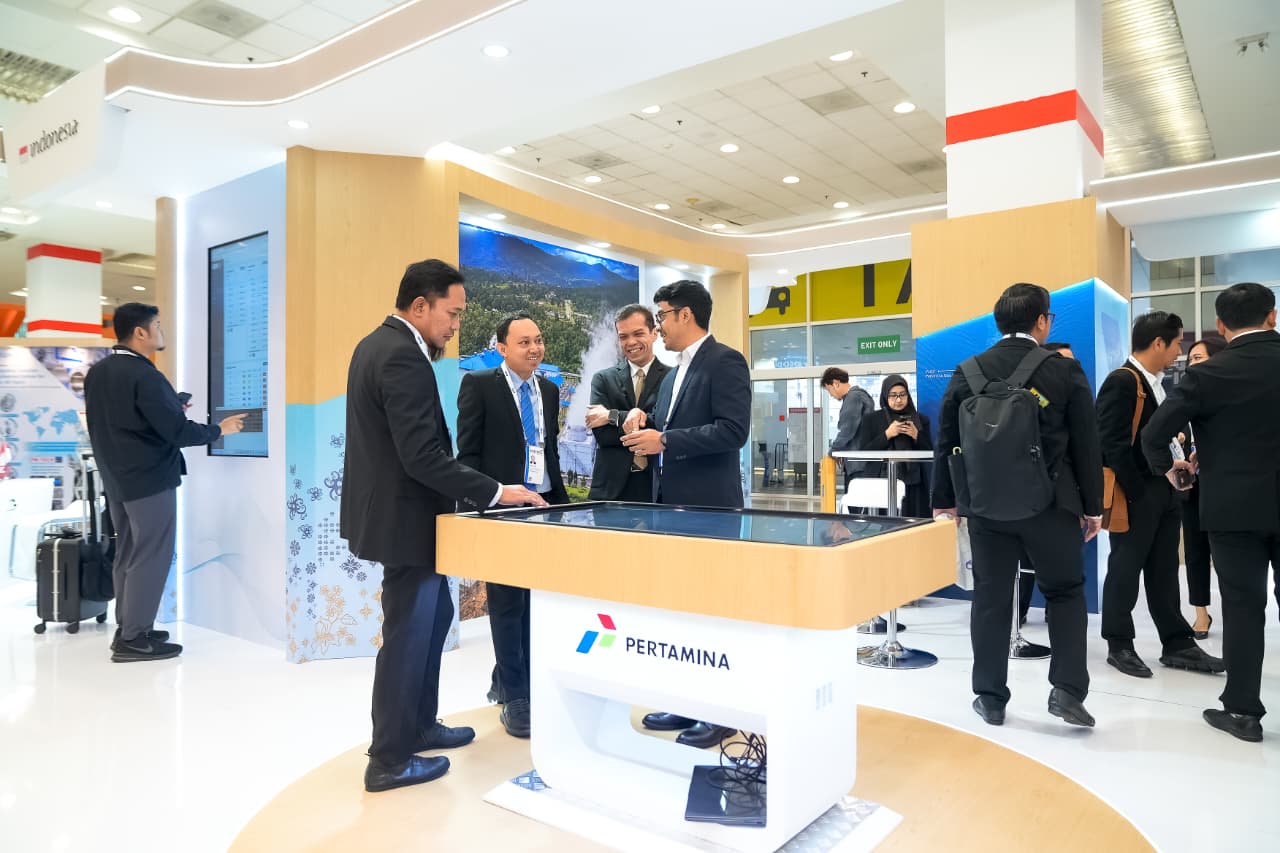
The statement was delivered by Pertamina Vice President Director Oki Muraza during a discussion themed Global Challenges: NOCs at the Heart of Energy Resilience at the 50th Indonesia Petroleum Association Convention and Exhibition (IPA Convex).
According to Oki, NOCs carry a dual mandate as business entities and instruments of national development. Beyond contributing to state revenues, NOCs are also responsible for ensuring long-term energy resilience.
“Energy development strategies should not rely solely on oil. Natural gas must play a stronger role as a transition energy source capable of providing more affordable energy with lower emissions,” Oki stated.
He explained that NOCs also create multiplier effects through downstream industrialization, which can generate employment opportunities and maximize the added value of national natural resources. In this context, natural gas is considered a crucial component in supporting both energy security and the transition toward lower-emission energy systems.
To strengthen energy resilience, Pertamina continues to enhance collaboration with governments, strategic partners, and financial institutions. Oki noted that many large-scale global energy projects demonstrate how strong synergy between states and corporations is essential to ensuring long-term energy security.
He cited the LNG Mozambique project as an example of successful collaboration supported by the Japanese government through policy support, equity participation by JOGMEC, financing from JBIC, insurance from NEXI, and long-term LNG off-take agreements with Japanese companies such as JERA.
“Strategic energy projects require strong support architecture. Governments can contribute through financing, insurance, market certainty, and policies that make projects bankable,” he said.
Oki also highlighted the importance of increasing domestic oil and gas production to reduce the gap between refining capacity and national crude production. Currently, Pertamina’s refinery capacity stands at around one million barrels per day, while domestic crude production remains approximately 600 thousand barrels per day.
As part of its strategy, Pertamina is continuing various initiatives to boost production while expanding its gas portfolio through participation in strategic projects.
Beyond domestic operations, Pertamina is also selectively expanding its international portfolio to strengthen both economic value creation and domestic energy supply security.
Oki further stressed that achieving energy resilience requires close cooperation among companies, governments, regulators, and stakeholders. According to him, continuous communication and stakeholder engagement are essential to aligning policies, project economics, and national development objectives.
He added that Pertamina’s competitive advantage lies in its position as an integrated energy company with upstream-to-downstream operations, supported by extensive oil and gas experience, existing infrastructure, and strategic partnerships.
“Collaboration with fellow NOCs and International Oil Companies helps reduce risks, strengthen investment discipline, and accelerate business development opportunities that support energy resilience,” Oki remarked.
He also described ASEAN as one of the most attractive regions for energy investment due to its large market, rapid energy demand growth, and relatively stable investment climate.
“ASEAN offers strong investment potential because nearly 50 percent of global energy demand growth comes from this region. Regulatory support and stakeholder collaboration are also critical factors in sustaining investment flows,” he concluded.
Pertamina reaffirmed its commitment to supporting Indonesia’s Net Zero Emission target by 2060 through energy transition initiatives aligned with Sustainable Development Goals (SDGs) and Environmental, Social & Governance (ESG) principles across its business operations. (*)