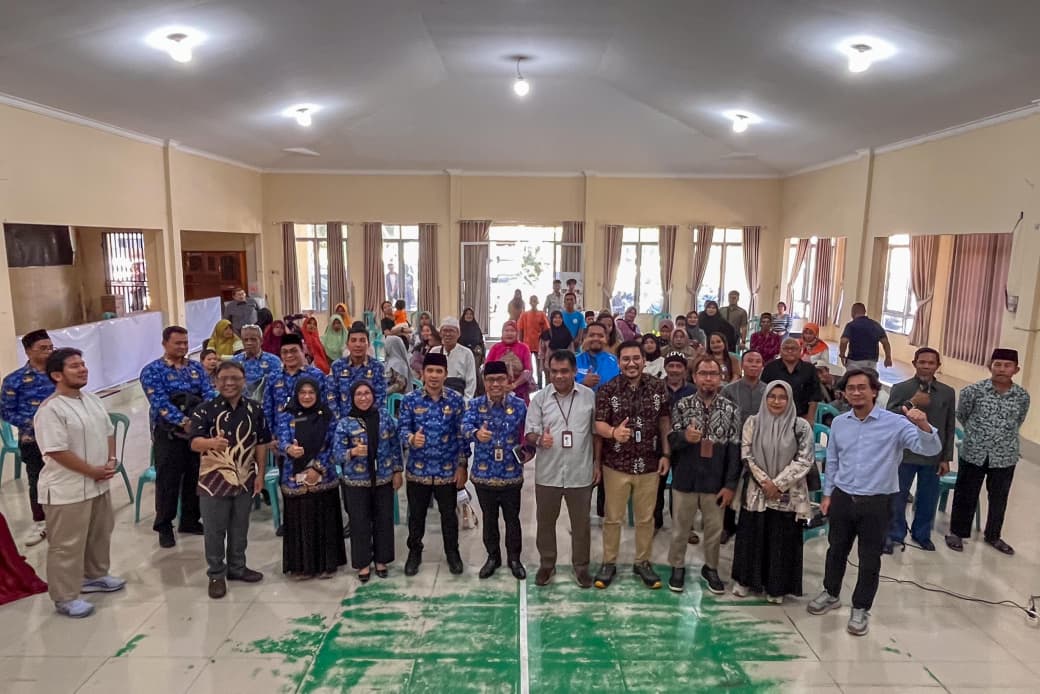
Enviro News Asia, Jakarta — PT PLN Energi Primer Indonesia (PLN EPI) and the Ministry of Villages and Development of Disadvantaged Regions (Kemendes PDT) have strengthened cooperation to develop village-based biomass potential as part of Indonesia’s energy transition and rural economic development.
The two institutions signed a cooperation agreement on August 20, 2026, aimed at enabling Village-Owned Enterprises (BUM Desa) and local communities to utilize agricultural and plantation residues as biomass for power generation. The initiative is expected to create new economic opportunities in rural areas while strengthening the national energy supply chain.
Director General of Village Economic Development and Investment at Kemendes PDT Tabrani said the partnership would empower rural communities to utilize local resources while contributing to national energy needs. Indonesia’s 75,262 villages, he said, have significant potential to supply biomass through BUM Desa and other village economic institutions.
PLN EPI Biomass Director Hokkop Situngkir said village communities are already involved in biomass supply through operations supporting 52 coal-fired power plant locations across Indonesia. The new agreement is expected to expand the role of BUM Desa through more structured partnerships with PLN EPI.
Under the partnership model, BUM Desa could serve not only as biomass suppliers but also as investment partners in developing biomass production facilities and hubs to support PLN’s co-firing program. This approach could allow villages to participate more directly in the energy supply chain while generating additional economic value from agricultural waste.
Indonesia produces an estimated 200 million tonnes of agricultural residues annually, of which around 80 million tonnes could potentially be utilized as biomass. Currently, approximately 12 million tonnes are used by industry, 8–10 million tonnes are exported, and PLN utilizes around 2.5 million tonnes for co-firing.
PLN EPI is targeting biomass utilization of 10 million tonnes annually by 2030. The company estimates that this could unlock around 60 million tonnes of currently underutilized biomass potential.
The cooperation will cover agricultural and plantation residues such as rice husks, corn cobs, sugarcane bagasse, empty fruit bunches from oil palm plantations, and palm shells. These materials can be processed to meet the specifications required for power generation.
Secretary General of Kemendes PDT Taufik Madjid said the development of energy based on local resources was important for strengthening village self-reliance and productivity. The agreement follows a memorandum of understanding between PLN and Kemendes PDT concerning the utilization and management of electricity to improve economic activity and productivity in villages and disadvantaged regions.
PLN EPI said the partnership could create a new biomass supply chain coordinated by BUM Desa while providing additional business opportunities for rural communities. By integrating local agricultural residues into the energy sector, the initiative is expected to support energy security, advance Indonesia’s energy transition, and create sustainable economic value for villages. (*)