Enviro News Asia, Bangkok — PT PLN Energi Primer Indonesia (PLN EPI) is strengthening its strategy to accelerate liquefied natural gas (LNG) infrastructure development across Indonesia by integrating project planning, securing supply-chain capacity early and expanding domestic industrial capabilities.
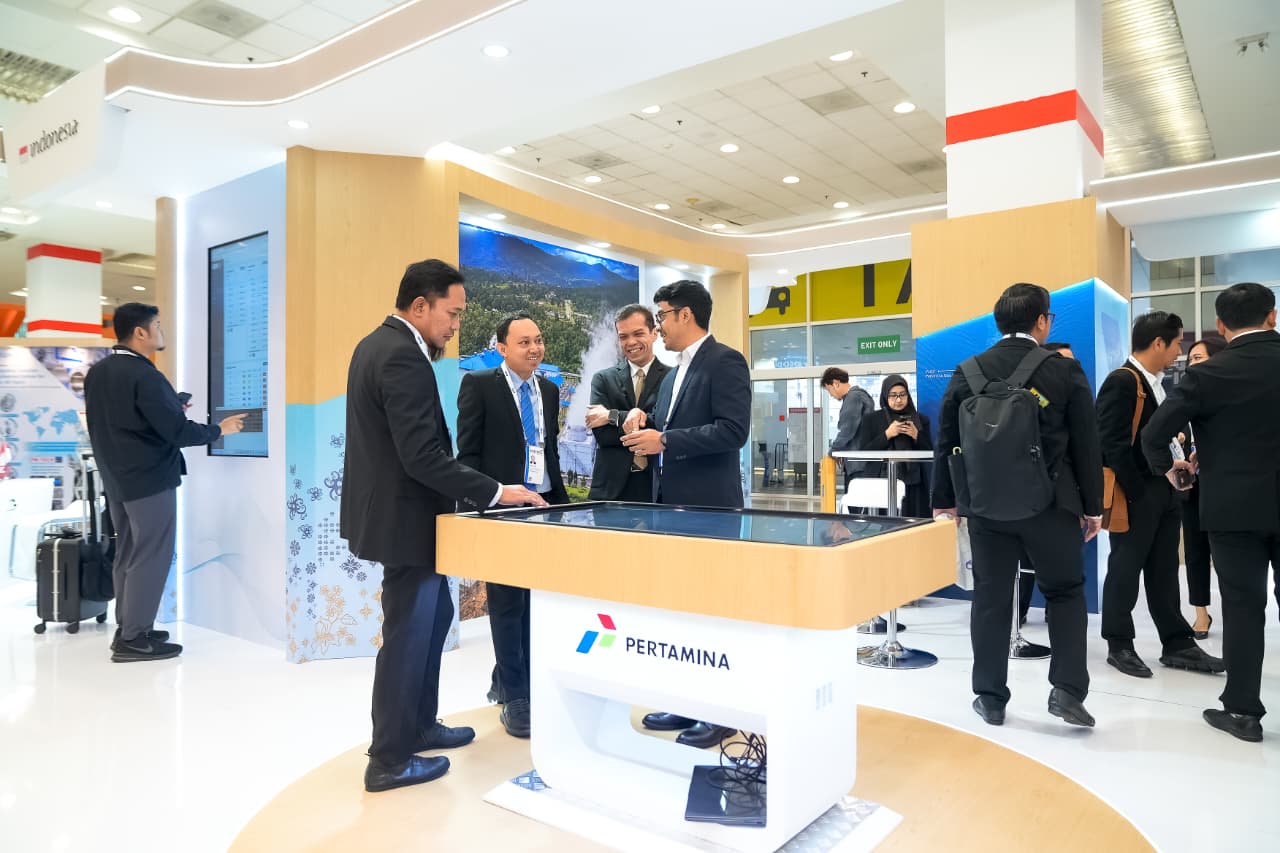
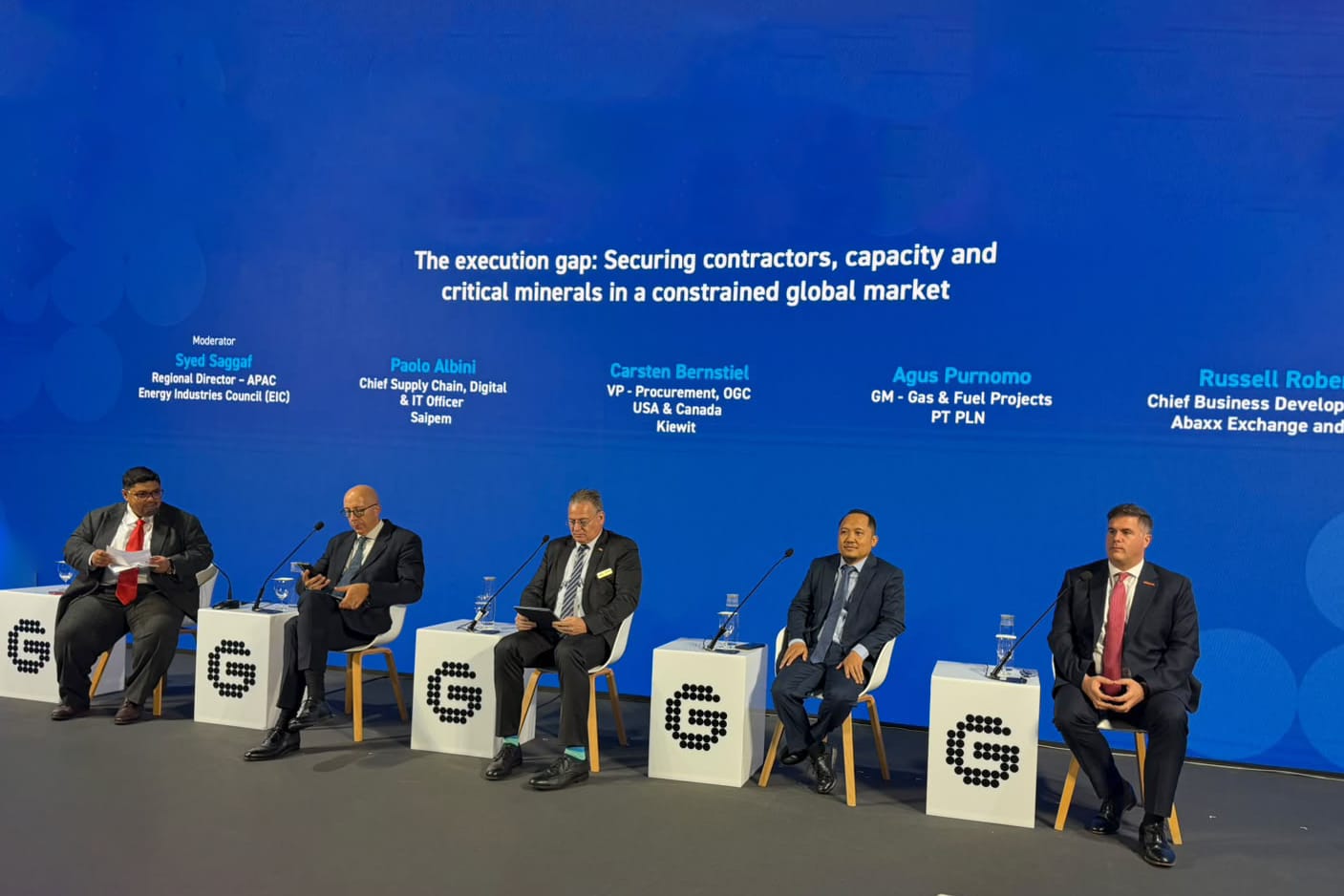
The strategy was presented by Agus Purnomo, General Manager of PLN EPI’s Gas and Fuel Project Implementation Unit, during the Strategic Panel at Gastech Exhibition & Conference 2026 in Bangkok, Thailand, on September 14.
The approach aims to ensure LNG infrastructure is available on schedule to support the reliability of fuel supplies for power generation.
Held under the theme “For a Secure & Sustainable Energy Future,” Gastech 2026 brought together around 800 energy-sector leaders, policymakers, innovators and strategic investors to discuss natural gas, LNG, hydrogen, low-carbon solutions, electrification and artificial intelligence in the energy sector.
Agus spoke during the session “The Execution Gap: Securing Contractors, Capacity and Critical Minerals in a Constrained Global Market,” which examined constraints in engineering, procurement and construction (EPC) capacity, manufacturing, skilled labor and delivery slots amid rising global investment in energy infrastructure.
“The challenge is not only developing projects. We also need to ensure that suppliers of major equipment, shipyards and contractors have sufficient capacity to complete projects on schedule,” Agus said.
Since 2023, PLN EPI has accelerated midstream LNG projects at around 25 locations across Indonesia to support PLN’s dedieselization program, which seeks to replace diesel with LNG while improving power-system reliability.
At the same time, the global LNG industry is facing constraints in execution capacity. Large LNG shipbuilding capacity in South Korea and China was estimated at around 85 vessels per year in early 2026, while the global LNG carrier orderbook had reached 268 vessels as of March 31, 2026. Some vessels ordered in 2026 are scheduled for delivery as late as 2029.
“Capacity does not mean availability. An increase in industrial capacity does not automatically guarantee production slots when a project needs equipment or vessels,” Agus said.
To address these constraints, PLN EPI is managing its midstream LNG development projects as an integrated portfolio. Floating storage and regasification units (FSRUs), LNG carriers, regasification and storage facilities, pipelines and power-plant connections are being planned in coordination.
The strategy includes portfolio-level capacity planning, early engagement with suppliers, flexibility in asset strategies and standardization of designs and equipment.
PLN EPI is also evaluating the conversion of existing LNG carriers into FSRUs as an alternative when shipyard capacity for newbuild vessels is limited. The company said the option is not automatically faster or cheaper but could provide an alternative execution pathway amid constraints in new vessel construction.
Alongside global technology and suppliers for specialized requirements, PLN EPI is seeking to strengthen domestic capabilities in construction, fabrication, storage tanks, piping, electrical systems, shipbuilding, operations and maintenance, and engineering services.
“We need global capabilities for highly specialized technologies, but the scale of Indonesia’s project pipeline can be used to gradually build stronger domestic capabilities,” Agus said.
By 2029, PLN EPI targets the development of nearly 20 land-based satellite LNG receiving terminals across Indonesia. The planned facilities include one location in Nias, six in Sulawesi, nine in the Nusa Tenggara region and four in northern Papua, developed through four strategic partner clusters under Joint Development Agreements (JDAs).
The terminals will be developed within an integrated program framework to prevent the individual facilities from operating as separate supply chains.
Agus also emphasized that successful energy infrastructure development requires coordination among the government, industry and financial institutions.
The government is expected to provide policy certainty and a supportive investment climate, while industry players execute projects and financial institutions provide capital.
“The government creates the enabling environment, industry executes the projects, and lenders provide capital. All three need to be aligned from the outset,” Agus said.
As global industrial capacity becomes increasingly constrained, LNG infrastructure development depends not only on investment readiness but also on the ability to secure and synchronize execution capacity.
Through its integrated approach, PLN EPI aims to keep LNG infrastructure projects on schedule while strengthening energy security and the reliability of Indonesia’s electricity system. (*)