Enviro News Asia, Jakarta — The condition of Indonesia’s oceans is currently far from healthy. Global warming caused by climate change is melting Antarctic ice, leading to rising sea levels, changing global ocean currents, and disrupting fish migration patterns.
These changes have a direct impact on the waters of archipelagic nations like Indonesia.
The country’s marine ecosystems are in a state of distress and urgently require restoration.
If left unaddressed, marine ecosystems and the livelihoods that depend on them will continue to be at serious risk.
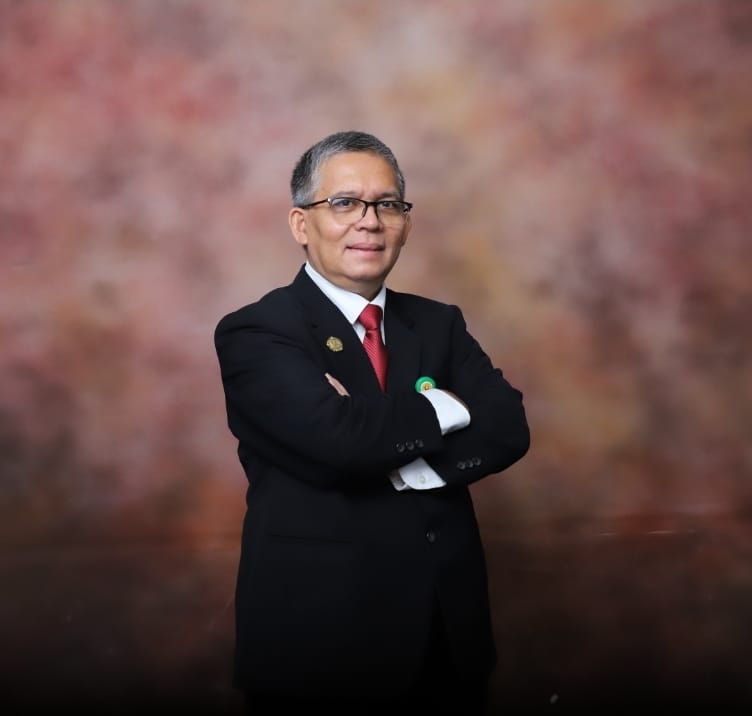
This concern was raised by Dr. Salveanty Makarim, a physical oceanography expert from the Ministry of Marine Affairs and Fisheries, during a discussion held by the Center for Technology & Innovation Studies (CTIS) on Wednesday, June 11, 2025.
In her presentation titled “The Role of the Indonesian Seas in the World Ocean Health and Warming Climate: Perspectives, Challenges and Outlooks,” moderated by marine expert Dr. Marina Frederick of CTIS, Dr. Salveanty — an alumna of Xiamen University, China — explained that global temperatures have been rising since the Industrial Revolution in Europe during the 1800s.
However, global awareness of the climate crisis only began to emerge in the early 1960s.
“For a long time, we assumed climate change was solely due to ozone depletion caused by chlorofluorocarbons (CFCs), but in fact, the causes are far more complex,” she noted.
She added that while ozone can be monitored thanks to atmospheric surveillance tools, deep-sea environments are much harder to observe.
The deep sea often remains a “blind spot,” escaping public and governmental attention, despite its increasingly alarming condition.
ENSO and Its Impact on Indonesia’s Marine Environment
In addition to industrial activity, the ENSO (El Niño Southern Oscillation) phenomenon also plays a role in deteriorating ocean conditions.
ENSO is a natural climate variability pattern that greatly influences global weather and ocean dynamics.
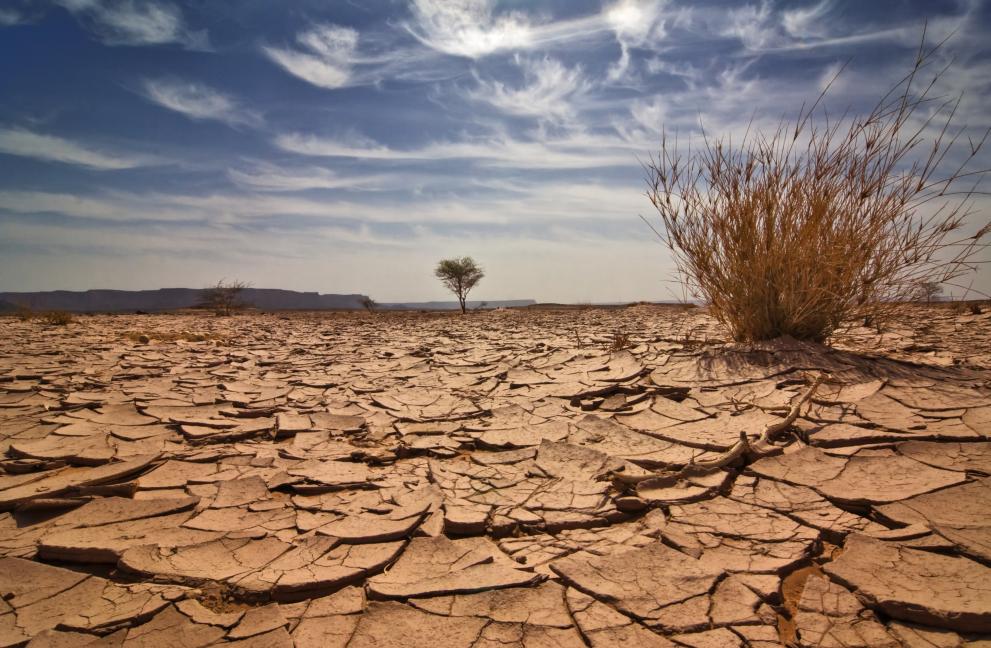
Its impacts include prolonged droughts, crop failures, forest and land fires, and even public health crises such as increased cases of dengue fever.
Interestingly, ENSO also affects chlorophyll distribution in the ocean — the primary food source for fish — potentially making certain areas more abundant in fish.
“Due to global climate change, ENSO, which used to be periodic, is now expected to become more frequent and intense,” said Salveanty.
Her 2023 study in Lamongan and Pamekasan, East Java, found that tidal cycles have accelerated from the usual 12 hours to only 10 hours.
This serves as clear evidence that global warming is affecting coastal regions, including Java’s densely populated northern coastline, which is also a major industrial area.
To restore ocean health, long-term monitoring of ENSO over periods of five, ten, or twenty years is needed. “ENSO is one of the parameters of global warming.
By predicting its patterns over time, we can anticipate changes in fish migration zones. Ideally, we could even forecast it annually,” she explained.
The government is also undertaking a massive mangrove planting program along Indonesia’s coastal areas to improve marine conditions.
Additionally, President Prabowo Subianto has launched a Giant Sea Wall development initiative along the northern coast of Java Island to prevent coastal erosion and protect the region from rising sea levels.
Urgent Need for Adaptation and Recovery
Dr. Salveanty emphasized the importance of community adaptation in coastal areas, especially in the face of increasingly frequent tidal flooding.
One of the necessary solutions is promoting green energy-based industries and reducing environmentally harmful industrial activities.
“China has already begun implementing eco-friendly industrial technologies. We must also start reorganizing our industrial zones and ensure that all industrial activities have proper environmental impact assessments (AMDAL) and waste management systems — not dumping waste into the ocean,” she stressed.
Local governments are also being urged to actively engage communities in cleaning rivers, maintaining waterway hygiene, and conserving coastal environments.
One current initiative is the mangrove planting movement across the northern coast of Java.
Unfortunately, despite Indonesia’s involvement in the United Nations Decade of Ocean Science for Sustainable Development (2021–2030), real and measurable ocean recovery actions remain limited.
According to the latest Ocean Health Index, Indonesia scores only 61 out of 100, classifying it as unhealthy.
Globally, the country ranks 124th out of 200 evaluated nations.
The UN Ocean Decade aims to establish a global framework for advancing ocean science and knowledge, with the vision: “The Science We Need for the Ocean We Want.” The initiative focuses on clean oceans, healthy and resilient oceans, productive oceans, and oceans sustainably managed for human well-being.
This aligns with Goal 14 of the Sustainable Development Goals (SDGs): the conservation and sustainable use of oceans, seas, and marine resources.
However, without strong domestic commitment and tangible action, this vision will be difficult to achieve.
The time has come for Indonesia to take serious steps toward restoring its oceans — for a sustainable future and as a legacy for the next generation. (*)