

Enviro News Asia, Belém — The Director General of Sustainable Forest Management (PHL) at the Ministry of Forestry of Indonesia, Laksmi Wijayanti, emphasized the importance of adopting Regenerative Forestry Business models as a strategic solution to achieve low-carbon development that aligns with social equity in Indonesia.
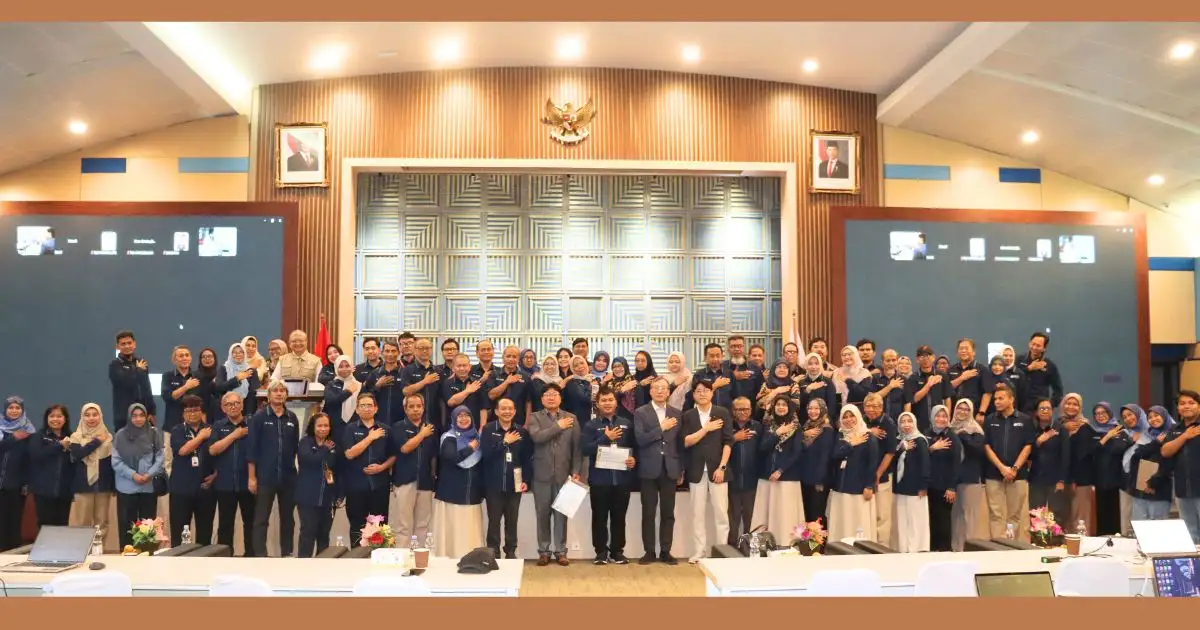
Speaking at a talk show titled “Regenerative Forestry Business: A Bridge to Low-Carbon Development and Social Equity in Indonesia” held at the Indonesia Pavilion during COP30 UNFCCC in Belém, Brazil, Laksmi underscored that the government is preparing a green policy and incentive package to encourage environmentally friendly investment while strengthening partnerships between the private sector and local communities in forest management.
“Regenerative forestry is not only about maintaining forest cover but also about building fair and sustainable economic value through non-timber forest products, agroforestry, and social forestry,” Laksmi said.
She explained that the regenerative forestry business model places communities as the main actors in creating an inclusive value chain. By developing commodities such as forest-grown coffee, certified organic honey, and essential oils from endemic plants, Indonesia aims to demonstrate that forest management can generate prosperity without degrading ecosystems.
The session brought together multi-sector speakers, including Silverius Oscar Unggul (Senior Advisor to the Minister of Forestry on the Regenerative Forestry Task Force), Arlyza Eka Wijayanti (Director of Operations and Production, PT Pupuk Kujang), Purwadi Soeprihanto (Secretary General of APHI), and Daan Wensing (CEO of IDH). The speakers highlighted the importance of collaboration among government, private sector, and civil society in expanding the application of regenerative forestry principles in Indonesia.
Laksmi further stressed that cross-sector collaboration is key to accelerating the transformation toward an inclusive green economy.
“With strong partnerships, we can ensure that the transition toward a green economy not only reduces carbon emissions but also promotes social justice for forest-dependent communities,” she affirmed.
Through this session, the Ministry of Forestry reaffirmed Indonesia’s commitment to becoming a global pioneer in implementing regenerative forestry business models that contribute not only to climate change mitigation but also to community welfare and ecosystem resilience. (*)