Enviro News Asia, Nairobi — Global greenhouse gas emissions have continued to rise steadily since the mid-19th century, reaching a record high of nearly 58 billion tonnes in 2024, according to findings highlighted in the Global Environment Outlook. This surge in emissions is driving a rapid increase in global temperatures, intensifying the climate crisis and its far-reaching impacts.
Greenhouse gases trap heat in the atmosphere, causing the Earth’s surface temperature to rise. In 2024, global temperatures were recorded at approximately 1.5°C above pre-industrial levels, marking a continuation of a century-long warming trend. Scientists warn that this temperature rise is destabilizing climate systems and contributing to more frequent and severe extreme weather events, including floods, wildfires, and heatwaves.
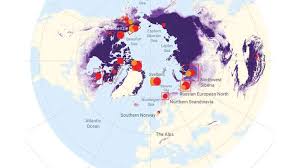
The warming climate is also transforming natural landscapes. In the Arctic, thawing permafrost is releasing stored carbon and methane, creating a feedback loop that could accelerate global warming. These environmental changes underscore the interconnected nature of climate systems and the risks posed by continued emissions.
Future projections remain uncertain but deeply concerning. Analysis from the Emissions Gap Report 2025 suggests that if current emission trends persist, global temperatures could rise between 2.5°C and 4.6°C by the end of the century. Even if countries fulfill their existing climate pledges, warming is still expected to reach between 2.1°C and 2.9°C, levels that could trigger severe environmental and societal consequences.
Scientists have also identified critical tipping points that may be crossed as temperatures rise. At 2°C of warming, most warm-water coral reefs could disappear. At higher temperature thresholds, the collapse of major ice sheets and the transformation of key ecosystems such as the Amazon rainforest could occur, leading to irreversible global impacts.
Beyond environmental damage, climate change poses significant economic risks. Studies indicate that global gross domestic product could decline by up to 22 percent by 2100, potentially resulting in annual losses amounting to trillions of dollars.
Despite these alarming trends, there are signs of progress. Several countries, including China, European Union, and Japan, are showing declining or stabilizing emissions due to improved energy efficiency and a transition toward renewable energy. However, experts emphasize that the pace of change must accelerate significantly to avoid the most severe consequences of climate change. (*)