Enviro News Asia, Ivory Coast — An international study coordinated by the French agricultural research centre CIRAD, in collaboration with 32 research institutions, finds that declining soil fertility could pose a greater long-term threat to maize production in sub-Saharan Africa than climate change itself.
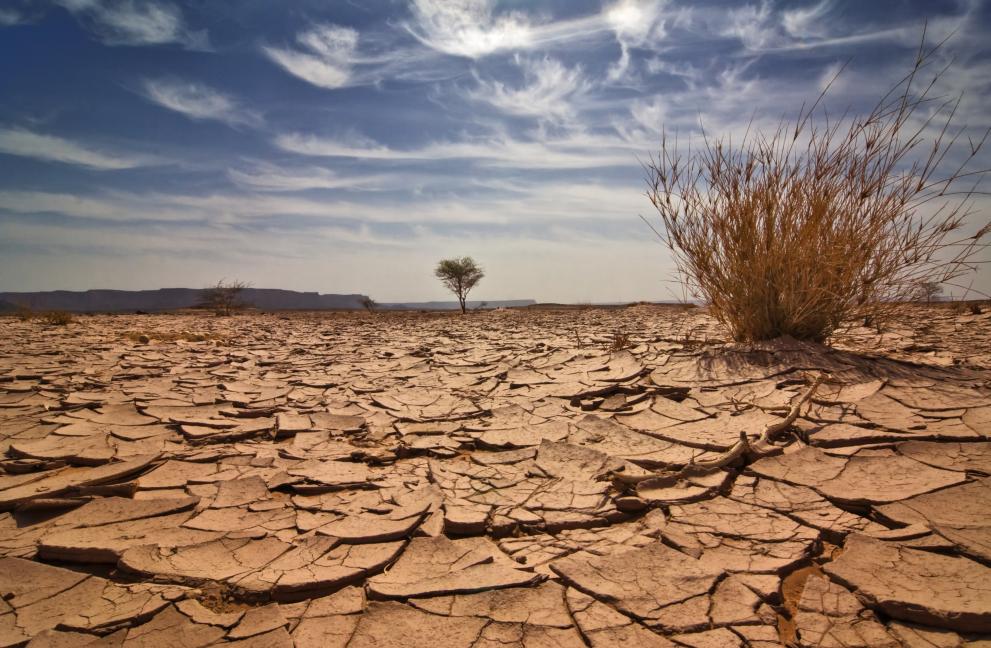
Published in the journal Global Change Biology, the study draws on data from four long-term field experiments and simulations using 15 soil–crop models. The findings show that progressive soil degradation—particularly the loss of soil organic carbon—can lead to maize yield losses of between 20 and 50 percent over several decades if left unaddressed.
The research examined representative maize-producing regions in Ivory Coast, Zimbabwe, and Kenya, modelling the combined long-term impacts of climate change and soil fertility decline. In scenarios without fertilisation, soil organic carbon levels fell steadily, resulting in significant yield reductions that exceeded the individual effects of rising temperatures, changing rainfall patterns, and increasing atmospheric carbon dioxide concentrations.
According to Antoine Couëdel, a researcher at CIRAD and lead author of the study, ignoring soil degradation in future agricultural impact assessments could result in a serious underestimation of production losses. He noted that in many parts of sub-Saharan Africa, crops are more constrained by nutrient availability than by climatic factors.
Régis Chikowo of the University of Zimbabwe added that current yield losses linked to declining soil fertility already surpass those attributed to climate change, largely because baseline soil fertility levels are extremely low across much of the region.
The study highlights integrated soil fertility management—combining organic matter with mineral fertilisers—as a key solution to sustain and improve maize yields. Simulation results show that such practices can significantly slow soil fertility decline and potentially triple crop yields over time, even under changing climate conditions.
Researchers describe this approach as a “no-regret” adaptation strategy, as fertiliser use efficiency remains relatively stable under climate change while delivering yields far higher than those achieved under low-input farming systems.
The study also underscores the importance of soil restoration as a core pillar of climate adaptation and food security strategies in sub-Saharan Africa.
Methodologically, the research stands out for its multi-model framework, developed under the Agricultural Model Intercomparison and Improvement Project (AgMIP), led by NASA and Columbia University. By integrating long-term soil fertility dynamics—often overlooked in climate impact studies—the researchers were able to generate more robust and reliable projections for future agricultural productivity. (*)