

Enviro News Asia, Bekasi — The Environmental Science Study Program of the Department of Environmental Science, School of Sustainable Development Studies at Universitas Indonesia implemented a community service and empowerment program on biofertilizer application to support urban farming in Bekasi, West Java.
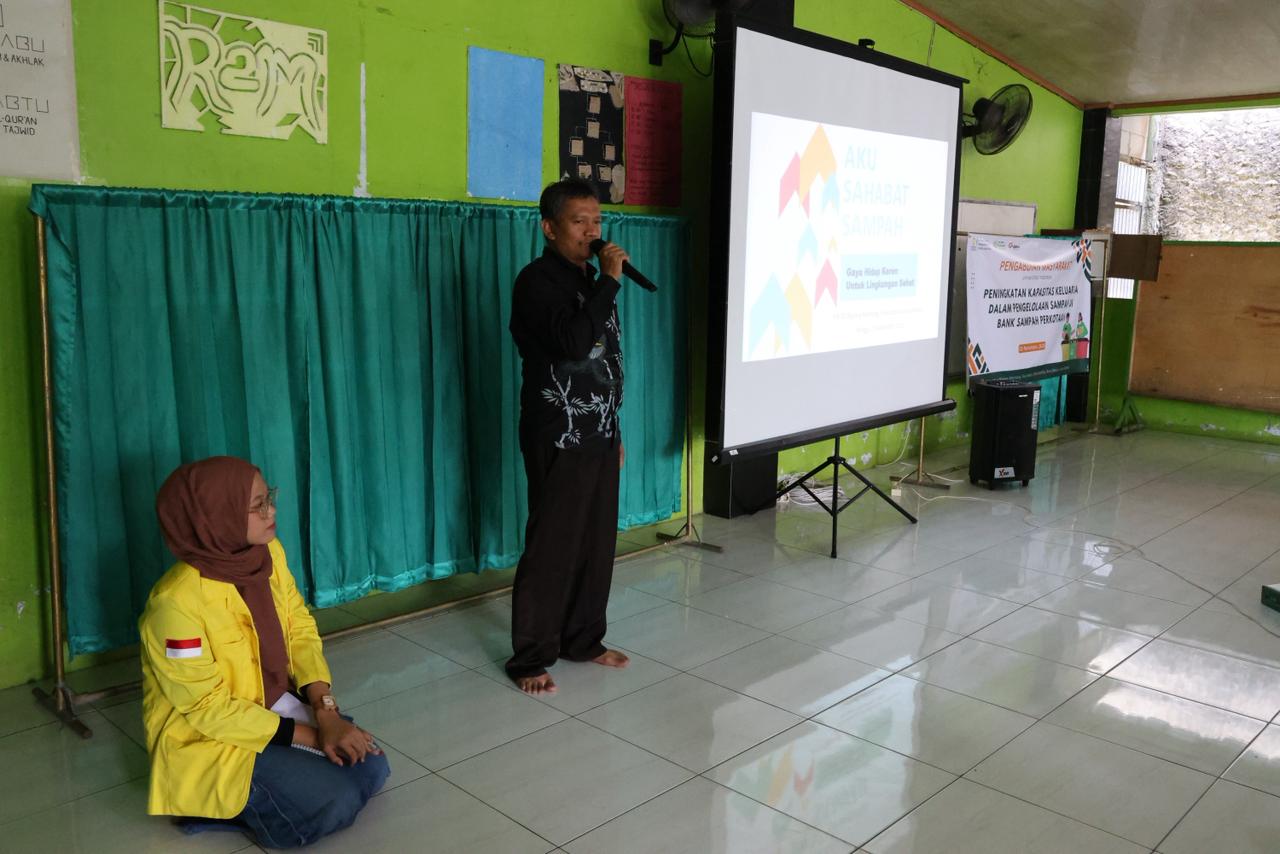
The activity took place in Bojong Menteng Sub-district, Rawalumbu District, Bekasi City, on Sunday, October 2, 2025. The program introduced the use of biofertilizer derived from domestic waste to local residents as an environmentally oriented approach to improving agricultural productivity in urban areas.
Urban farming refers to agricultural activities conducted within or on the outskirts of cities by utilizing available resources, services, and human capital to produce and distribute agricultural products. The concept has emerged as an innovative solution to address land constraints in rapidly growing urban regions such as Bekasi.
Bekasi faces mounting challenges in domestic waste management as population growth continues to outpace waste-handling capacity. To respond to this issue, the program promoted practical solutions, including the production of biofertilizer, community training, and monitoring of biofertilizer application on urban farming plots. The biofertilizer introduced during the program was eco-enzyme, produced from household organic waste.
The initiative formed part of Universitas Indonesia’s community service program under the Department of Environmental Science. It aimed to increase public understanding of domestic waste processing while enhancing environmentally oriented agricultural productivity.
Representing the academic community of Universitas Indonesia, Evi Frimawaty stated that the knowledge transfer provided residents with practical guidance on converting domestic waste into eco-enzyme for agricultural use. She added that the program is expected to serve as a reference for local government agencies, enabling domestic waste reduction and more optimal resource utilization.
The community empowerment program was conducted in collaboration with Bank Sampah Alamanda Sejahtera, which is actively involved in eco-enzyme production in Bekasi. Eco-enzyme is a method of processing household organic waste, particularly fruit peels. Representatives of the waste bank, Emylia Kristini and Sulastri, served as resource persons during the activity.
Emylia Kristini, Treasurer of Bank Sampah Alamanda Sejahtera, explained that eco-enzyme provides multiple benefits beyond agriculture, including strengthening social interaction and reducing household expenses for cleaning products.
Head of Neighborhood Association RW 02 in Bojong Menteng, Dain Santoso, welcomed the initiative and expressed appreciation for the introduction of organic fertilizer knowledge to the community. He said the program encouraged residents to better utilize household waste and explore its productive potential.
Organizers noted that the innovation supports the Sustainable Development Goals, particularly SDG 2 on Zero Hunger, SDG 11 on Sustainable Cities and Communities, and SDG 12 on Responsible Consumption and Production. The approach also has the potential for broader implementation through the involvement of students and community partners.
Through regular collaborative programs, Universitas Indonesia reaffirmed its commitment to community engagement and environmental sustainability. The activity was successfully implemented with funding support from the School of Sustainable Development Studies at Universitas Indonesia. (*)