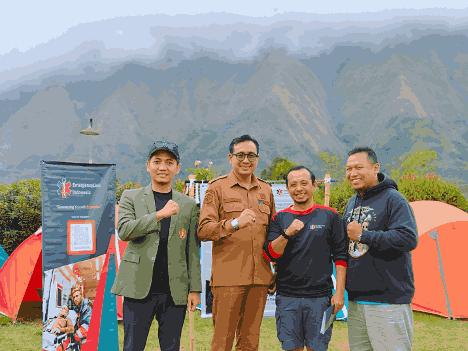


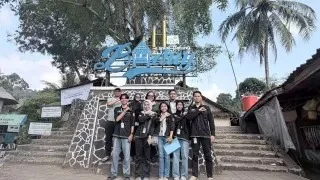
Enviro News Asia, Lebak — The Student Executive Board (BEM) of Universitas Pembangunan Nasional “Veteran” Jakarta (UPNVJ) has launched the Sustainable Village Baduy Luar 2026 program in Kanekes Village, Leuwidamar District, Lebak Regency, to strengthen community empowerment through economic, health, education, environmental, and communication initiatives.
The program runs from July 18 to 27 under the theme “Threads of Change: Weaving Impact Together.” It aims to address local needs by involving students as facilitators in digital marketing, health services, non-formal education, waste management, and communication training.
The initiative builds on the economic and cultural strengths of the Baduy community. Most households depend on upland farming and non-timber forest products, including honey, medicinal plants, ginger, turmeric, and aromatic ginger. Traditional weaving and cultural tourism also contribute significantly to household incomes, with the Baduy area attracting around 120,000 visitors each year.
Despite its economic potential, the community continues to face challenges in marketing local products. Most businesses still rely on direct sales and traditional markets, while digital marketing, online commerce, product branding, and cashless payment systems remain underutilized.
To address these challenges, UPNVJ students are assisting at least 15 local entrepreneurs in adopting QRIS digital payment services, creating e-commerce accounts, developing social media platforms, and producing digital product catalogs. The team is also establishing online promotional channels for Baduy cultural tourism and will continue monitoring the platforms to help residents manage them independently.
The health program provides medical screenings for at least 40 residents, including blood glucose, cholesterol, and uric acid tests. Students are also conducting education sessions on healthy living practices, the use of herbal medicine, and basic first aid for snakebite emergencies, particularly for people working in agricultural and forest areas.
The education component offers non-formal learning activities for children aged 5 to 12 through creative and nature-based educational programs designed to improve health awareness and practical learning skills.
In addition, local entrepreneurs and community tourism guides are receiving public speaking and digital communication training to strengthen their ability to promote local products and introduce Baduy culture to visitors.
The environmental program focuses on improving community waste management through waste identification, waste segregation campaigns, and the construction of two low-smoke incinerators. Students will also provide operational training and work with local community groups to ensure the facilities remain sustainable after the program ends.
The initiative is being implemented in two stages, beginning with health and economic empowerment activities before continuing with education and environmental programs. The phased approach is intended to improve implementation and maximize community participation.
The Sustainable Village Baduy Luar 2026 program supports several United Nations Sustainable Development Goals (SDGs), including Good Health and Well-being, Quality Education, Decent Work and Economic Growth, Responsible Consumption and Production, and Climate Action.
The program is coordinated by organizing committee chair Glen Christhover Aprilano and members of the UPNVJ Student Executive Board in collaboration with village officials, community leaders, local organizations, business owners, and residents to ensure the activities meet local needs while respecting the Baduy community’s cultural values. (www.upnvj.ac.id)