Yogyakarta — Indonesia’s Ministry of Environment and Environmental Control Agency (KLH/BPLH) has introduced young environmental advocates to community-based waste management practices in Ciamis, West Java, as part of efforts to strengthen environmental awareness among the younger generation.
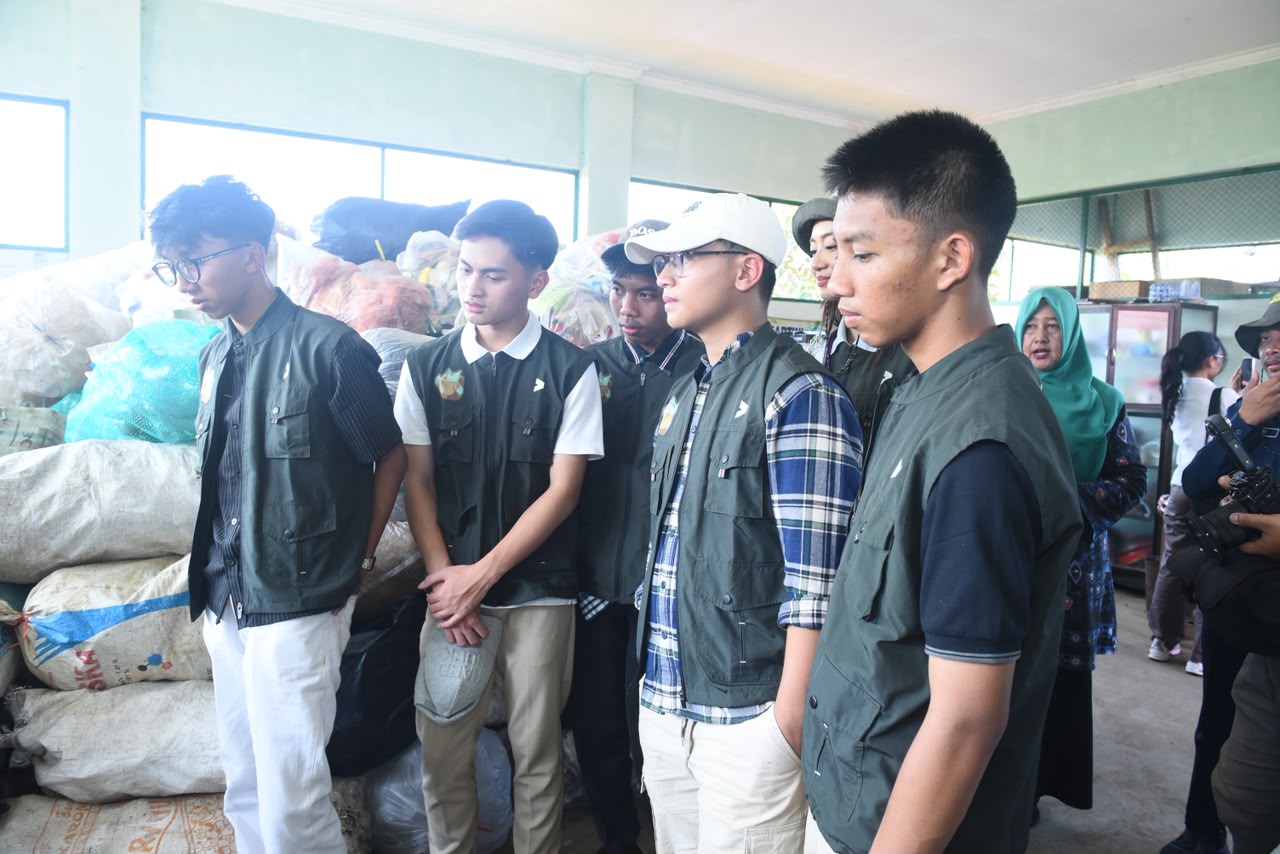
Thirteen selected students from the Greater Jakarta area, accompanied by 2026 Puteri Indonesia Environment Victoria Veronica Titisari Kosasieputri, visited Ciamis on August 7 as part of the third edition of the ministry’s Kenali Lingkungan Bareng Anak Muda (KELANA) environmental education program.
The program aims to provide young people with direct exposure to practical environmental solutions rather than relying solely on classroom-based learning.
Ciamis was selected as one of the destinations because of its track record in maintaining environmental quality and developing community participation in waste management. The district received the ASEAN Environmentally Sustainable Cities Award in 2025 and has also maintained its national Adipura recognition, including the Adipura Kencana.
KLH/BPLH said Ciamis demonstrates how strong community participation can contribute to environmental improvements even in areas without large-scale industrial infrastructure.
Romi Setiawan, coordinator of the Communication, Information and Education Working Group at the ministry’s Public Relations Bureau, said the KELANA participants were introduced to environmental initiatives involving local government agencies, businesses, community organizations, and environmental award recipients.
He said the experience was intended to encourage young people to replicate successful community-based environmental practices in their own communities.
Community participation is a central element of Ciamis’ waste management approach. Local authorities have encouraged residents to maintain cleanliness through neighborhood-level initiatives and competitions involving different administrative areas.
According to Ciamis Housing, Settlement and Environment Agency head Slamet Budi Wibowo, many sub-districts have established waste banks, while residents are increasingly managing waste independently at the household level.
The local government has also promoted the “Clean Friday” movement, which involves government institutions, schools, small businesses, and local communities in regular environmental activities.
The KELANA participants also visited the Kartini TPS 3R waste management facility in Imbanagara Raya Village, Ciamis District. They observed plastic processing using a pressing machine and organic waste composting activities conducted in cooperation with a local women farmers’ group.
Ciamis officials said waste separation at the household level remains a critical factor in making waste processing facilities more effective.
The community-based approach has also created opportunities to generate economic value from waste, particularly through recyclable materials and organic waste processing.
Local authorities emphasized that environmental awards should not be viewed as the ultimate objective. Instead, they said the long-term priority is to maintain public participation and establish environmental management as a shared responsibility.
The eight-day, seven-night KELANA program traveled through Jakarta, Ciamis, Banyumas, Yogyakarta, and Magelang. KLH/BPLH expects the program to equip participants with practical knowledge that can encourage them to become environmental change agents in their respective communities.
The initiative highlights the growing importance of community participation, waste separation, environmental education, and local economic opportunities in building more sustainable waste management systems in Indonesia. (*)