

Enviro News Asia, Jakarta — Indonesia is expanding research and innovation cooperation with the United States as the country accelerates efforts to strengthen food and energy security, develop high-value industries, and advance technological self-reliance.
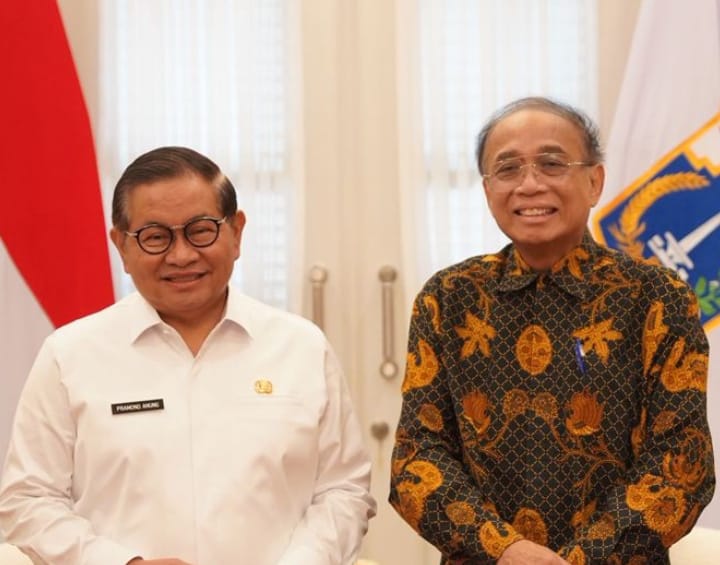
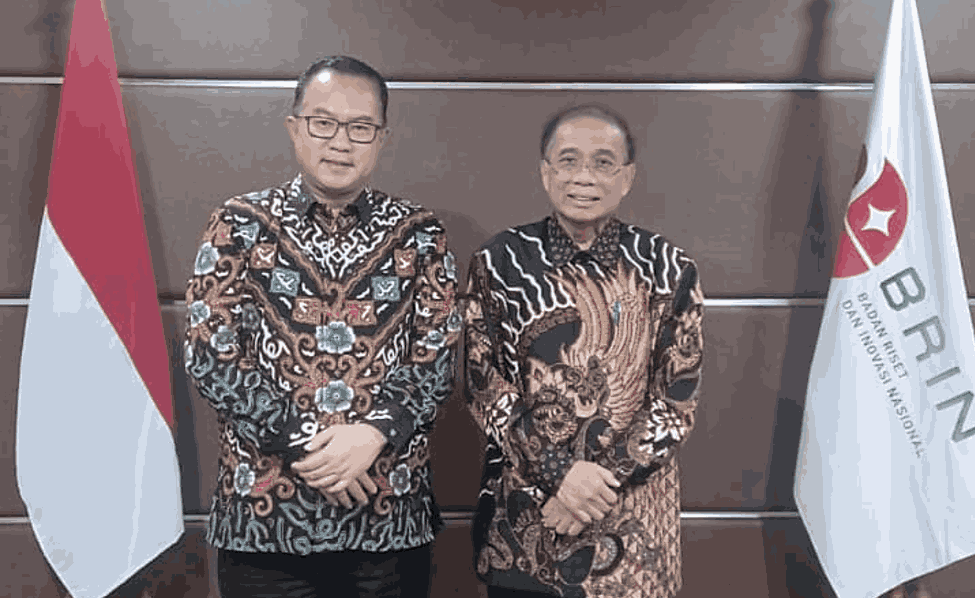
The direction of the cooperation was discussed during a meeting between National Research and Innovation Agency (BRIN) Chairman Arif Satria and Indonesian Ambassador to the United States Indroyono Soesilo in Jakarta on August 27, 2026. The meeting was also attended by BRIN Vice Chairman Amarulla Octavian, BRIN Deputy Chairman Boediastoeti Ontowirjo, and heads of BRIN research organizations and research centers.
The planned cooperation covers a broad range of strategic sectors, including marine research, critical minerals, semiconductor technology, energy, livestock, advanced manufacturing, artificial intelligence, and satellite technology.
Satria said international research partnerships are an important part of BRIN’s efforts to revitalize Indonesia’s national research ecosystem and accelerate the transition from scientific discoveries to industrial applications.
The United States offers an extensive research ecosystem connecting universities, national laboratories, technology companies, and private industry. Indonesia sees an opportunity to link this ecosystem with domestic priorities, particularly food security, energy substitution, mineral downstreaming, and technology development.
One of the planned collaborations involves BRIN, the Indonesian Navy’s Hydro-Oceanographic Center, Scripps Institution of Oceanography, and the University of California, San Diego (UC San Diego). The research program is expected to utilize BRIN’s Baruna Jaya research vessel for ocean monitoring, sustainable fisheries research, and coastal disaster mitigation.
The initiative is intended to strengthen Indonesia’s food security by improving knowledge and management of marine resources while supporting better preparedness for coastal hazards.
BRIN and Bandung Institute of Technology (ITB) are also developing research cooperation on critical minerals and rare earth elements with Argonne National Laboratory, the University of Michigan, and the University of Iowa. The research could support the development of industries involved in electronics, electric vehicles, and other high-technology applications.
Another strategic area is semiconductor development. BRIN is initiating cooperation with Arizona State University on semiconductor chip design and fabrication, with support from ARM Corporation. The partnership is expected to contribute to the development of Indonesia’s domestic semiconductor capabilities and strengthen its position in the global technology value chain.
In the energy sector, BRIN is exploring research on the gasification of low-calorie coal as a potential substitute for liquefied petroleum gas (LPG), in cooperation with Latitude Energy and the University of North Dakota.
BRIN is also pursuing partnerships with US industries on low-carbon and green energy technologies aimed at reducing emissions while improving Indonesia’s energy resilience.
Food security is another priority. A livestock research program involving BRIN, IPB University, and the University of California, Davis (UC Davis) is focused on improving livestock productivity, nutrition, and farming efficiency.
The cooperation is expected to contribute to stronger domestic food production and improve the nutritional quality and efficiency of Indonesia’s livestock sector.
BRIN is also exploring cooperation with Northwestern University on machinery and manufacturing technology as part of broader relations between Indonesia and the US state of Illinois. The initiative is designed to strengthen the technological capabilities of small and medium-sized manufacturers and improve the quality and competitiveness of locally produced goods.
Artificial intelligence is emerging as another major component of the Indonesia-US research agenda. BRIN is building on Indonesia’s longstanding research experience in machine learning and machine translation, which dates back to the country’s earlier technology research institutions in the 1980s.
The agency is now exploring cooperation with major US technology companies, including Amazon, Microsoft, Google, and Apple, which have expanded their investments in Indonesia. These investments include data-center development in several parts of the country.
The cooperation is expected to support stronger data infrastructure, wider adoption of artificial intelligence, and the development of Indonesia’s digital talent.
Space and Earth-observation technology are also included in the emerging partnership. BRIN plans to develop cooperation with NASA’s Johnson Space Center in Houston and Planet Labs in San Francisco on microsatellite development and remote-sensing applications.
High-resolution satellite data combined with artificial intelligence could support precision agriculture, land monitoring, disaster mitigation, and natural-resource management.
BRIN already has initial capabilities in microsatellite development and various applications of remote-sensing technology. The planned cooperation is expected to strengthen these capabilities through access to international expertise, technology, and research networks.
Satria said BRIN is undertaking a major revitalization program that includes upgrading laboratory equipment, expanding its research-vessel fleet, and strengthening researcher capacity through international collaboration.
The agency is also receiving dedicated research funding support from Indonesia’s Education Endowment Fund (LPDP) to accelerate the downstreaming of research results so that innovations can be adopted more rapidly by industry and generate direct benefits for society.
Ambassador Indroyono Soesilo emphasized that the cooperation offers mutual benefits. Indonesia can gain access to advanced technology, research expertise, capacity building, and the US innovation ecosystem, while US institutions and businesses can gain greater access to Indonesian talent and its growing market.
Bilateral economic relations provide an additional foundation for expanding cooperation. Indonesia-US trade reached approximately US$43 billion in 2025, with Indonesia recording a surplus of around US$19 billion, according to the information presented during the meeting.
As a follow-up, Satria is scheduled to visit the United States in early September 2026 to attend the G20 Innovation Ministers’ Meeting in Chapel Hill, North Carolina, and meet members of the US-Indonesia Business Council (US-ABC) in Washington, DC.
US-ABC signed a memorandum of understanding with BRIN in August 2024, providing a framework for strengthening cooperation between Indonesian research institutions and US businesses.
The expanding network of partnerships spans leading US research institutions and universities, including Scripps Institution of Oceanography, UC San Diego, Argonne National Laboratory, the University of Michigan, the University of Iowa, The Ohio State University, the University of North Dakota, UC Davis, Northwestern University, Arizona State University, and NASA Johnson Space Center.
It also involves technology and industrial companies such as Amazon, Microsoft, Google, Apple, ARM, Latitude Energy, and Planet Labs.
By connecting research, technology development, industrial investment, and commercialization, the Indonesia-US partnership could provide a broader pathway for turning scientific research into economic value.
For Indonesia, the cooperation is expected to support food and energy security, accelerate industrial downstreaming, develop high-tech employment, strengthen domestic technological capabilities, and position the country as an increasingly important innovation partner in the Indo-Pacific. (*)