

Enviro News Asia, Central Kalimantan — The Indonesian Forestry Association (APHI) Central Kalimantan Chapter has strengthened forest and land fire prevention measures by requiring Forest Utilization Business License (PBPH) holders to intensify patrols, monitor operational areas and ensure firefighting resources remain ready amid increasing fire risks across the province.
APHI Central Kalimantan Chairman Achwan said companies must maintain operational readiness beyond administrative requirements, including personnel, firefighting equipment, water sources, communication facilities and emergency response procedures.
“Under current conditions, all PBPH management units must ensure their resources are ready and able to respond quickly to any forest and land fire information. They must not simply wait, but actively carry out prevention, patrols and field response,” Achwan said on Tuesday, September 1, 2026.
The association has also encouraged PBPH companies to assist with firefighting outside their concession areas when necessary and when such support can be coordinated with relevant authorities.
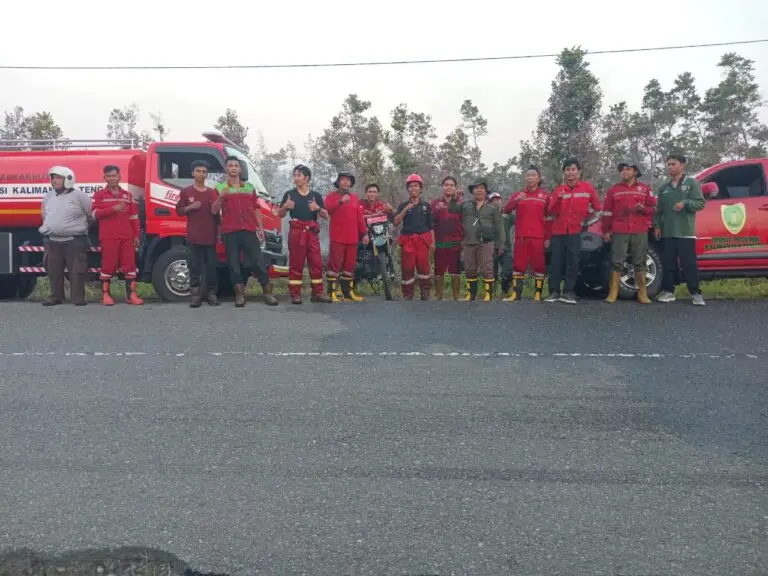
Several APHI members have already participated in joint firefighting operations with government agencies and local communities. Among them, the firefighting team of PT Industrial Forest Plantation (IFP), a member of APHI Central Kalimantan, assisted the Masyarakat Peduli Api community and the Central Kalimantan Forestry Agency in responding to a fire in Gawing Village.
Similar support was provided for fires around the operational area of PT Sakti Mait Jaya Langit (Agrinas) and the Mandau Telawang Wildlife Reserve.
Achwan said the involvement of PBPH companies reflected a shared responsibility to prevent fires from spreading and to strengthen environmental protection.
APHI Central Kalimantan has also intensified monitoring by requiring daily reports from each PBPH management unit, including when no hotspots or fires are detected. The reports cover patrol activities, field conditions, firefighting infrastructure, personnel readiness and water availability.
“Daily reports must still be submitted even when there are no hotspots. This is important to ensure that fire prevention and control activities continue to operate,” Achwan said.
To accelerate information exchange, APHI Central Kalimantan has established a dedicated WhatsApp communication group involving PBPH management units, the Central Kalimantan Forestry Agency and the Regional Forest Management Unit XII in Palangka Raya.
Hotspot information and indications of fires can be shared through the channel, allowing companies located near affected areas to conduct immediate field verification.
Initial information is also obtained from the SIPONGI and SIPASHUT monitoring systems. When hotspots are detected within or near PBPH areas, the relevant management unit is expected to verify the situation on the ground and take appropriate action based on field conditions.
Achwan emphasized that the communication group serves to accelerate the delivery of initial information, while all forest and land fire incidents must continue to be reported through official mechanisms in accordance with applicable regulations.
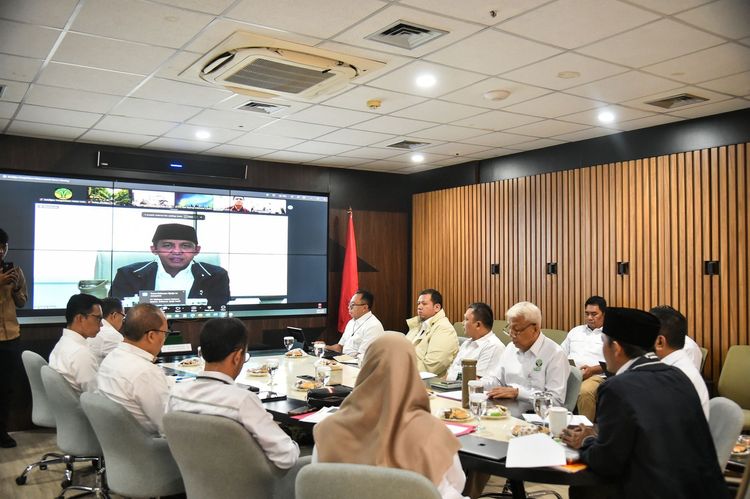
APHI Central Kalimantan is also participating in daily coordination meetings with relevant agencies under the coordination of the Central Kalimantan Regional Disaster Management Agency (BPBD). The meetings are used to update information on hotspots, fire locations, field conditions, personnel and equipment readiness, as well as firefighting support requirements.
“Coordination is carried out every day because forest and land fire conditions are highly dynamic. Information from the field must be communicated and followed up immediately,” Achwan said.
APHI Central Kalimantan said it would continue coordinating with BPBD and other relevant agencies to ensure that PBPH resources could contribute effectively to fire prevention and response.
Achwan stressed that rapid information exchange and response are critical to preventing fires from developing and spreading to surrounding areas.
“Forest and land fires are a shared responsibility. What we need is not to blame one another, but to accelerate information exchange, strengthen coordination and ensure that every incident receives a real response in the field,” he said.
He called on all APHI members to maintain preparedness through regular patrols, monitoring, reporting and cooperation with government institutions and local communities.
“PBPH companies must be part of the solution. The measure is preparedness, response speed, information transparency, collaboration and concrete action in the field,” Achwan said. (*)