Enviro News Asia, Bandung — Indonesia’s National Research and Innovation Agency (BRIN) has developed an integrated atmospheric monitoring system capable of detecting particulate matter from forest and land fires, including PM1, PM2.5 and PM10, as smoke from fires continues to affect communities far beyond the areas where fires occur.
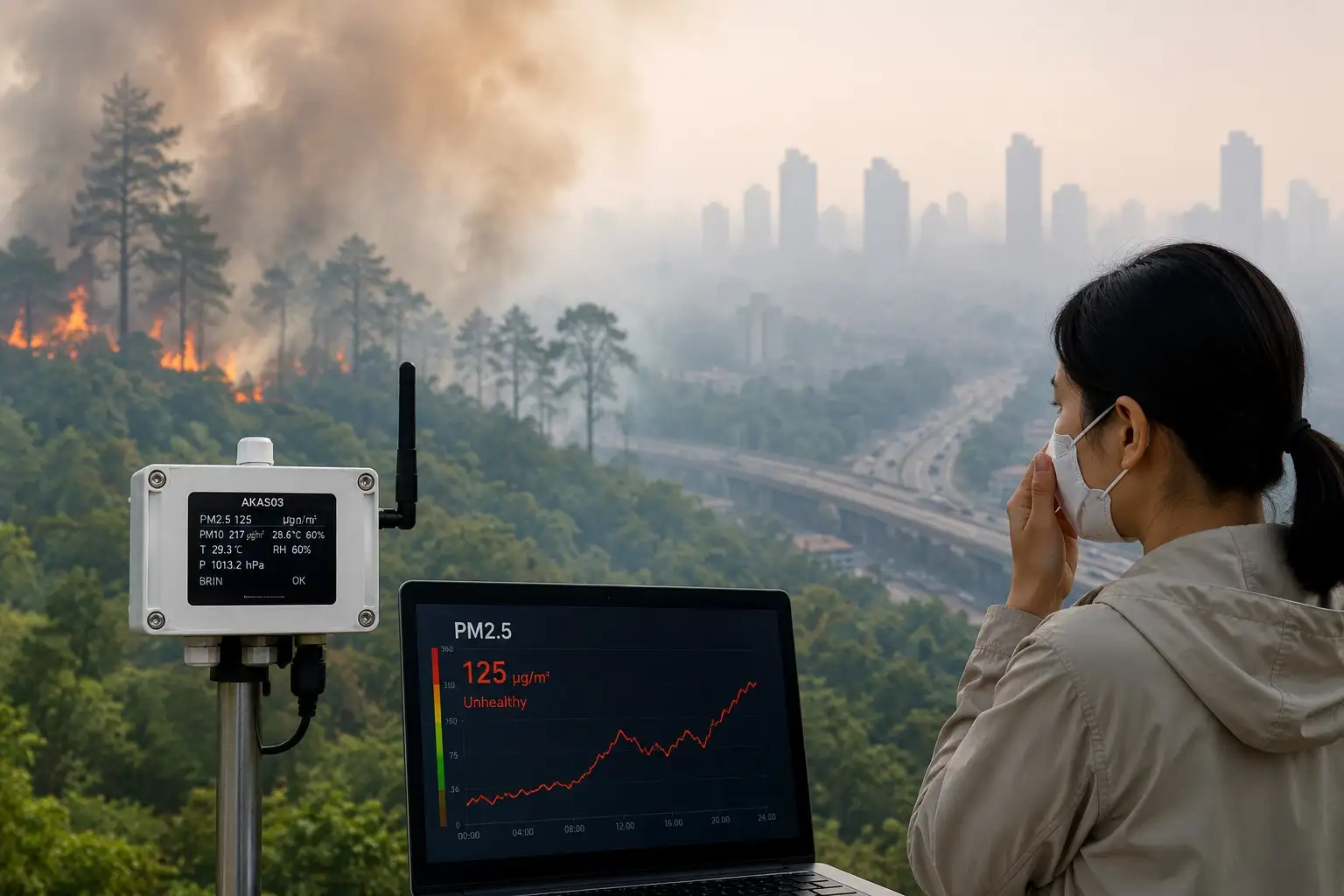
The system, known as AKAS (Atmospheric Knowledge and Sensing), has been developed in stages to strengthen monitoring of air pollution caused by forest and land fires. The latest version, AKAS04, features a more comprehensive set of sensors capable of simultaneously detecting PM1, PM2.5 and PM10 using a particle counter.
BRIN researcher Saipul Hamdi of the Center for Climate and Atmospheric Research (PRIMA) said the system also measures air pressure, temperature and humidity.
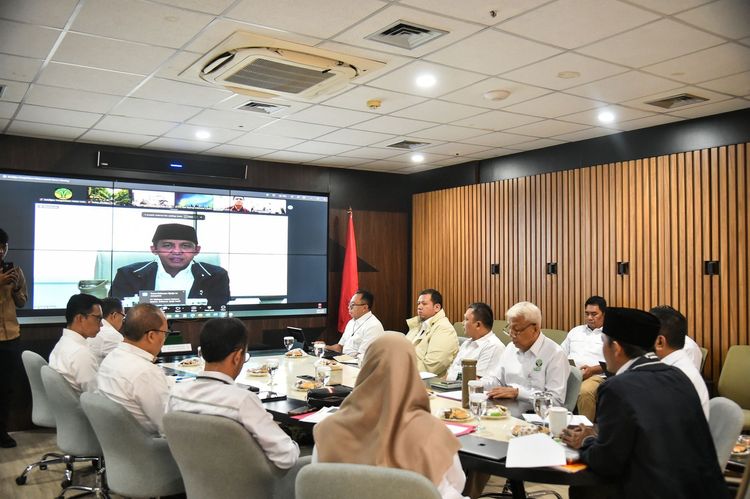
He made the statement during the Coffee Morning Peat Wildfires event on Friday, August 28, 2026.
“Going forward, we want to develop sensors that can be carried by drones to measure particulate concentrations at several altitude levels,” Saipul said.
BRIN previously developed AKAS01 using basic sensors before introducing AKAS03, which incorporates Internet of Things (IoT) technology. AKAS03 is currently operating in Palembang, South Sumatra.
Monitoring data collected by AKAS03 in the Srimas Buana Rindang area of Palembang showed that PM2.5 concentrations can change significantly over relatively short periods. Between August 22 and 27, the monitoring system recorded a sharp increase in PM2.5 concentrations.
The changes highlight the importance of continuous air-quality monitoring during periods of forest and land fires, when pollution episodes can emerge, intensify and decline within relatively short periods.
Saipul explained that smoke from forest and land fires contains particulate matter, a complex mixture of very small solid particles and liquid droplets suspended in the air. Among the pollutants of greatest concern is PM2.5, consisting of particles with a diameter of 2.5 micrometers or smaller.
PM2.5 is particularly concerning because its small size allows it to penetrate deep into the lungs and enter the bloodstream. Exposure can contribute to respiratory problems, affect fetal development, disrupt the cardiovascular system and have long-term impacts on children’s growth and health, according to Saipul.
Continuous monitoring is therefore needed to provide a clearer picture of exposure to fire-related pollution and support timely public information.
“Air-quality monitoring is an important step in determining the level of particulate exposure caused by forest and land fires. Information on particulate concentrations needs to be made available regularly so that communities and stakeholders can take appropriate measures based on air-quality conditions in affected areas,” Saipul said.
The development of AKAS is part of BRIN’s efforts to provide faster and more measurable atmospheric data. The agency expects the technology to support communities and decision-makers in understanding air-quality conditions and responding more effectively to the risks associated with fire-related smoke.
BRIN said continuous monitoring could transform air-quality information from observational data into a practical basis for increasing public awareness, supporting decision-making and strengthening measures to reduce the environmental and health impacts of forest and land fires.