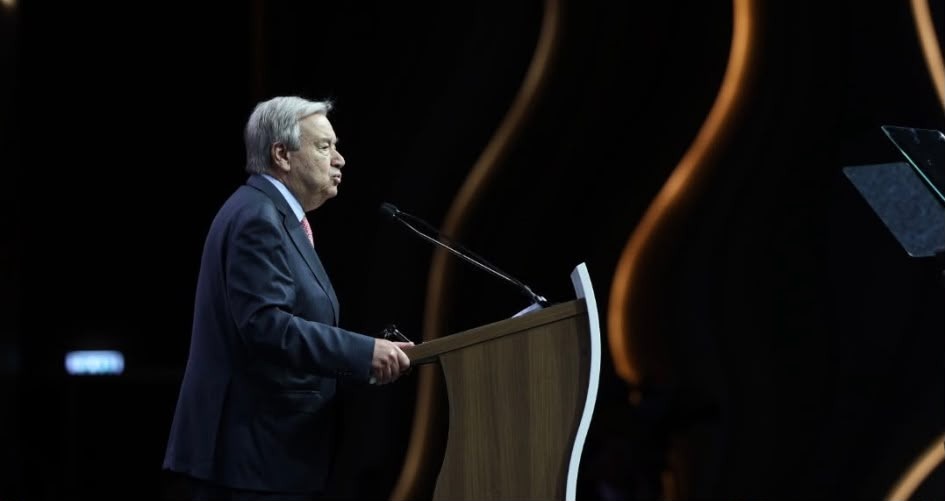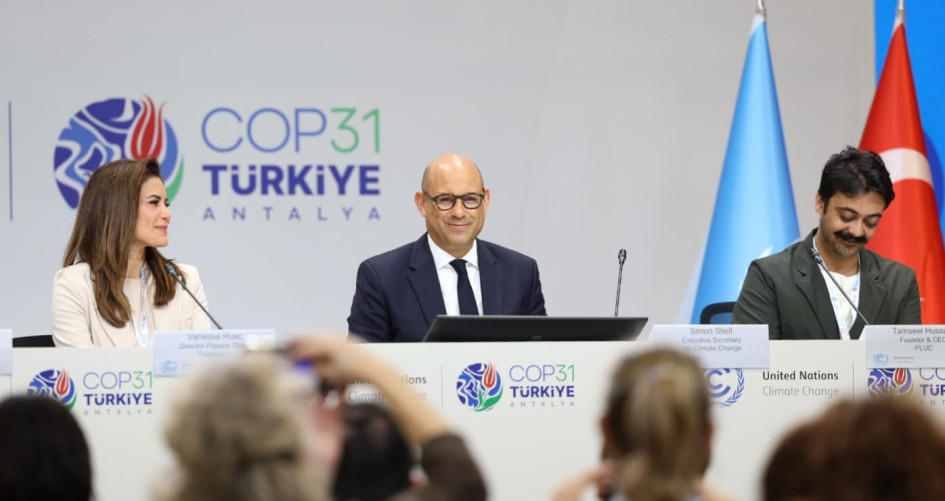
Enviro News Asia, Antalya — UN Climate Change Executive Secretary Simon Stiell has urged countries to compromise and accelerate negotiations as COP31 reached its halfway point on Nov. 14, warning that no collective agreement would be possible without concessions from every participating nation.
Speaking at a press conference in Antalya, Türkiye, Stiell said nearly 200 countries were working through 165 negotiation mandates, with delegates making progress despite differences over key issues.
“There is no collective success without compromise from every Party,” he said, urging governments to address the most difficult issues during the second week and avoid tactical delays.
Stiell described the conference as one of the largest COP gatherings, bringing together governments, international institutions, businesses and civil society. He said world leaders had reaffirmed their commitment to climate action and the United Nations climate process.
Countries were increasingly treating climate action as both an environmental priority and an economic necessity, he said, pointing to renewable energy as a source of jobs, economic growth and more secure and affordable energy. Adaptation, meanwhile, was becoming increasingly important to economic competitiveness.
He also highlighted the role of the COP31 Action Agenda in turning international commitments into practical measures across the economy, including clean electricity, stronger infrastructure, cleaner industries and improved protection against disasters.
Stiell said no single climate conference could resolve the crisis, but each should deliver measurable progress. He called for broader public engagement, arguing that climate action needed to connect with people’s everyday concerns, including health, employment and affordable energy.
Sport, entertainment and culture could help bring climate issues to wider audiences, he said.
Telemundo journalist Vanessa Hauc illustrated this approach through the broadcaster’s coverage of the FIFA World Cup. She explained how the network used players’ hydration breaks to show viewers the effects of extreme heat and humidity on athletes.
Hauc said she interviewed medical professionals, players and a referee from Guatemala who collapsed on the field because of extreme heat. Her reports explained how high temperatures affected athletes’ health and performance.
Telemundo also chose not to run commercials during hydration breaks, allowing viewers to see players cooling themselves with water and ice packs while Hauc explained the climate-related risks.
She said the coverage helped bring climate science to millions of viewers who might not otherwise follow environmental reporting.
The World Cup, she added, offered an opportunity to connect climate change with an event that brings together people across national, linguistic and generational boundaries.
Hauc also stressed the importance of addressing the role of fossil fuel emissions in the climate crisis, saying climate reporting should include accountability as well as scientific explanations.
Tamseel Hussain, founder and chief executive of Indian organisation PLUC, highlighted the potential of film and television to make climate issues part of mainstream storytelling.
India produces more than 1,800 films annually in about 20 languages, he said, offering a major opportunity to incorporate climate themes into popular entertainment.
PLUC has launched India’s first climate scriptwriting laboratory in partnership with Netflix India. The programme received more than 6,000 applications from credited screenwriters, with 65 selected.
Rather than asking participants to write conventional climate stories, the programme encouraged them to develop genres such as romance, horror and science fiction that could reach audiences through familiar narratives.
Hussain also described efforts to reduce emissions in film production. Nine major studios initially joined discussions with the Producers Guild of India, helping build a wider initiative involving 170 studios to develop the country’s first green production handbook.
The handbook outlines practices for reducing emissions while maintaining production quality, drawing on experience from Indian and international film studios.
Stiell said the UN climate body was working through its Entertainment and Culture for Climate Action initiative to encourage creators to tell stories connected to people’s lives. He said partnerships across sport, culture and entertainment could help make climate action more relevant to wider audiences. (*)