Enviro News Asia, Antalya — Climate action by local governments, businesses, cities, and civil society organizations is beginning to deliver results. However, implementation must accelerate to ensure global commitments translate into tangible emissions reductions and environmental protection.
This was highlighted in the Yearbook of Global Climate Action 2026, launched by the Secretariat of the United Nations Framework Convention on Climate Change (UNFCCC) on November 9, 2026, on the sidelines of the 31st UN Climate Change Conference (COP31) in Antalya, Türkiye.
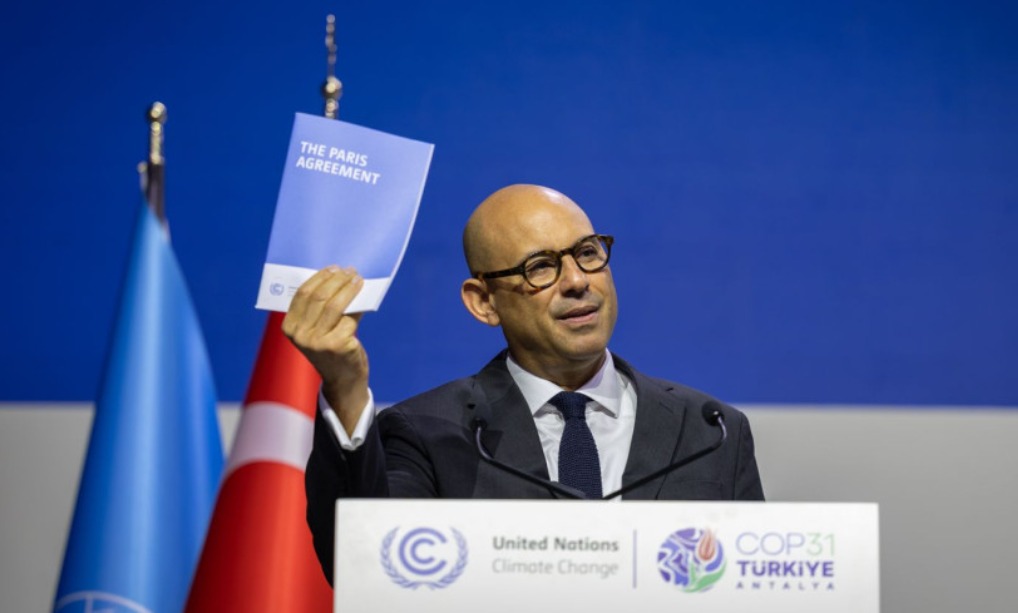
UNFCCC Executive Secretary Simon Stiell said initiatives by businesses, city governments, and communities have generated changes whose benefits are increasingly being felt by the public.
“This yearbook shows how businesses, cities, communities, and other actors are translating global commitments into changes that people can see, feel, and benefit from,” Stiell said.
He added, “COP31 must help scale up solutions, mobilize finance, and bring the benefits of climate action to more people.”
The report records progress across 44 global indicators linked to the outcomes of the first Global Stocktake of the implementation of the Paris Agreement. Among the 96 socioeconomic indicators monitored, positive developments include increased renewable energy capacity, slower deforestation, and stronger climate adaptation efforts.
However, significant gaps remain, particularly in reducing methane emissions from the oil and gas sector and addressing food loss. Limited global indicators in several areas also pose challenges to measuring overall progress comprehensively.
COP31 is taking place from November 9 to 20, 2026, at the ANFAŞ Antalya Expo Center in Türkiye. The conference involves 197 parties to the UNFCCC, comprising 196 countries and the European Union. Around 100,000 participants are expected to attend.
A total of 102 leaders from 95 countries and seven international organizations are scheduled to attend the high-level meetings, including 37 heads of state and 35 heads of government. Türkiye’s Minister of Environment, Urbanization and Climate Change, Murat Kurum, is serving as COP31 President, while Australia’s Minister for Climate Change and Energy, Chris Bowen, is leading the negotiation process.
Engagement by non-state actors is also showing progress. Through the Non-State Actor Zone for Climate Action (NAZCA) platform, the UNFCCC has recorded 83 collaborative initiatives reporting more than 200 activities.
Meanwhile, 84 percent of the Plans to Accelerate Solutions reported progress after one year of implementation. These achievements form part of the 10-year milestone of the Marrakech Partnership for Global Climate Action, which brings together governments, businesses, investors, local authorities, and communities.
The UNFCCC said these developments must be reinforced through consistent emissions reductions, forest protection, and increased financing for developing countries.
The Yearbook of Global Climate Action 2026 will also be updated to reflect developments in the climate action agenda throughout COP31.
Stiell warned that the world’s challenge is no longer simply to make commitments, but to ensure they are implemented more widely and rapidly. The success of climate action, therefore, must be measured by the tangible changes it delivers for people and the environment, rather than by the number of agreements reached. (*)