Enviro News Asia, Antalya — Indonesia has called for stronger use of scientific information in forest management and climate investment, saying reliable data must inform decisions by governments, businesses and local communities.
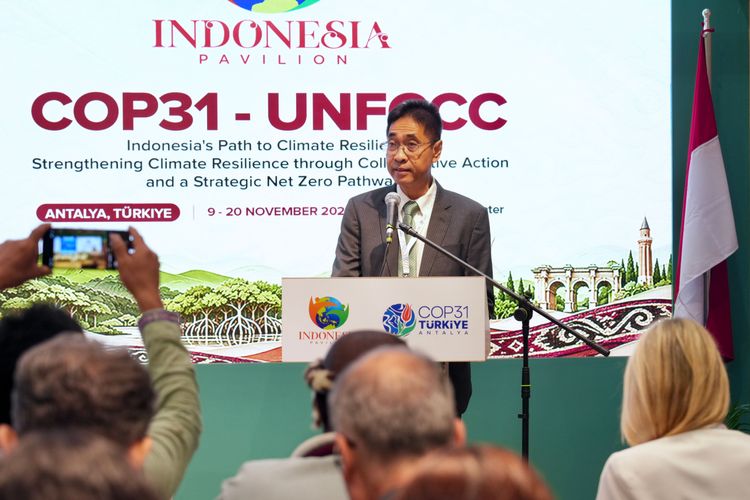
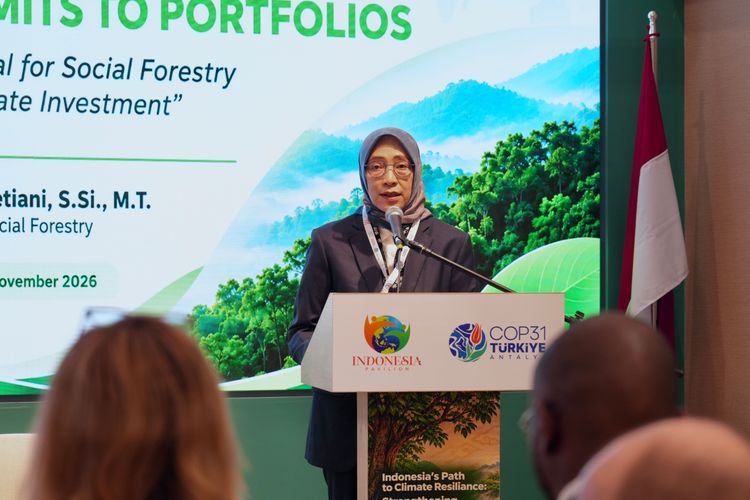
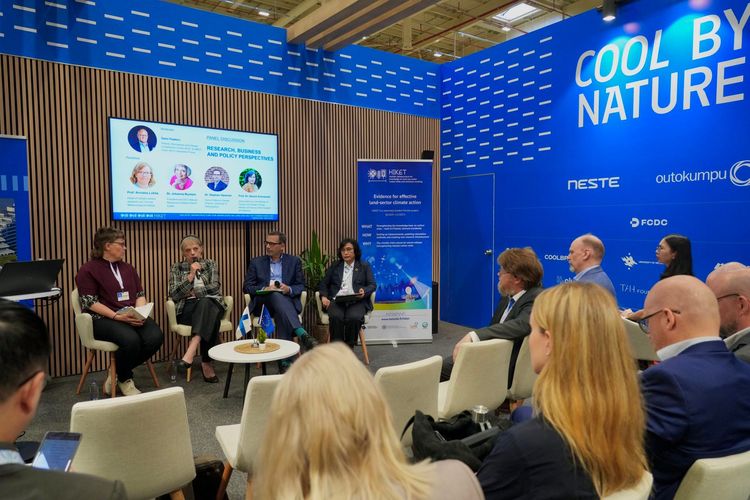
Haruni Krisnawati, an expert staff member to the Forestry Minister for Climate Change, delivered the message during a panel discussion titled “Scientific Knowledge of the Land-Use Sector as a Basis for Decision-Making in Business and Society” at the Finland Pavilion at the COP31 climate conference in Antalya, Turkey, on Nov. 14.
The discussion was held under the Holistic Infrastructure for Knowledge on Land-Use Sector Carbon Sinks and Emissions Tracking (HIKET) initiative of the University of Helsinki. It brought together experts from scientific institutions, government and the business sector to examine how land-use data could support public policy and investment decisions.
The panel was moderated by Sami Paatero, an adviser at Finland’s Atmospheric and Climate Competence Center. Other speakers included Annalea Lohila of the Finnish Meteorological Institute, Johanna Buchert, director general of the Natural Resources Institute Finland, and Stephen Hammer of the University of Pennsylvania in the United States.
Haruni said scientific information must cover more than carbon measurements, as forest management also involves biodiversity, water regulation, ecosystem functions and the welfare of communities that depend on forests.
“Integrated scientific information is essential for Indonesia because forest management is not only about carbon. We must also consider ecological functions, biodiversity, water systems and the welfare of forest-dependent communities,” she said.
Indonesia has continued to strengthen its National Forest Monitoring System, including SIMONTANA, which combines satellite observations, field measurements and data from the National Forest Inventory.
The system provides information on changes in forest cover and helps estimate carbon emissions and absorption. It also supports the implementation of REDD+ and Indonesia’s FOLU Net Sink 2030 agenda.
However, producing reliable scientific data remains only part of the challenge. The information must also be accessible and useful to decision-makers at national and regional levels, forest managers, businesses and communities on the ground.
The discussion highlighted persistent gaps in data availability, methodological consistency and the management of scientific uncertainty. Indonesia’s experience with greenhouse gas inventories and REDD+ reporting shows that differences in definitions, observation periods, activity data and emission factors can lead to varying estimates.
Such differences must be clearly understood and transparently documented, particularly when the data are used for climate reporting and results-based financing.
For businesses, credible scientific information can help assess environmental risks, identify investment priorities and demonstrate measurable climate outcomes. Reliable monitoring and adequate safeguards are particularly important for sustainable forest management, ecosystem restoration and forestry carbon projects.
The forum also explored opportunities to expand scientific cooperation between Indonesia and Finland, including through the International Tropical Peatlands Center (ITPC).
Finland’s experience in atmospheric and ecosystem monitoring could complement Indonesia’s expertise in tropical forest and peatland monitoring. Potential areas of cooperation include joint research, knowledge exchange and capacity building.
The panelists agreed that scientific knowledge on land use must be translated into practical decisions that improve public policy, business practices and climate action.
“Our goal is not merely to produce better scientific data, but to ensure that this knowledge is used to make better decisions for the climate, biodiversity and society,” Haruni said. (*)