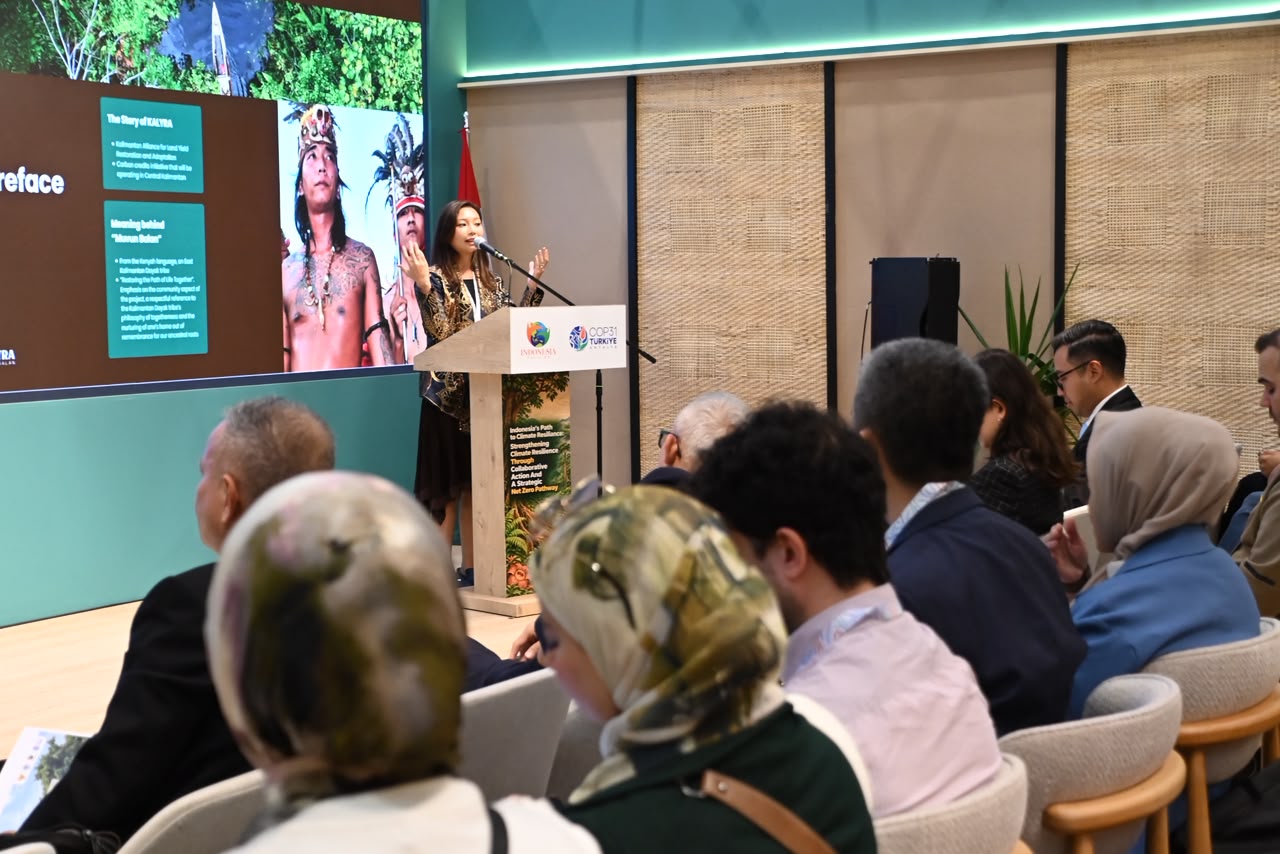
Enviro News Asia, Antalya — Indonesia has presented 14 climate mitigation projects to potential buyers, investors, financial institutions and international development partners, seeking to attract green investment from forest landscapes in Kalimantan to restoration sites in Sumba.
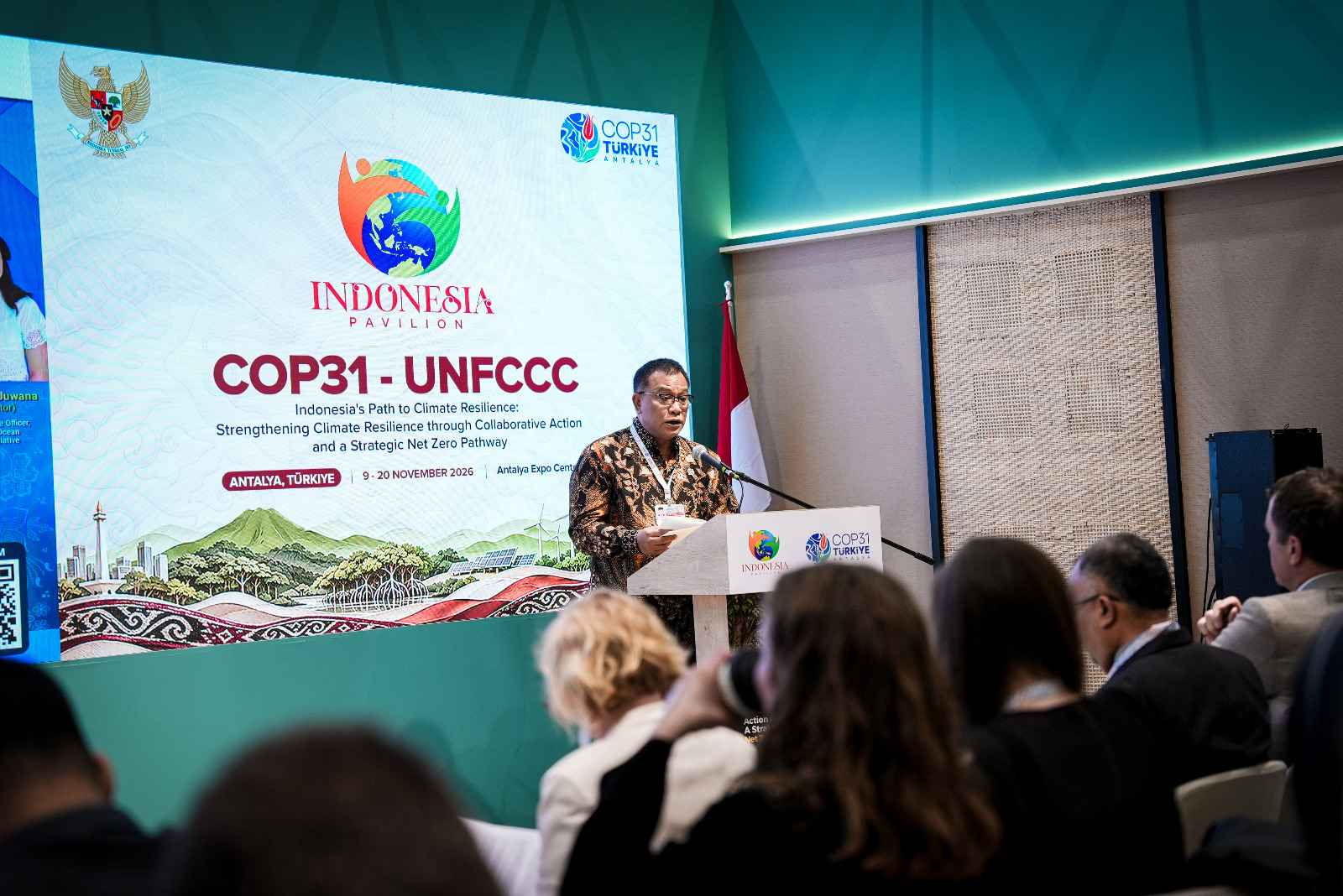
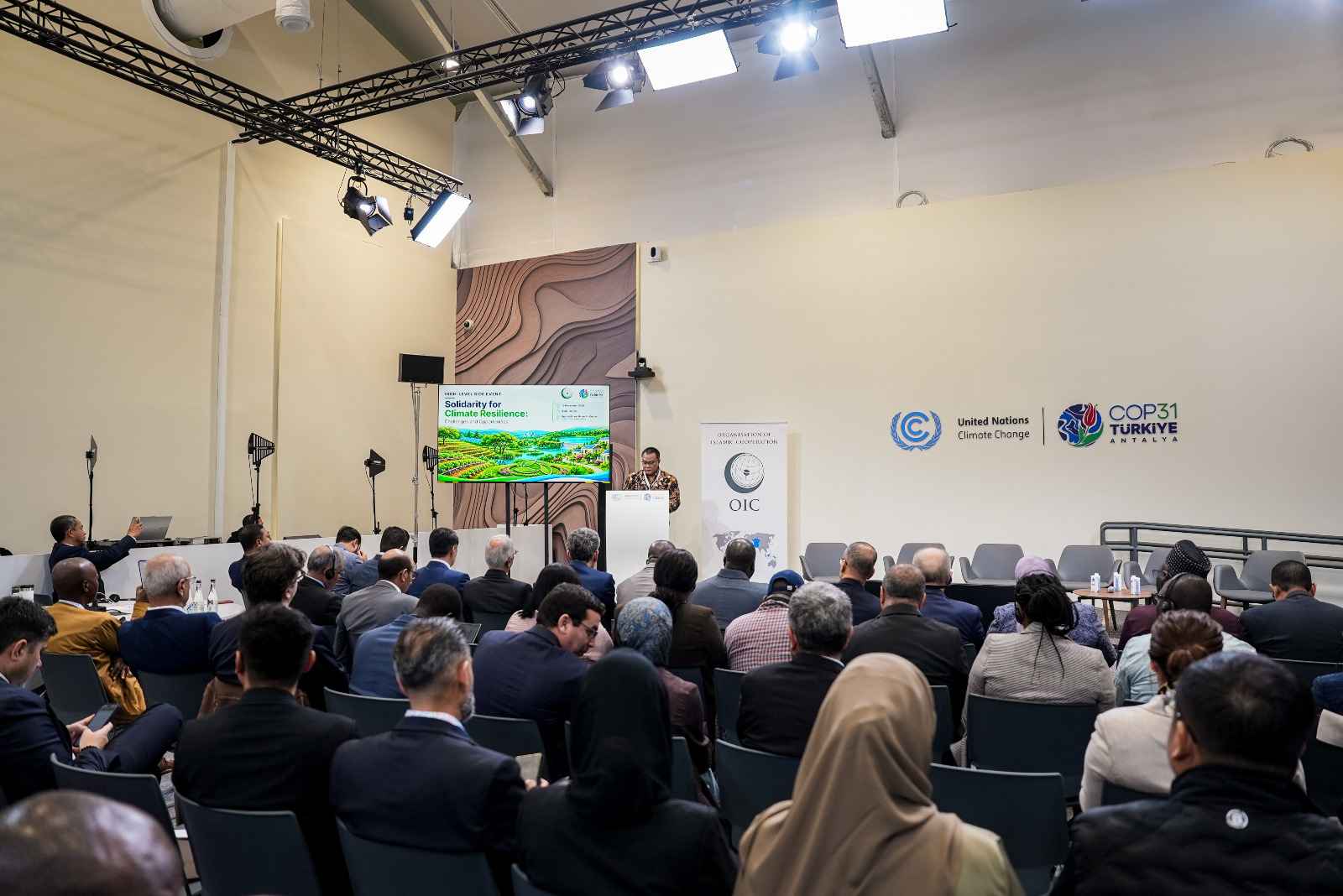
The projects were showcased during the first week of the Carbon Connection Session (Carbonnex), held from Nov. 10 to 14 at the Indonesian Pavilion during the 31st United Nations Climate Change Conference (COP31) in Antalya, Türkiye.
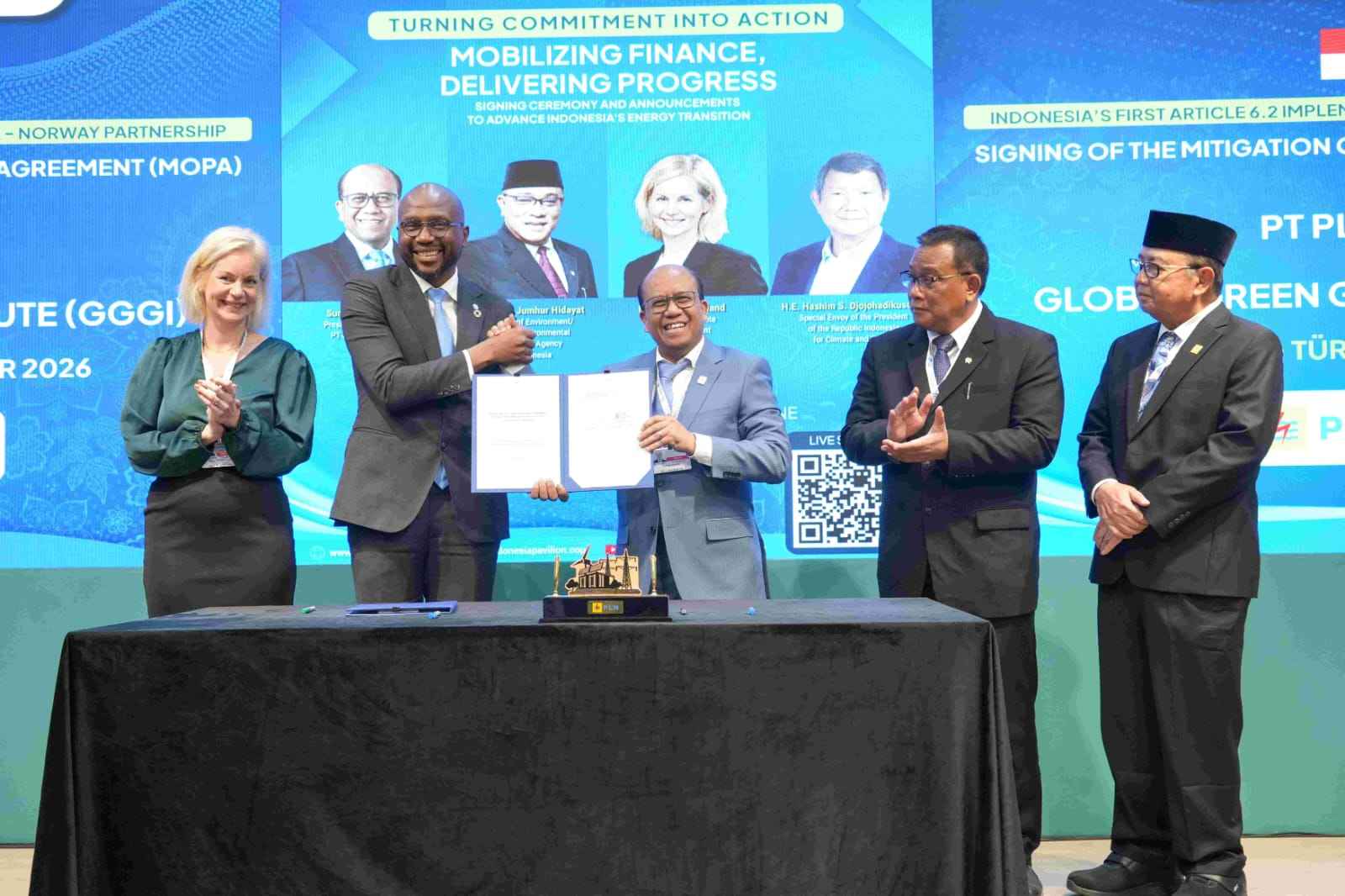
The initiative was reinforced by the launch of the Indonesia Climate and Carbon Partnership (ICCP) on Nov. 10. The platform is designed to connect Indonesia’s national climate priorities with international expertise, technology and financing.
Environment Minister and head of the Environmental Control Agency Moh Jumhur Hidayat said carbon market cooperation must deliver measurable benefits for communities and the environment, rather than remain limited to financial transactions.
“High Integrity, Real Impact must not stop at being an event theme, but must guide every stage, from project preparation to the achievement of results,” Jumhur said.
He added that international market confidence depended on credible mitigation outcomes, supported by transparent verification and emissions accounting.
Fourteen projects across three sectors
Nine project developers presented 14 initiatives during the first week of COP31. The portfolio comprises nine Forestry and Other Land Use (FOLU) projects, four waste management projects and one agriculture and biomass project.
Several initiatives involve local communities directly and offer opportunities for village-level participation in climate mitigation.
The forest and land-use portfolio includes the Rangkong Basaken Conservation Project, developed by PT Pertamina Power Indonesia, which uses an Improved Forest Management (IFM) approach and has the potential to reduce emissions by around 272,000 tonnes of CO2e annually.
PT Karbonix Utama Indonesia presented the Daisy Berau Project, with estimated annual reductions of 44,276 tonnes of CO2e, and the KGR Central Kalimantan project, which combines sustainable forest management with efforts to reduce deforestation and forest degradation. The latter has an estimated annual reduction potential of 78,414 tonnes of CO2e.
The M4CR Blue Carbon Project, developed by PT Benuanta Kaltara Jaya, focuses on mangrove restoration and emissions reduction. It has the potential to cut emissions by around 137,665 tonnes of CO2e annually, or 5.5 million tonnes over 40 years.
PT CarbonX Bumi Harmoni’s Sanggala Corridor Project combines deforestation prevention, forest degradation reduction and landscape restoration, with estimated cumulative reductions of 8.24 million tonnes of CO2e through 2074.
PT Karbon Indo Pratama presented the Mahakam Forest Landscape and Kayan Forest Rejuvenation projects, which combine sustainable forest management, deforestation prevention and forest restoration. Together, the two projects have an estimated potential of 600,000 to 700,000 carbon credits annually.
The IFM Murung Raya project, developed by PT Nafas Fajar Karbon/KALYRA, focuses on sustainable forest management and restoration. It has an estimated annual emissions reduction potential of 572,359 tonnes of CO2e, with cumulative potential reaching 22.89 million tonnes.
Four waste-related projects developed by KIS Group focus on capturing methane from waste processing. They are Bina Pitri Jaya Mill, with an estimated reduction potential of 401,751 tonnes of CO2e; KIS Biofuels Bakrie Project, 425,370 tonnes; PT SMART Tbk PKS Padang Halaban, 404,411 tonnes; and Langga Payung Mill, 563,930 tonnes.
The portfolio also includes the Biochar Carbon Removal Project in Ogan Ilir, developed by PT Planet Carbon Teknologi. The initiative applies biochar technology in agriculture and biomass industries, targeting 10,000 carbon credits in 2027.
The final project, Restoring Sumba with Pongamia, developed by PT Santi Energi Hijau, combines land restoration and agroforestry using pongamia trees. It has an estimated emissions reduction potential of 284,000 tonnes of CO2e over 40 years and targets the issuance of 232,000 Verified Carbon Units (VCUs).
Building the carbon investment ecosystem
The project presentations form part of ICCP’s seventh Priority Support Package (PSP), which focuses on project preparation and climate investment. The sessions provide a platform for developers to present their project pipelines and explore financing requirements and market access.
ICCP comprises eight Priority Support Packages covering policy and regulatory development; institutional and human resource capacity; measurement, reporting and verification (MRV) systems and digital infrastructure; carbon integrity; sectoral readiness; subnational readiness; project preparation and climate investment; and cooperation under Article 6 of the Paris Agreement and carbon market development.
While Carbonnex connects projects with buyers and investors, ICCP strengthens the institutional, technical and financial conditions needed to make those projects credible and investment-ready.
Three strategic partners outlined potential support for the platform during the first week of COP31.
The ASEAN Alliance on Carbon Markets (AACM), with a network of 95 members across 20 countries, offered to facilitate access to international carbon buyers, support policy and regulatory development, and strengthen institutional and technical capacity.
IDXCarbon highlighted its role in developing transparent carbon trading infrastructure integrated with the Carbon Unit Registry System (SRUK). It also aims to strengthen market participants’ capacity and expand international connectivity through the Global Carbon Market Network (GCMN).
Meanwhile, CNGR Indonesia explored opportunities to support decarbonisation in the nickel industry through pilot projects on MRV and product carbon footprints, clean energy development, landscape conservation in Sulawesi and cooperation under Article 6.
The three partners’ proposals are expected to provide a starting point for further discussions on specific contributions and joint implementation.
Through ICCP and Carbonnex, Indonesia is seeking to connect its climate mitigation projects with international finance and technology while strengthening transparency, accountability and environmental integrity in its carbon market.