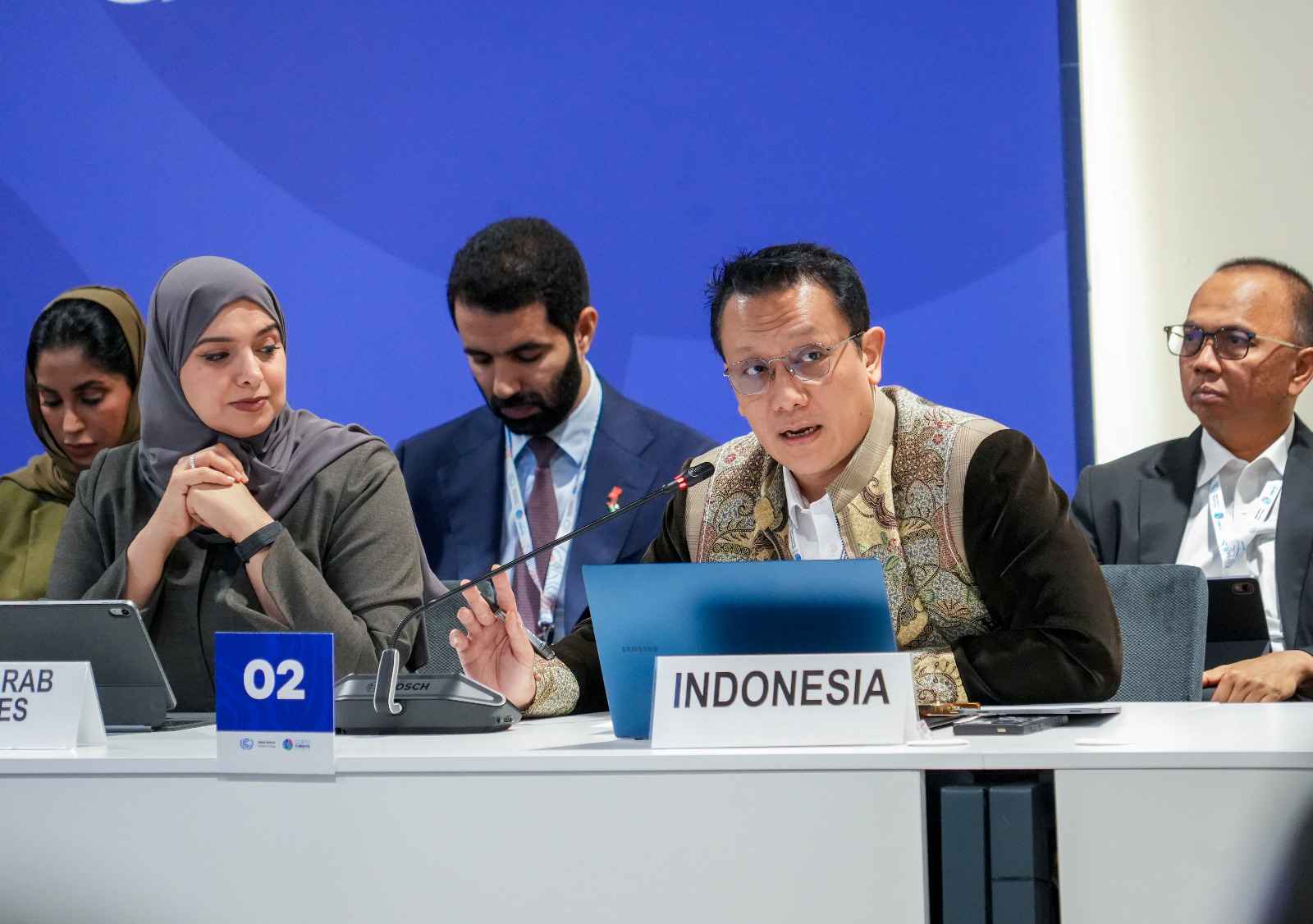
Enviro News Asia, Antalya — Indonesia has called for climate justice to become a fundamental principle of global climate action, particularly in planning, financing and implementing the transition towards low-carbon development. The government stressed that climate justice must go beyond policy statements and administrative requirements to ensure that vulnerable communities receive adequate protection and benefit from the green transition.
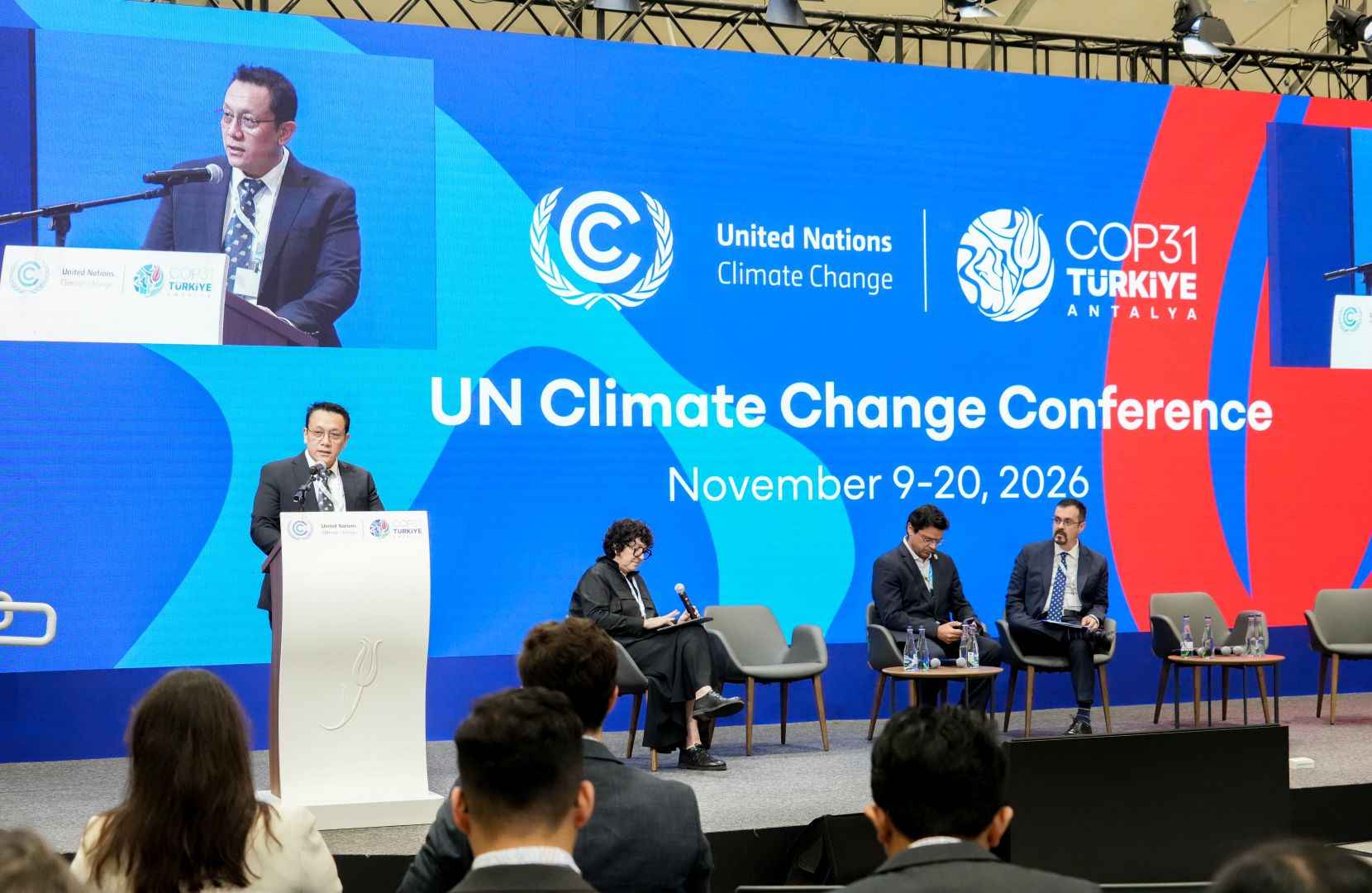
The position was delivered by Ary Sudijanto, Deputy for Climate Change Control and Carbon Economic Value Governance at the Ministry of Environment/Environmental Control Agency (KLH/BPLH), during the forum titled “Emerging Climate Justice: Shaping Just Transition through Global Experience” at the 31st United Nations Climate Change Conference (COP31) in Antalya, Türkiye, on Monday (Nov. 16, 2026). Ary participated as a keynote speaker.
Ary said the transition towards low-carbon development must be carefully planned to ensure that no one is left behind. He explained that climate justice encompasses not only the historical responsibility of countries for global greenhouse gas emissions, but also intergenerational equity and the protection of communities most vulnerable to climate change and economic transformation.
“Climate ambition must create a transition pathway that people can follow, benefit from and trust. We cannot ask vulnerable groups to bear the costs of the transition without support, opportunities or involvement in decision-making,” Ary said.
Indonesia emphasized that just transition principles must be integrated across economic sectors. In the energy sector, priorities include affordable access to energy and protection for affected workers. In industry, the focus is on reskilling programs and economic diversification, while forestry and land-use policies must strengthen the protection of local livelihoods.
In forestry, land use and carbon financing, the government also highlighted the importance of Free, Prior and Informed Consent (FPIC), known in Indonesia as Persetujuan atas Dasar Informasi Awal Tanpa Paksaan (PADIATAPA). The principle ensures that Indigenous Peoples and local communities participate meaningfully in decisions and retain the right to give or withhold consent to activities affecting their territories and customary rights.
Indonesia also stressed that economic benefits generated through Reducing Emissions from Deforestation and Forest Degradation (REDD+) and result-based payment programs must be distributed fairly to communities that actively protect forests.
To support this objective, the government is strengthening transparent beneficiary identification, accountable benefit-sharing mechanisms and responsive grievance procedures. Indonesia is also advancing legislative efforts to establish climate justice as a binding pillar of its national legal framework.
Achmad Santosa, co-founder of the Indonesia Ocean Justice Initiative (IOJI), expressed similar views, emphasizing that climate commitments must be translated into a strong legal framework to ensure consistent and accountable implementation.
Achmad outlined four key dimensions of climate justice that should be incorporated into national policies and legislation.
Distributive justice concerns the fair allocation of costs and benefits. Recognition justice focuses on protecting the rights and addressing the vulnerabilities of different communities. Procedural justice ensures transparency and meaningful public participation, while corrective justice addresses existing environmental damage and intergenerational inequalities.
He said the development of a draft law on climate change and justice presented an important opportunity to incorporate these four dimensions into Indonesia’s national legal governance framework.
Through its participation in the high-level forum, Indonesia reiterated that the success of climate action should not be measured solely by emissions reductions. The country argued that the transition towards a green economy must also deliver social justice, protect community rights and promote equitable prosperity. (*)