Enviro News Asia, Jakarta — The Indonesian government has emphasized the importance of multi-stakeholder collaboration in developing a voluntary carbon market (VCM) within the forestry sector.
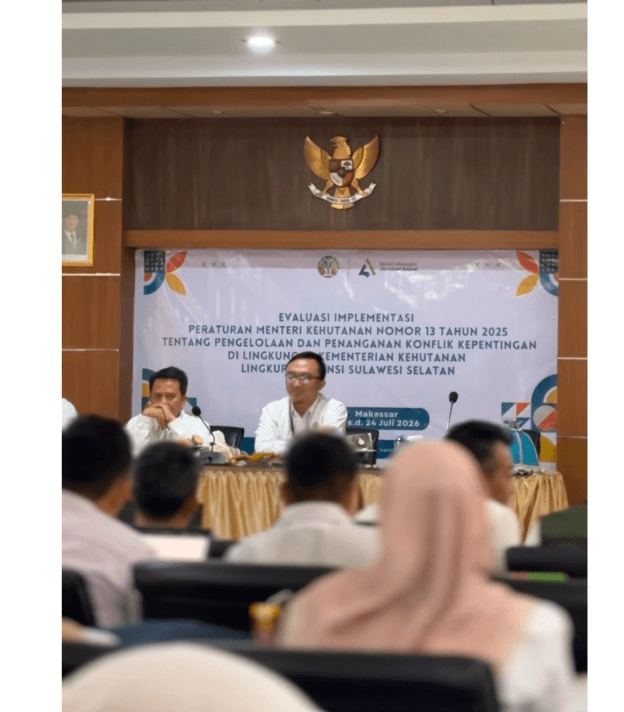
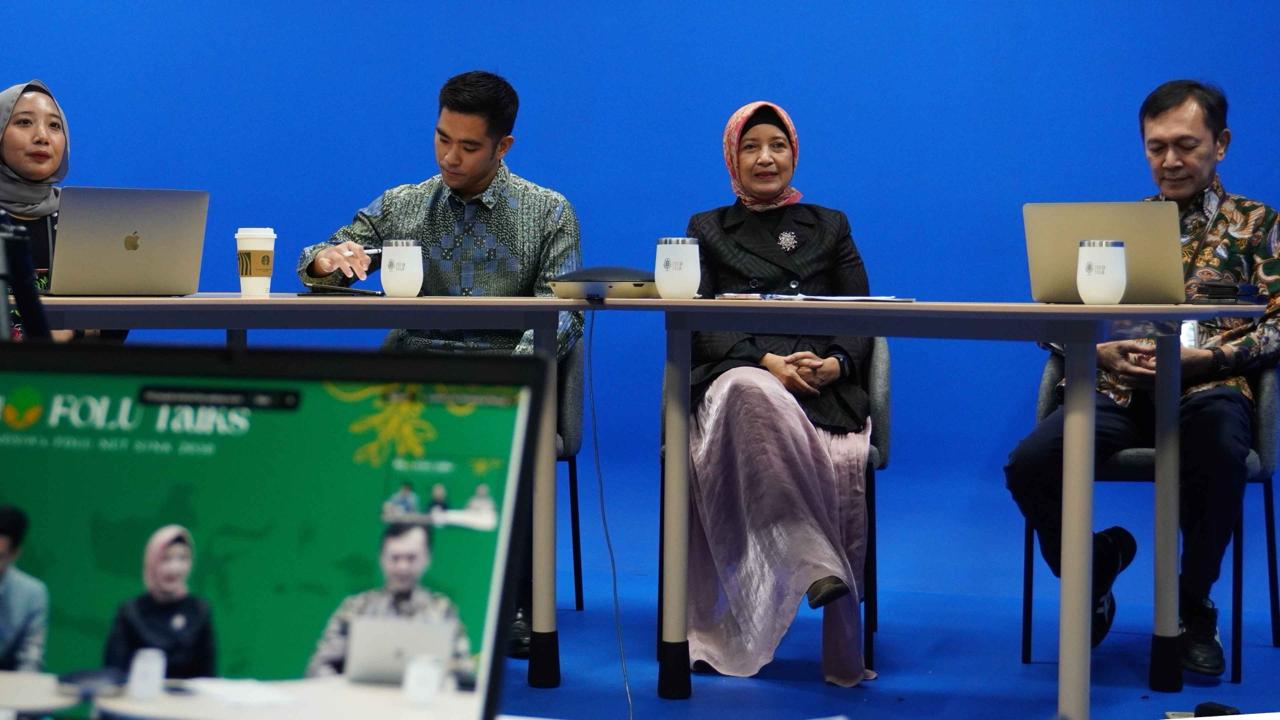
This was highlighted during the FOLU Talks discussion forum titled “Multi-Stakeholder Collaboration in the Implementation of Voluntary Carbon Market in the Forestry Sector,” held in Jakarta.
The event deliberated on strategies for developing a forest-based voluntary carbon market (VCM), including the role of businesses, regulatory challenges, and policy directions towards achieving the FOLU Net Sink 2030 target.
Director General of Sustainable Forest Management, Ministry of Forestry, Laksmi Wijayanti, stated that the economic value of carbon must serve as a tangible incentive for parties involved in protecting and managing forests, including businesses and communities residing near forest areas.
“The carbon market is not just about trade; it’s about justice. We want businesses to receive incentives, communities to prosper, and forests to remain sustainable,” she asserted.
She emphasized that the success of the carbon market can only be achieved through cooperation among all stakeholders, including central and regional governments, business permit holders, academics, civil society, and investors.
According to her, Indonesia possesses over 120 million hectares of forest area, with 12 million hectares being critical land that can be restored while generating high-value carbon credits.
Adding a global context, Director of Governance for the Implementation of Carbon Economic Value, Ministry of Environment and Forestry (KLH), Ignatius Wahyu Marjaka, explained that the voluntary carbon market also emerged as a response to the significant challenges in operating the compliance carbon market, as regulated by Presidential Regulation No. 98/2021.
“Our Presidential Regulation 98 was designed for a mandatory carbon market. However, because a mandatory market is not easy to implement and requires extraordinary effort, there emerged an impetus to open opportunities in the voluntary carbon market,” Wahyu stated.
According to him, the voluntary carbon market can serve as a swift incentive bridge that strengthens Indonesia’s contribution to its emission reduction target (NDC), while also enhancing global market confidence.
“The voluntary carbon market is very important. It can be a driving force to strengthen sustainability, as well as reinforce our commitment to the NDC. This is well-sounded globally,” he added.
Meanwhile, a representative from the Association of Indonesian Forest Concessionaires (APHI), Andrew Sunarko, opined that sustainable forest management is the fundamental cornerstone for building a robust and credible carbon market.
According to him, many forest concessions are currently prepared to support carbon projects.
“With clear and efficient processes, we are not only protecting forests but also unlocking billions of dollars in funding for environmentally friendly development,” he said.
Andrew highlighted the need for regulatory simplification, harmonization of emission calculation methodologies, and legal certainty regarding carbon transactions.
He mentioned that carbon projects from forest management could yield credit prices ranging from US11toUS30 per ton, provided the processes are transparent and possess strong legality.
Currently, the government is preparing revisions to regulations such as Presidential Regulation No. 98/2021 and the Minister of Environment and Forestry Regulation to strengthen the carbon market ecosystem, including the implementation of a decentralized nesting approach to allow private and government projects to run concurrently. If implemented collaboratively, Indonesia is projected to unlock a carbon economic value of up to IDR 8,000 trillion, while simultaneously achieving the FOLU Net Sink 2030 target.
The success of the carbon market is not solely about policy or technology, but about the willingness of all parties to work together.
Close collaboration among the government, businesses, communities, and the global community will be key to ensuring that Indonesia’s forest carbon potential truly becomes a just, transparent, and impactful climate solution for future generations. (*)