Enviro News Asia, Brasilia — The International Fund for Agricultural Development (IFAD) has announced a major expansion of its investment portfolio in Brazil, mobilizing more than USD 1.1 billion to support rural development projects through 2030. The initiative aims to improve the livelihoods of an estimated one million rural people across the country.
The announcement was made on 9 February 2026 by Rocío Medina Bolívar, IFAD’s Regional Director for Latin America and the Caribbean, during a high-level visit to Brazil involving meetings with government authorities and representatives from the public and private sectors.
The new investment marks a significant increase from IFAD’s previous USD 450 million investment between 2017 and 2024, underscoring Brazil’s position as a strategic partner for the Fund. IFAD’s portfolio in Brazil now ranks fifth globally and represents the largest number of IFAD-financed projects in a single country.
Medina Bolívar stated that Brazil accounts for 40 percent of IFAD’s total financing in Latin America and the Caribbean, reflecting its central role in advancing rural transformation across the region. She emphasized that collaboration with public institutions, private sector actors, and financing partners enables IFAD to scale up investments and deliver broad-based development impact.
Brazil is currently the only country worldwide hosting two IFAD offices, located in Brasilia and Salvador, Bahia. The Salvador office, recently inaugurated, focuses on project supervision and pipeline development to strengthen operational effectiveness.
IFAD contributes approximately 15 percent of total project financing in Brazil, while leveraging co-financing from a wide range of national and international partners. These include the Green Climate Fund (GCF), the Inter-American Development Bank (IDB), the Spanish Agency for International Development Cooperation (AECID), the German government, and the Brazilian Development Bank (BNDES), alongside national government contributions. According to Donal Brown, IFAD’s Associate Vice-President of Operations, this blended financing approach enhances both the scale and impact of rural investments.
The Northeast region, which records the highest poverty rates in Brazil, remains a priority for IFAD’s operations. The Fund currently finances eight projects in the region, including the recently launched Dom Hélder Câmara III programme, which focuses on food security, nutrition, and climate resilience in the semi-arid Northeast. The programme’s previous phase reportedly reduced extreme poverty by 90 percent among participating communities.
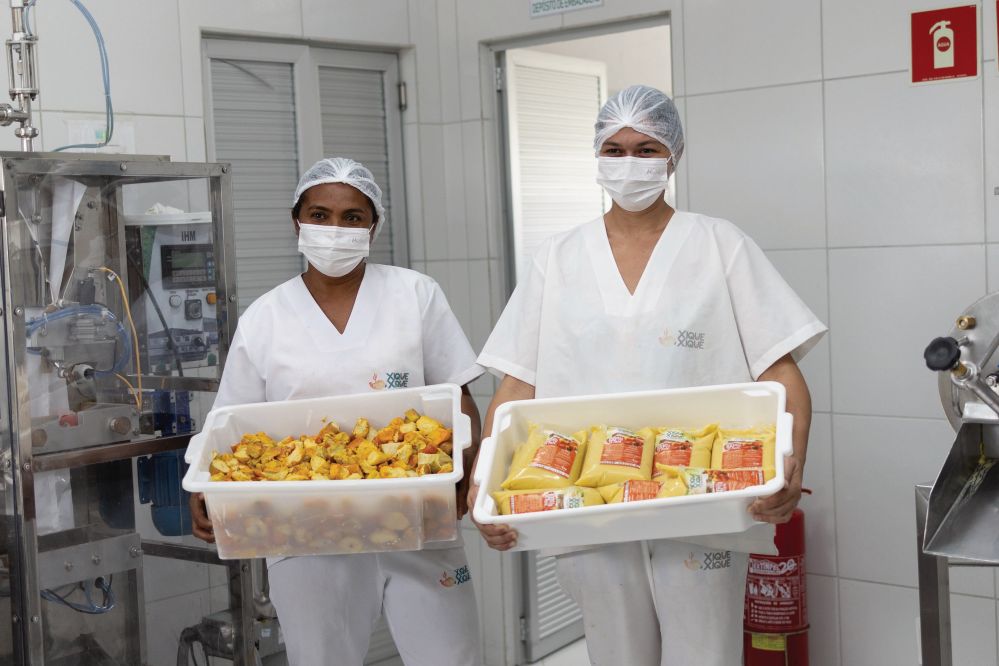
In a move to deepen private sector engagement, IFAD has approved its first direct loan to a private sector entity in Brazil through a credit facility with the cooperative CRESOL, marking its second such operation in the Latin America and Caribbean region.
IFAD Country Director for Brazil Arnoud Hameleers noted that the Fund is adopting a programmatic and high-leverage approach in Brazil, positioning the country as a potential benchmark for promoting rural prosperity in other upper middle-income economies.
Beyond project financing, IFAD is actively involved in policy dialogue, including support for the Global Alliance Against Hunger and Poverty, initiated by Brazil during its G20 Presidency. The Fund also promotes international knowledge exchange through its South-South Triangular Cooperation Centre in Brasilia, facilitating collaboration among countries such as Angola, Pakistan, and Mozambique on issues including land access, market integration, gender equity, youth inclusion, and water security. (*)