Enviro News Asia, Jakarta — The Ministry of Forestry of the Republic of Indonesia renewed its strategic partnership with the International Centre for Research in Agroforestry (ICRAF) by signing a new Memorandum of Understanding (MoU) to strengthen agroforestry development and enhance resilient forest landscapes in Indonesia.
The agreement was signed in Jakarta on Thursday (March 5) by Secretary General Mahfudz and Director General Eliane Ubalijoro, marking a new phase of collaboration aimed at supporting Indonesia’s long-term vision toward Indonesia Emas 2045.
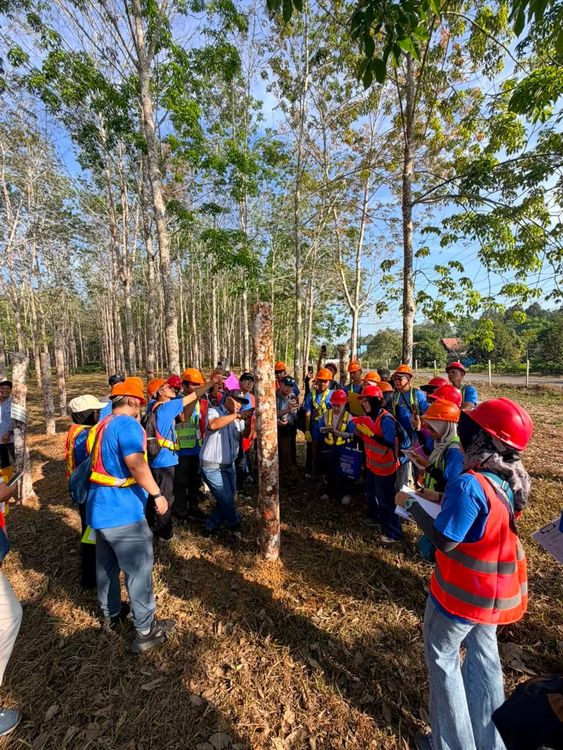
The renewed partnership focuses on six key areas of cooperation: developing agroforestry models, watershed management and restoration, innovative financing mechanisms for agroforestry, agroforestry development in Special Purpose Forest Areas (KHDTK), digital knowledge management, and strengthening the socio-economic capacity of forest communities through social forestry programs.
Mahfudz stated that agroforestry provides a practical and balanced approach to maintaining forest protection while supporting productive land use. According to him, the forestry development strategy in the 2025–2029 Strategic Plan positions forest areas as landscape entities capable of delivering ecological, economic, and social benefits simultaneously.
He emphasized that forests should not only function as protected areas but also serve as productive spaces that contribute to community welfare and social equity.
Through agroforestry systems, the integration of multipurpose tree species with agricultural crops is expected to increase vegetation cover, improve soil fertility, and enhance national carbon stocks. This approach is also considered important in addressing complex challenges such as climate change and hydrometeorological disasters.
The ministry expects the collaboration with ICRAF to strengthen technical support and develop sustainable forestry business models at the field level. Mahfudz also encouraged the MoU to be followed by concrete and measurable action plans that generate tangible impacts for communities living around forest areas.
He added that forest and landscape management challenges require collaborative and evidence-based approaches. The government therefore encourages broader participation from universities, private sector partners, and other stakeholders to strengthen priority forestry programs.
Meanwhile, Eliane Ubalijoro noted that agroforestry practices have been used by communities around the world for centuries, long before the concept was formally introduced in scientific discussions in the 1970s. She highlighted several traditional Indonesian agroforestry systems—such as Repong Damar in Lampung, Tembawang in West Kalimantan, Mamar in East Nusa Tenggara, Pelak in Jambi, and Parak in West Sumatra—as proven models that demonstrate the long-standing success of integrated landscape management.
The Agroforestry Dialogue held alongside the MoU signing brought together policymakers, researchers, and practitioners to formulate practical policy recommendations. By combining ICRAF’s global expertise with Indonesia’s national policy commitment, the partnership is expected to strengthen sustainable forest management while improving the livelihoods of forest-dependent communities. (*)