Enviro News Asia, San Diego — Indonesia is strengthening its long-standing marine research collaboration with the Scripps Institution of Oceanography to advance ocean observation technologies, including smart buoys and unmanned underwater vehicles (UUVs).
The partnership, which dates back to the early 2000s, has involved Indonesian institutions such as the Badan Pengkajian dan Penerapan Teknologi and the Lembaga Ilmu Pengetahuan Indonesia, utilizing research vessels like Baruna Jaya. One of its key achievements is the study of the Indonesian Throughflow, a major ocean current connecting the Pacific and Indian Oceans, which plays a crucial role in climate prediction.
Data from the Indonesian Throughflow has been used to forecast climate variability, including El Niño and La Niña, up to 24 months in advance, supporting early warnings for drought, forest fires, crop failures, and shifts in fish distribution.
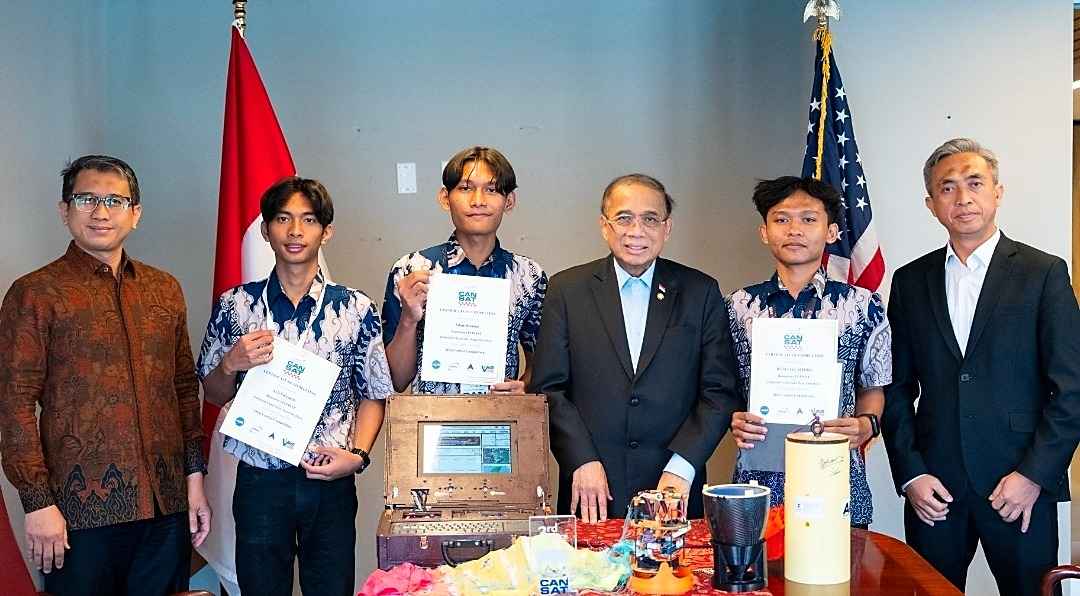
To further expand cooperation, Indonesia’s Ambassador Indroyono Soesilo visited Scripps in San Diego on April 10, 2026, and met with Scripps Director Meenakshi Wadhwa and marine scientist Eric Terrill.
The meeting explored joint development of advanced ocean monitoring systems involving the Badan Riset dan Inovasi Nasional and the Pusat Hidro-Oseanografi TNI-AL. These include smart buoy networks and UUVs capable of monitoring ocean currents, waves, water quality, and underwater acoustics in near real-time.
Scripps brings expertise in autonomous ocean platforms, including integration with uncrewed surface vehicles (USVs) and underwater sensors, as well as the development of next-generation hydrogen-hybrid research vessels designed for low-emission ocean exploration.
On the Indonesian side, BRIN—building on earlier work by BPPT—has developed tsunami detection systems such as InaBuoy under the Indonesia Tsunami Early Warning System framework, in collaboration with the Badan Meteorologi, Klimatologi, dan Geofisika.
BRIN is also preparing a new fleet of advanced research vessels equipped with remotely operated vehicles (ROVs) and underwater survey technologies. In partnership with Pushidrosal, efforts are underway to enhance seabed mapping and develop “digital twin” models of strategic maritime areas.
This collaboration is expected to strengthen Indonesia’s ocean monitoring capabilities, improve disaster early warning systems, enhance maritime safety, and support the development of the country’s blue economy.
Further technical discussions between Indonesian marine research institutions and Scripps are scheduled to take place in the near future in San Diego. (*)