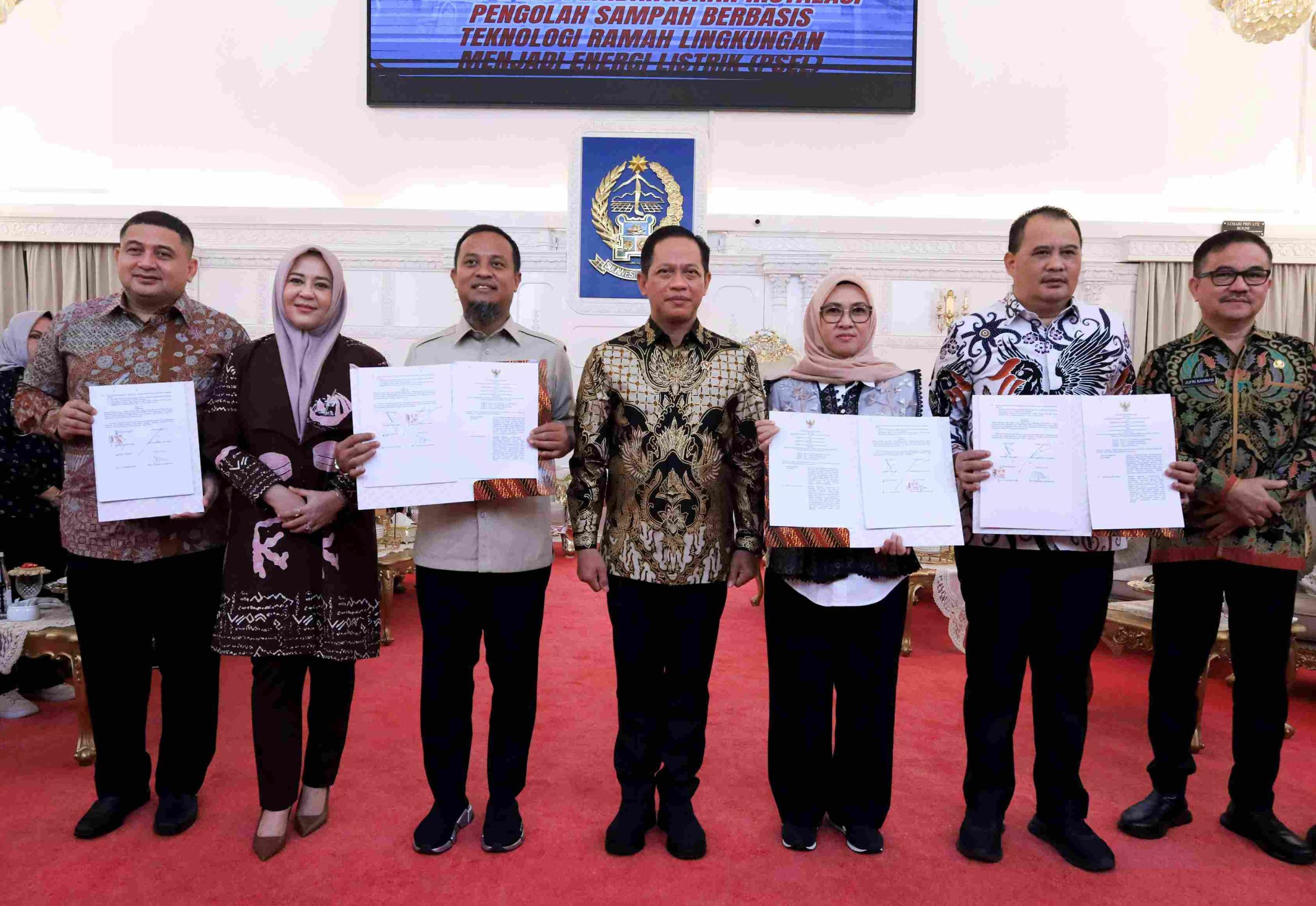
Enviro News Asia, Makasar — The central government has accelerated the development of a Waste-to-Energy (PSEL) facility in the Makassar metropolitan area through a formal cooperation agreement signed on April 4, 2026, involving the South Sulawesi Provincial Government, the Makassar City Administration, and the regencies of Gowa and Maros. The initiative aims to address Indonesia’s growing waste emergency while implementing directives from the President of the Republic of Indonesia.
Hanif Faisol Nurofiq, Minister of Environment and Head of the Environmental Control Agency, stated that the PSEL project represents a strategic solution to urban waste challenges that continue to escalate. He highlighted that waste generation in the Makassar metropolitan area has reached nearly 2,000 tons per day, making waste-to-energy technology an effective approach to reduce landfill pressure while producing renewable electricity.
The minister emphasized that accelerating PSEL development forms part of a broader national transformation toward a modern, integrated, and sustainable waste management system. The government targets the elimination of open dumping practices at all landfills by 2026, noting that approximately 66 percent of landfills across Indonesia still rely on such methods.
Data from the Ministry of Environment and the Environmental Control Agency (KLH/BPLH) in 2025 recorded daily waste generation in the Makassar metropolitan area at 1,644 tons. This includes 1,034 tons from Makassar City, 403 tons from Gowa Regency, and 207 tons from Maros Regency. The planned PSEL facility is expected to process up to 1,000 tons of waste per day, with 800 tons sourced from Makassar, 150 tons from Gowa, and 50 tons from Maros.
Andi Sudirman Sulaiman expressed full readiness from regional governments to support the project’s implementation. He confirmed that provincial and local administrations will strengthen collaboration, including public education efforts and the development of community habits aligned with modern waste management systems.
As a key economic hub in eastern Indonesia, the Makassar metropolitan area holds high urgency for advanced waste management infrastructure. The overloaded condition of the Tamangapa landfill, which still applies open dumping practices, has become a primary driver behind the project’s acceleration.
KLH/BPLH underlined that the signing of the cooperation agreement marks the beginning of concrete implementation between central and regional authorities. The government will continue reinforcing coordination to ensure the project’s success, covering waste supply assurance, upstream waste management improvements, and operational readiness of the PSEL facility. (*)