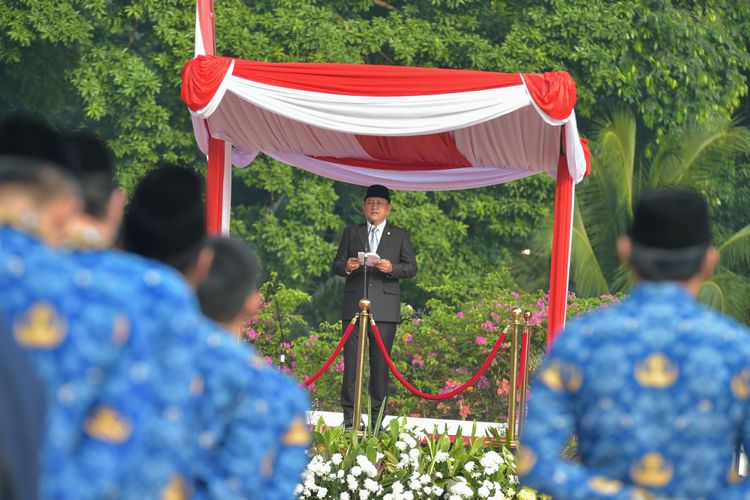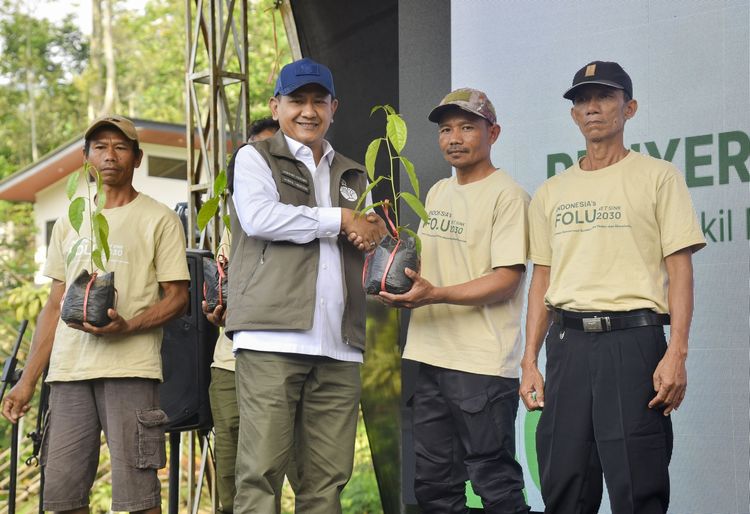
Enviro News Asia, Sukabumi — Rohmat Marzuki led a tree-planting initiative in Sukabumi, West Java, on April 7, 2026, to promote the replication of community-based conservation models. The activity took place in Desa Cipeuteuy, Kabandungan District, as part of the commemoration of International Day of Forests and aimed to strengthen conservation and local economic resilience in buffer zones surrounding Taman Nasional Gunung Halimun Salak (TNGHS).
The program, themed “Forests and Economy for Accelerating SNDC and FOLU Net Sink West Java,” brought together stakeholders including the Ministry of Forestry, IPB University, local governments, and farmer groups. It focuses on integrating environmental conservation with community welfare.
Rohmat emphasized that conservation efforts must go hand in hand with improving livelihoods. He stated that the tree-planting initiative reflects a collaborative approach to restoring ecological corridors while supporting biodiversity, including species such as the Elang Jawa, Owa Jawa, and Macan Tutul Jawa.
The planting composition consists of 70 percent Multi Purpose Tree Species (MPTS), which provide direct economic benefits through fruit production, and 30 percent endemic forest species such as puspa and rasamala. This approach aims to balance ecological restoration with income generation for local communities.
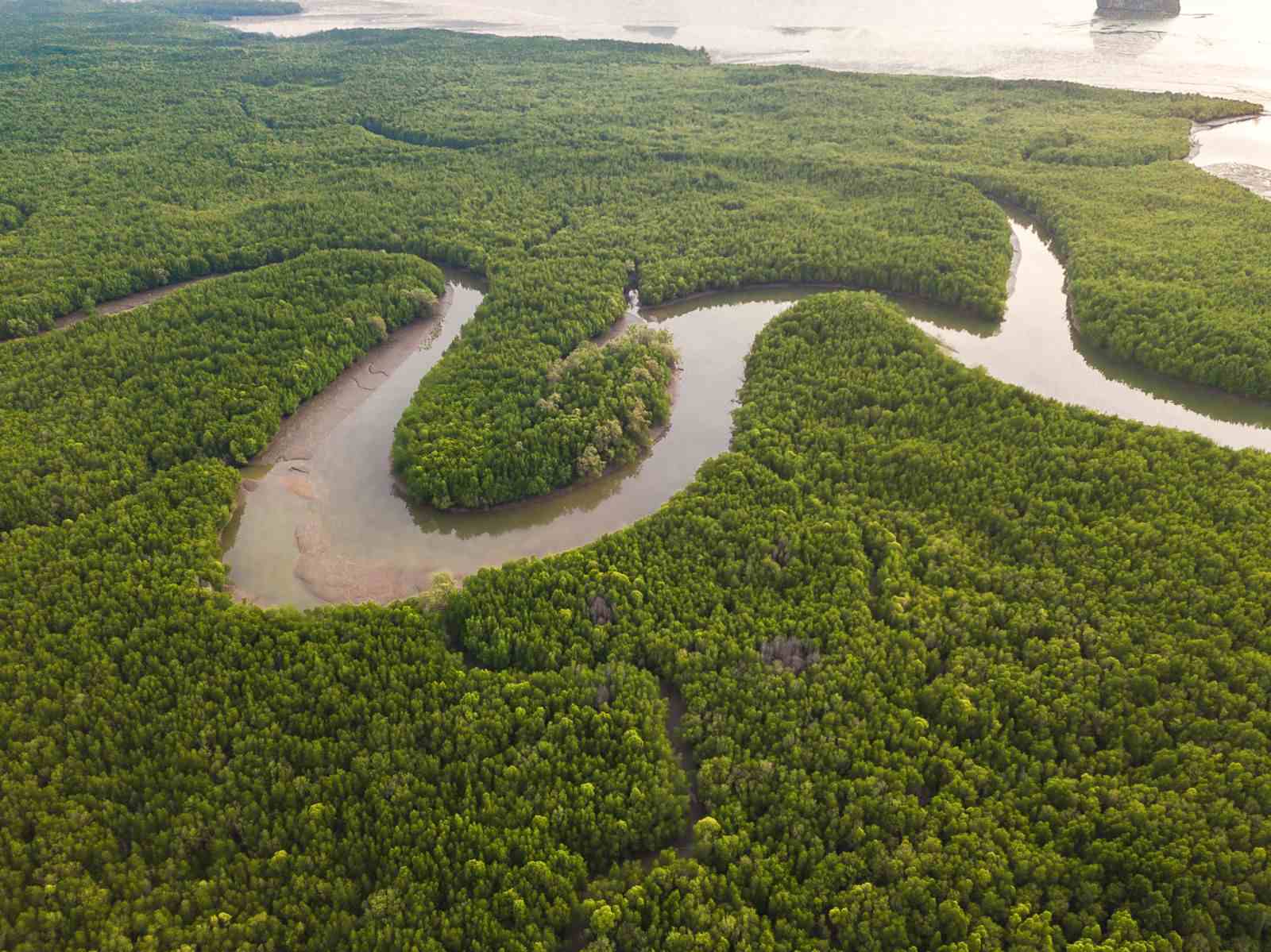
Rohmat highlighted the importance of rehabilitating degraded land in West Java, noting that upstream areas in Sukabumi function as critical “water towers” that ensure water supply for agriculture, industry, and urban communities downstream.
He described local farmers as environmental stewards, stating that their efforts in planting trees on their own land contribute significantly to maintaining water availability and ecological balance.
During the event, symbolic distribution of seedlings was conducted for eight farmers representing four buffer villages: Cipeuteuy, Mekarjaya, Cihamerang, and Kabandungan. The program also featured an interactive dialogue session titled “Rembuk Penyangga Halimun Salak: Sovereign Villages, Sustained Forests, Strong Economy.”
Rohmat urged stakeholders to ensure the sustainability of the initiative beyond planting activities. He called for continuous assistance from institutions such as IPB University and TNGHS management to ensure that the program delivers tangible economic benefits and becomes a model that can be replicated in other regions. (*)