

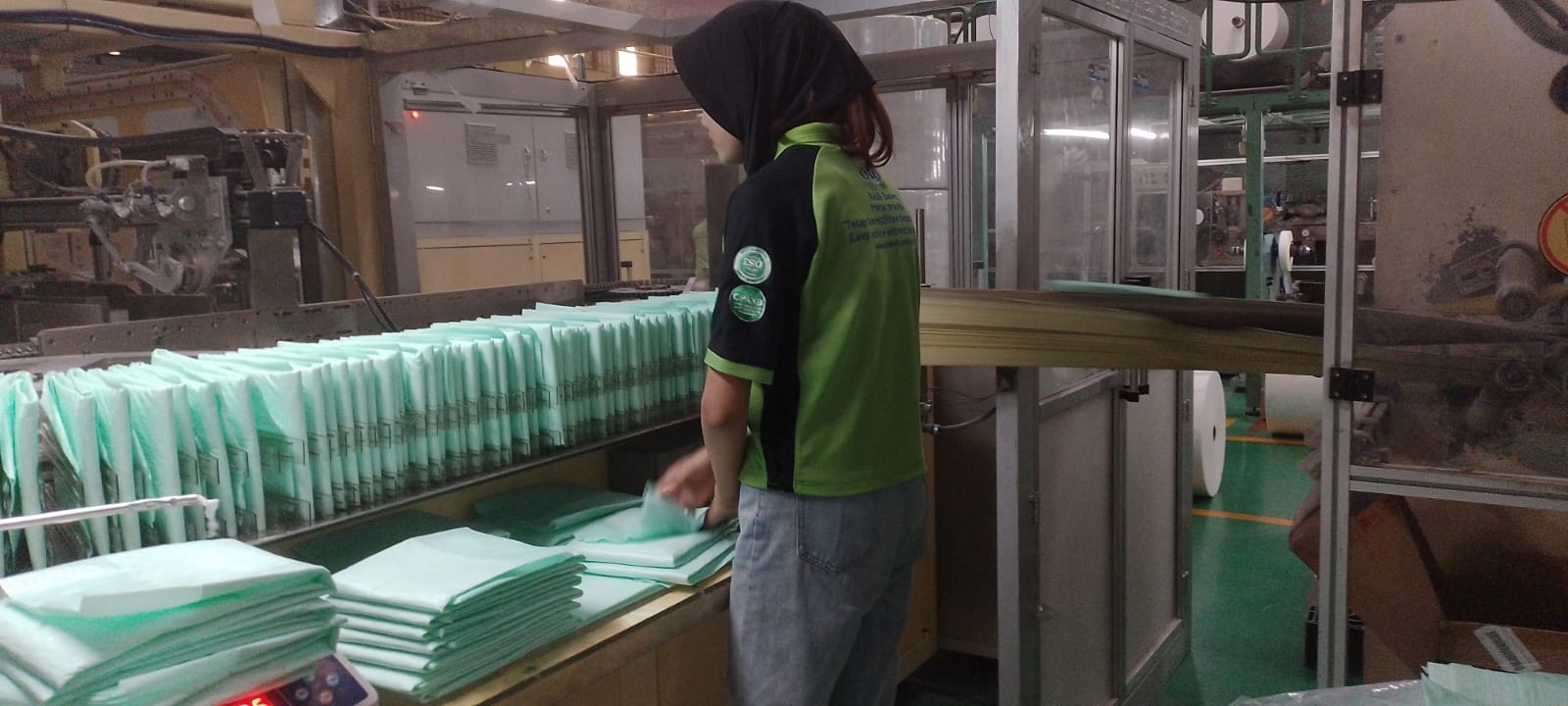
Enviro News Asia, Jakarta — Asosiasi Pulp dan Kertas Indonesia (APKI) has raised concerns over mounting pressure on Indonesia’s diaper industry due to sharp increases in raw material prices and supply uncertainty.
Industry players reported that prices of key inputs have become highly volatile, changing within hours, while supply constraints from suppliers are further complicating production and business planning.
The situation is partly driven by global dynamics, including geopolitical tensions in the Middle East that have pushed up crude oil prices. This has directly impacted petrochemical-based materials such as naphtha and polypropylene, which are essential in diaper production.
According to APKI, raw material prices have surged by as much as 90 to 100 percent in some cases, leading to an overall increase in product prices by around 20 to 30 percent. The association warned that prices may continue to rise amid ongoing volatility.
Director of APKI’s Diaper Committee, Oto Gunasis, said the rapid price fluctuations have made cost calculations unstable and forced companies to adjust their strategies.
Several manufacturers have begun implementing gradual price increases and reviewing promotional programs to sustain operations. However, APKI emphasized that partial measures will not be sufficient without stronger industry-wide coordination.
The association warned that prolonged uncertainty could disrupt the entire value chain, from raw material suppliers to finished product manufacturers, potentially affecting consumer purchasing power.
APKI urged companies to conduct comprehensive evaluations of cost structures, operational efficiency, and pricing strategies to remain resilient under rising cost pressures.
Without immediate solutions to secure raw material supply within the next one to two months, APKI cautioned that production disruptions, factory shutdowns, and potential layoffs could become unavoidable.
The association also called on the government to ensure smoother import processes and stronger inter-agency coordination to stabilize supply and prevent further disruption in the industry. (*)