

Enviro News Asia, Jakarta — The Government of Indonesia has officially established a Task Force on Innovative Financing for National Parks and Iconic Species Conservation, marking a major step to strengthen sustainable funding mechanisms and biodiversity protection through international collaboration.
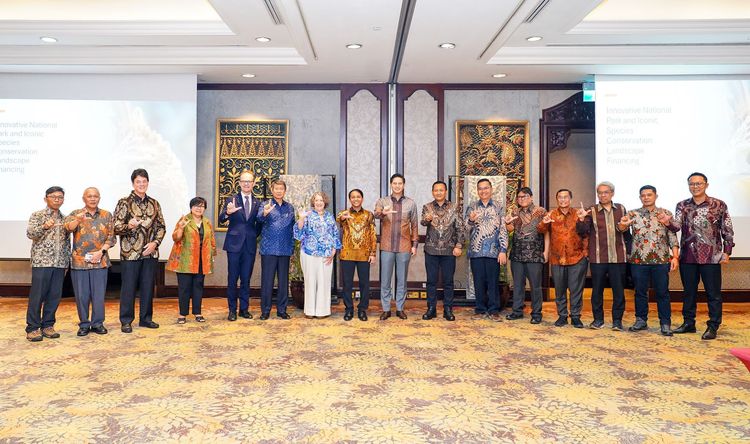
The initiative was formalized during a high-level meeting with representatives from the United Kingdom in Jakarta on April 21, attended by key government officials and task force members.
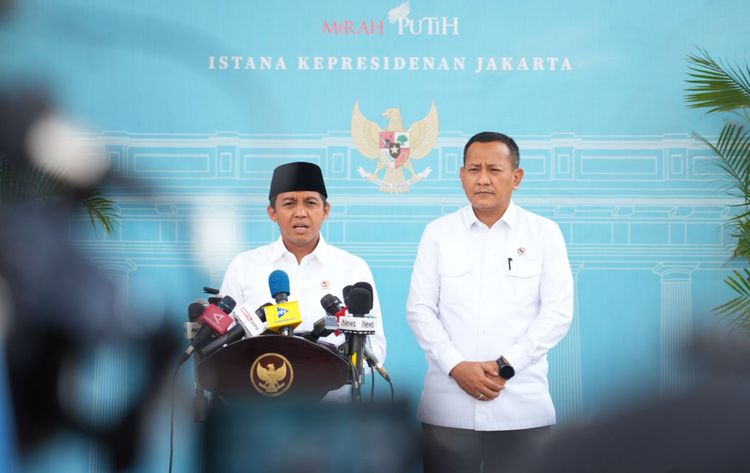
The meeting was led by Presidential Special Envoy for Climate and Energy Hashim Djojohadikusumo, who serves as Chair of the Task Force, alongside Minister of Forestry Raja Juli Antoni as Vice Chair. Also present were UK Special Representative for Nature Ruth Davis, British Ambassador to Indonesia Dominic Jermey, and CEO of WWF-Indonesia Aditya Bayunanda.
The establishment of the task force is backed by Presidential Decree No. 8 of 2026, providing a legal framework for advancing innovative conservation financing.
Hashim stated that the United Kingdom has committed £2 million to support the initiative, while Indonesia has allocated US$120 million from the state budget for Way Kambas National Park, reflecting strong bilateral commitment despite global financial pressures.
Ruth Davis highlighted Indonesia’s global leadership in strengthening conservation financing, governance, and protection of national parks. She emphasized that the initiative supports long-term sustainable funding, enhances ranger capacity, and delivers tangible benefits to indigenous peoples and local communities.
Minister Raja Juli Antoni noted that Indonesia manages 57 national parks covering approximately 18 million hectares, but current funding remains insufficient. He stressed the need to transform national parks from cost centers into financially sustainable entities.
To achieve this, the Ministry of Forestry proposed five key strategies: transforming selected parks into Public Service Agencies (BLU), strengthening management capacity including forest rangers, enhancing financing mechanisms through the Indonesia Biodiversity Fund managed by Environmental Fund Management Agency, increasing community participation and benefit-sharing, and protecting wildlife corridors through Other Effective Area-Based Conservation Measures (OECM).
Initial pilot projects for the BLU scheme will include Komodo National Park, Bromo Tengger Semeru National Park, and Mount Rinjani National Park.
WWF-Indonesia expressed strong support for the initiative, emphasizing its potential to ensure long-term survival of iconic species while generating economic benefits for communities surrounding conservation areas.
The partnership reflects a shared vision between Indonesia and the United Kingdom to advance sustainable development by integrating environmental protection with economic opportunities, positioning conservation as both an ecological and socio-economic priority. (*)