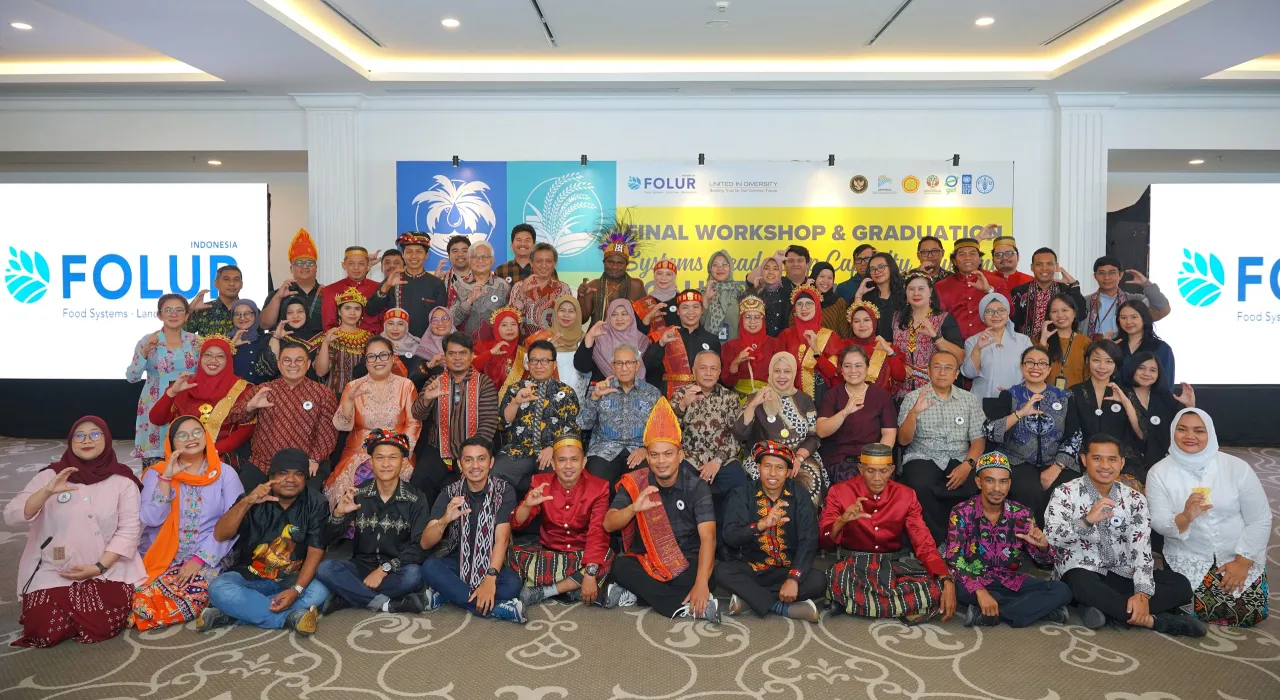
Enviro News Asia, Jakarta — Indonesia is strengthening efforts to build sustainable and resilient food systems through a systems leadership approach under the Food Systems, Land Use and Restoration (FOLUR) Program, led by the World Bank with support from the Global Environment Facility and implemented by the United Nations Development Programme.
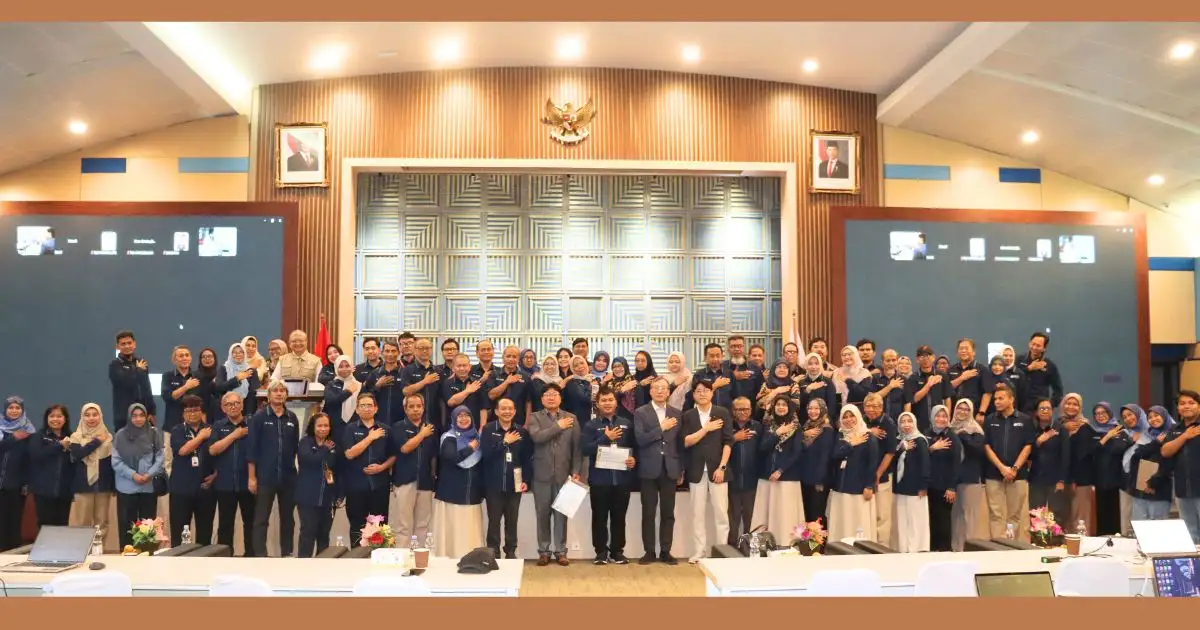
Over the past 14 months, the Systems Leadership Capacity Building (SLCB) initiative has engaged 54 participants from diverse backgrounds, including government officials, farmers, academics, civil society representatives, youth, and private sector actors across multiple regions in Indonesia.
The program aims to address interconnected challenges such as food security, land restoration, and climate change by fostering leadership that emphasizes collaboration, systems thinking, and cross-sector coordination. Participants were encouraged to move beyond conventional problem-solving and adopt a holistic perspective to better understand the links between environmental, social, and economic systems.
The initiative incorporates approaches such as Theory U, developed by Otto Scharmer, which integrates systems thinking, innovation, and awareness-based leadership practices. Through phases including foundation, sensing, deep dive, onboarding, and prototyping, participants developed practical solutions tailored to local challenges.
During the prototyping phase, participants designed small-scale initiatives targeting key areas such as sustainable commodity production—including coffee, palm oil, cocoa, and rice—local governance innovation, and strengthened community collaboration within food value chains. These pilot solutions aim to test scalable approaches for long-term impact.
The program also demonstrated adaptive leadership during the institutional transition of the FOLUR project to Indonesia’s Coordinating Ministry for Food Affairs, ensuring continuity and inclusive participation among stakeholders.
Looking ahead, the initiative will focus on sustaining momentum through ongoing systems coaching, strengthening collaboration with Centers of Excellence in project areas, and promoting global knowledge exchange to replicate successful models in other countries.
According to UNDP, the initiative reflects a broader commitment to multi-stakeholder collaboration and adaptive governance, which are essential to achieving the United Nations Sustainable Development Goals and building resilient food systems. (*)